SALSA Cutthroat GRX 610 1x12 – Endurance Bikepacking Bike
€3,988.00
Tax included
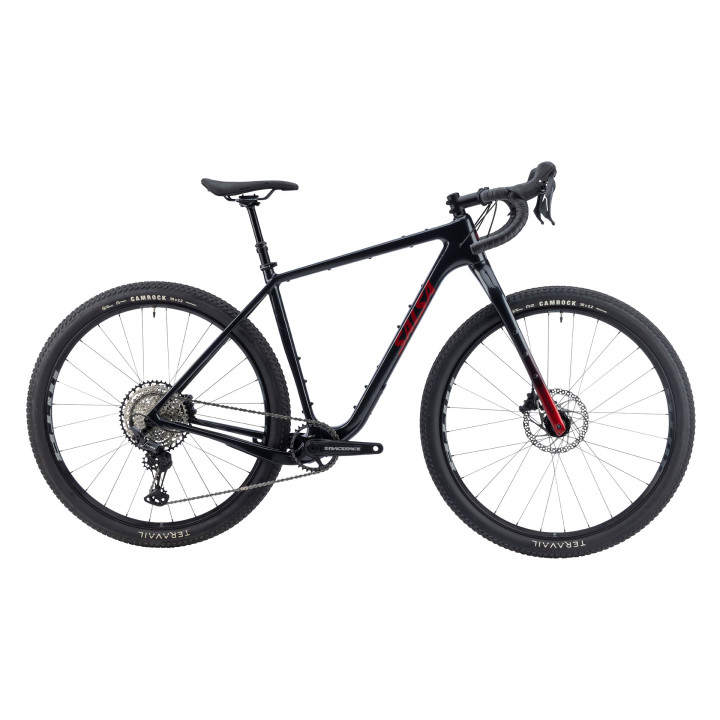
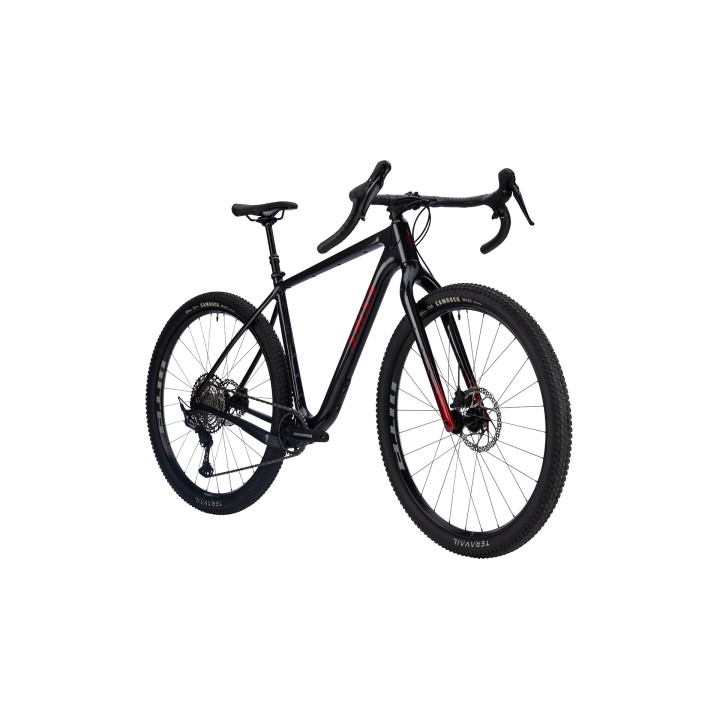
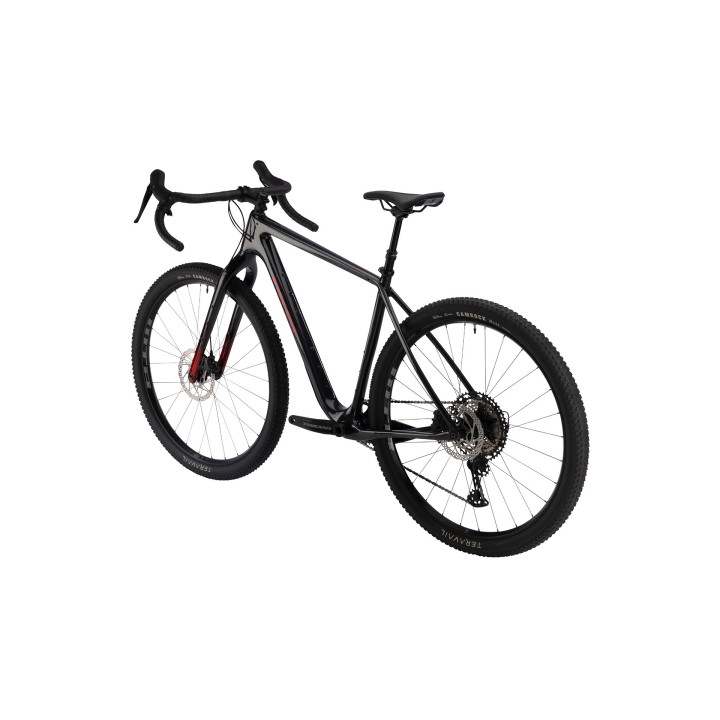
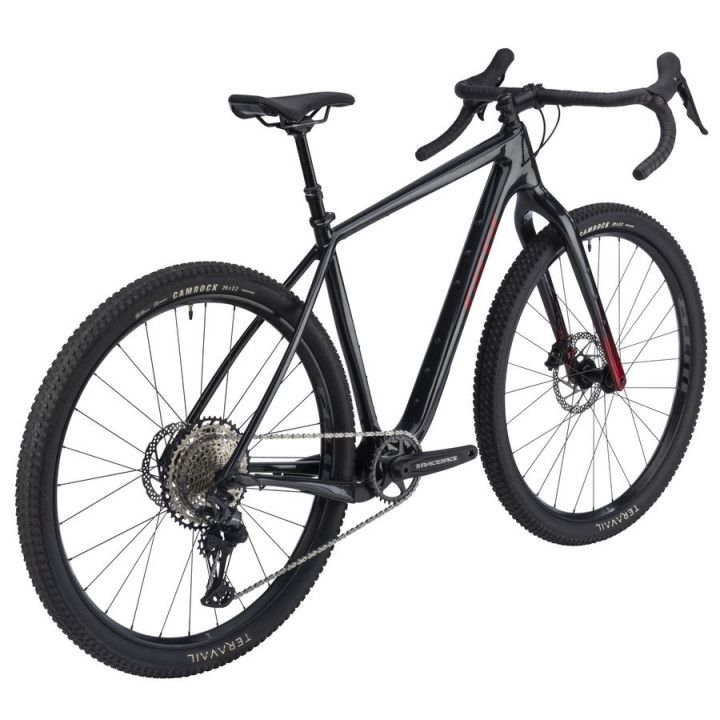
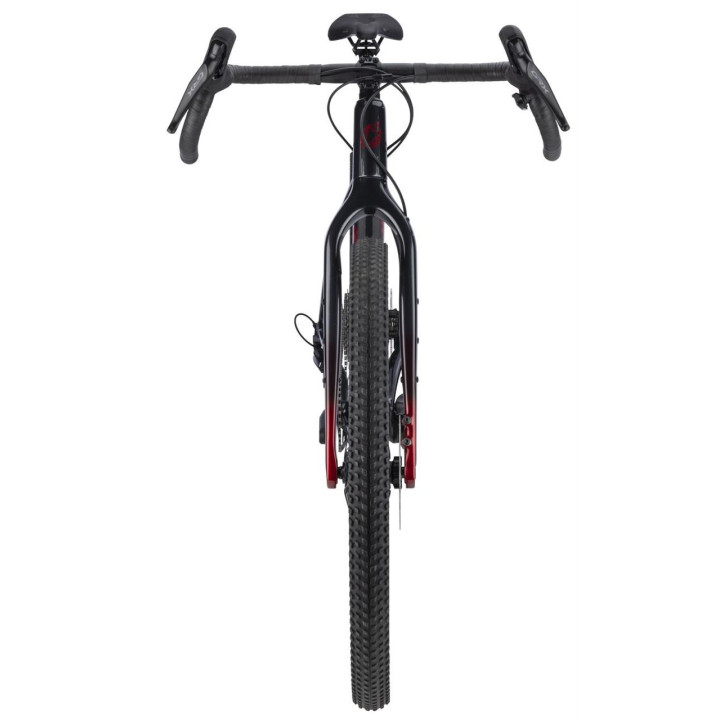
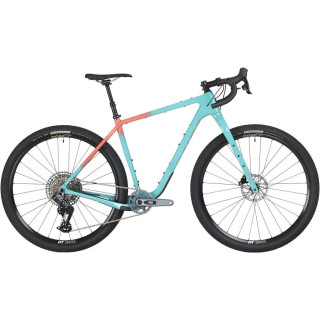
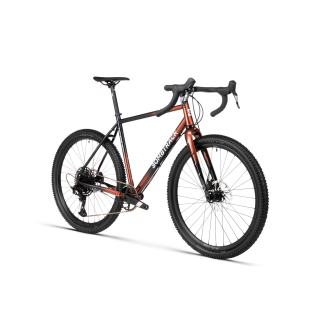
The Salsa Cutthroat GRX 610 1x12 is designed for long-distance off-road adventures and endurance bikepacking. Its carbon frame with Class 5 VRS technology, drop bar MTB geometry and mechanical Shimano GRX drivetrain combine efficiency, comfort and ease of maintenance.
WTB Speedterra i30 wheels, Teravail Camrock 29 x 2.2" tires and a stock dropper post enhance its capabilities on more technical terrain.
Looking for a different size or version? Contact us: info@bikejamming.it
🌍 International shipping available. If your country is not listed at checkout, email us at info@bikejamming.it to check availability and shipping costs.
Secure payments and protected data
Secure & tracked delivery
Regulated and transparent withdrawal
The explorer's Cutthroat
The Salsa Cutthroat GRX 610 1x12 combines the simplicity of a mechanical drivetrain with an endurance bikepacking setup designed to tackle technically demanding off-road routes.
Its Class 5 VRS carbon frame, drop-bar MTB geometry and 29" wheels form the foundation of a platform developed for long days in the saddle, exploring remote regions and carrying the equipment required for self-supported journeys.
In this build, WTB Speedterra i30 wheels, Teravail Camrock tyres and a dropper seatpost fitted as standard extend the bike's riding capabilities when gravel roads give way to trails, rough descents and less predictable surfaces.
The Shimano GRX 1x12 drivetrain retains a fully mechanical shifting system, particularly appealing to riders who prefer direct, hands-on control and maintenance of their bike during extended journeys far from populated areas.
Mechanical simplicity does not mean compromising off-road capability. This Cutthroat combines conventional mechanical shifting with components and design features firmly rooted in modern endurance mountain biking.
Carbon and Class 5 VRS
The Cutthroat frame incorporates Class 5 VRS (Vibration Reduction System), a design solution that harnesses the properties of carbon fibre to manage forces transmitted from the terrain.
The shape of the seatstays allows controlled elastic flex, while the chainstays resist the torsional forces generated during pedalling.
The objective is to create a rear triangle capable of absorbing some of the vibrations without compromising handling precision or power transfer.
Frame construction also incorporates internal moulds at the main junctions of the front triangle to control wall thickness and laminate quality in areas subjected to the greatest stresses.
In endurance bikepacking, comfort takes on a different meaning compared with a short bike ride.
Reducing repeated impacts and vibrations from uneven surfaces can help riders maintain consistent pedalling and precise handling even after many hours in the saddle.
The Cutthroat Carbon fork complements the frame with protection in areas particularly exposed to abrasion and extensive equipment-mounting options.
Drop-bar MTB geometry: a platform for long-distance off-road riding
The Cutthroat is not a gravel bike adapted to accommodate wider tyres. Its geometry is developed around the requirements of an endurance drop-bar mountain bike.
69° head tube angle across all frame sizes.
445 mm chainstays.
Wheelbase ranging from 1050 to 1129 mm, depending on frame size.
Rigid fork with a 483 mm axle-to-crown length and 51 mm offset.
29" wheels with MTB-derived tyres.
The head tube angle, wheelbase and tyre volume all contribute to the way the bike handles on uneven surfaces.
Directional stability is particularly valuable when travelling with equipment, as the weight of the bags alters weight distribution and makes predictable handling increasingly important.
Drop handlebars allow riders to alternate between different hand positions, a significant advantage when spending many hours on the bike over consecutive days.
The Cutthroat therefore retains its own distinctive identity between gravel and mountain biking, prioritising the ability to cover vast distances across terrain that can vary considerably along a single route.
Shimano GRX 610 1x12: the mechanical choice
The drivetrain combines Shimano GRX RX610 controls with a GRX RX822 rear derailleur and a 12-speed Shimano SLX M7100 cassette.
This setup integrates the ergonomics of gravel controls with mountain bike-derived gearing.
12-speed mechanical single-chainring drivetrain.
Shimano GRX RX610 shift controls.
Shimano GRX RX822 rear derailleur.
Race Face Ride crankset with a 34-tooth chainring.
Shimano SLX M7100 10-51 cassette.
510% overall gear range.
Gearing designed with loaded touring in mind
The choice of a 34-tooth chainring is consistent with the use of 29" wheels and high-volume tyres, particularly when the route includes off-road climbs and equipment increases the overall system weight.
The lowest 34 x 51 gear provides a short rollout for climbing steep gradients, while the 34 x 10 gear retains good pedalling capability on paved connecting sections and faster tracks.
Compared with a gravel 1x drivetrain using a larger chainring, this setup prioritises low climbing gears without excessively limiting the bike's performance on faster surfaces.
Mechanical or electronic shifting: a choice shaped by your travel plans
A mechanical drivetrain requires no batteries to operate the rear derailleur. Adjustment is carried out through a conventional cable-operated system, whose maintenance may be familiar to riders accustomed to looking after their own bikes.
When travelling through remote areas, this characteristic can be an advantage for riders who prefer to reduce the number of electronic devices on which the operation of their bike depends.
The GRX RX822 rear derailleur also incorporates a chain stabilisation system, helping to reduce chain movement when riding over rough terrain.
Choosing a mechanical drivetrain is not necessarily a question of price.
For some riders, electronic shifting represents a desirable technological advancement. For others, independence from battery power and familiarity with mechanical systems are key priorities when preparing for a journey.
Wheels and tyres: off-road control and traction
The wheel and tyre setup is one of the defining features of this particular Cutthroat GRX build.
WTB Speedterra i30 wheels are paired with Teravail Camrock 29 x 2.2" tyres, using different casings at the front and rear.
WTB Speedterra i30 29" wheels.
30 mm internal rim width.
28 spokes per wheel.
15 x 110 mm and 12 x 148 mm Boost hubs.
Teravail Camrock front tyre with Light Trail casing.
Teravail Camrock rear tyre with Durable casing.
Tubeless-compatible setup.
30 mm rims: supporting the tyre casing
The 30 mm internal rim width provides a wider base for the tyre casing than the 25 mm rims used on the other GRX build in the range.
When paired with appropriately sized MTB tyres, this can improve lateral casing support, particularly when cornering, riding through rough sections and tackling loose surfaces at relatively low tyre pressures.
Making effective use of tyre volume helps define the bike's handling characteristics, especially when the priority shifts from rolling efficiency on hard-packed surfaces to control on more uneven terrain.
Teravail Camrock: beyond rolling efficiency
Compared with the Sparwood tyres fitted to the other GRX build, the Camrock tyres place greater emphasis on off-road grip.
Their tread pattern is well suited to routes combining hard-packed surfaces, loose gravel, roots and trail sections, where the ability to hold a chosen line becomes particularly important.
The use of different front and rear tyre casings also addresses the distinct functional requirements of each wheel.
Front, Light Trail casing: a construction designed to balance protection, terrain compliance and weight savings.
Rear, Durable casing: a construction with a greater emphasis on durability, particularly valuable on the wheel that generally carries a larger proportion of the load and transfers pedalling forces to the ground.
Tyre pressure, tyre choice and load distribution
In bikepacking, tyre pressure should not be considered independently of the rest of the setup.
Rider weight, equipment weight, bag distribution, tyre volume and terrain characteristics together determine the operating conditions of both wheels.
Adjusting front and rear tyre pressures independently allows the bike's handling to be tailored to the requirements of grip, casing support and rim protection.
Tyres are an integral part of any travel setup. Tyre choice influences comfort, traction, control, puncture resistance and energy expenditure throughout the journey.
The clearance available in the frame and fork also allows riders to consider alternative tyres according to the terrain, without necessarily changing other components of the bike.
Dropper seatpost and cockpit
The TranzX YSP38 dropper seatpost with 90 mm of travel is one of the most significant differences compared with the Cutthroat GRX equipped with a rigid seatpost.
When the terrain becomes steep or uneven, the ability to temporarily lower the saddle provides greater freedom of movement over the bike.
The rider can shift their weight more easily, move with the bike and negotiate technical sections without being restricted by the normal pedalling height of the saddle.
The cockpit features the Teravail Radia 24 handlebar, Teravail Radia stem and matching bar tape.
The handlebar flare provides a wider grip in the drops, particularly useful through sections where greater control of the front wheel is required.
A dropper seatpost also changes the way rear luggage can be organised.
A conventional saddle pack may restrict its operation. To make full use of the dropper seatpost throughout a journey, riders should consider compatible luggage systems or redistribute equipment between the frame, handlebar and fork.
Carrying capacity and self-supported travel
The ability to organise equipment directly on the bike is an integral part of the Cutthroat's design philosophy.
The main frame triangle is designed to provide space for frame bags, while mounting points distributed across the platform allow luggage arrangements to be tailored to the duration of the journey and resupply opportunities along the route.
Compatibility with direct-mount frame bags.
Top tube mounts for a top tube bag.
Bottle cage mounts within the main frame triangle.
Two pairs of mounts underneath the down tube.
Three-Pack mounts on both fork legs.
Compatibility with front lowrider racks.
Rear rack compatibility using a dedicated seatpost collar.
Internal fork routing for dynamo-powered lighting cables.
These options allow the Cutthroat to be prepared for a wide range of requirements, from minimal equipment for an ultra-distance event to the setup needed for several days of riding with limited resupply opportunities.
A frame bag allows some equipment to be positioned centrally and relatively low on the bike, while the fork mounts provide additional space for water, bulky items or specialised equipment.
Load distribution should nevertheless take into account the bike's dynamic characteristics and the need to preserve freedom of movement through technical sections.
Two approaches to the Cutthroat GRX
The Bikejamming range includes two Cutthroat builds equipped with the Shimano GRX 610 1x12 drivetrain.
They share the same carbon platform, drop-bar MTB geometry and drivetrain gearing, but differ in several component choices that become particularly important when considering the predominant terrain.
Feature
Cutthroat GRX 610
Cutthroat GRX 610 1x12
Drivetrain
Shimano GRX mechanical 1x12
Shimano GRX mechanical 1x12
Gearing
34T, 10-51
34T, 10-51
Internal rim width
25 mm
30 mm
Tyres
Teravail Sparwood 29 x 2.2"
Teravail Camrock 29 x 2.2"
Seatpost
Rigid
Dropper, 90 mm
Handlebar
Salsa Cowchipper
Teravail Radia 24
Build focus
Endurance riding and mixed-terrain touring
Endurance riding and bikepacking with a greater emphasis on technical off-road terrain
When to favour the rigid-seatpost build
For riders who primarily tackle long gravel tracks, quiet backroads, paved connecting sections and routes with relatively modest technical demands, a build featuring Sparwood tyres and a rigid seatpost may be particularly well suited to their needs.
A conventional seatpost also simplifies the installation of many bikepacking saddle packs.
When to choose the dropper-seatpost build
For riders who combine long distances with singletrack, rough descents and terrain where grip and freedom of movement become more important, the combination of i30 rims, Camrock tyres and a dropper seatpost offers different riding capabilities.
Same platform, same drivetrain philosophy, different build priorities.
The choice between the two GRX builds should start with the characteristics of the intended routes and the way equipment will be carried, rather than simply the number or specification level of the components fitted.
This Cutthroat build is aimed at riders who want to cover vast distances off-road while retaining a mechanical drivetrain, without compromising on components that enhance handling on technical trails.
It is ideal for riders who:
Plan self-supported journeys and long-distance off-road adventures.
Prioritise the straightforward maintenance and operation of a mechanical drivetrain.
Tackle routes with significant elevation gain and varied terrain.
Ride a combination of forest tracks, remote roads and singletrack.
Want to make use of a dropper seatpost when riding technical terrain.
Are looking for an endurance platform with extensive luggage configuration options.
Prefer a bike already equipped for demanding routes, without the immediate need to upgrade wheels, tyres or seatpost.
When it may not be the right choice
If your routes consist predominantly of paved roads and hard-packed gravel, a gravel or all-road bike with a greater emphasis on rolling efficiency may be better suited to your riding.
If you would prefer to retain the Cutthroat platform but anticipate less technical routes and regularly use a conventional saddle pack, the rigid-seatpost GRX build is worth considering.
For riders who particularly value wireless electronic shifting and the characteristics of the Eagle Transmission system, the Cutthroat Apex S1000 AXS offers another approach to the same platform.
The explorer's Cutthroat, even when exploration takes you onto technical terrain.
This GRX build is designed for riders who prefer a mechanical drivetrain but contemporary solutions for tackling demanding terrain.
The choice is not necessarily between tradition and technology: it is about how each rider wants to prepare their bike for the journey ahead.
Which Salsa Cutthroat should you choose?
The different Cutthroat builds share the same design identity, but use different components to balance self-sufficiency, efficiency, ease of maintenance and off-road ride quality.
Drivetrain, wheels, tyres and cockpit should be considered together, taking into account the type of routes you intend to ride.
What is the difference between the two Cutthroat GRX 610 builds?
Both builds share the same frame and Shimano GRX mechanical drivetrain gearing. This version features rims with a 30 mm internal width, Teravail Camrock tyres and a 90 mm dropper seatpost, components that enhance its capabilities on technical trails. The other build uses 25 mm rims, Sparwood tyres and a rigid seatpost.
Is the Cutthroat GRX 610 a gravel bike or a mountain bike?
The Cutthroat belongs to the drop-bar mountain bike category. Its geometry, 29" wheels and MTB tyres make it particularly well suited to long-distance off-road riding, while retaining the multiple hand positions offered by drop handlebars.
Is the Shimano GRX 610 drivetrain fully mechanical?
Yes. The rear derailleur is cable-operated and requires no batteries. The disc brakes, however, are hydraulic.
Is the 34 x 10-51 gearing suitable for loaded bikepacking?
The 34-tooth chainring paired with a 10-51 cassette provides a wide gear range and a particularly useful low gear for off-road climbs. The suitability of the gearing nevertheless depends on overall system weight, rider fitness and the gradients encountered along the route.
Are the wheels tubeless compatible?
Yes. The build includes WTB Speedterra i30 wheels, tubeless-compatible Teravail Camrock tyres and WTB TCS sealant.
What tyre sizes can I use?
The frame is designed around 29" wheels, with a reference tyre size of 29 x 2.25" and clearance for up to 29 x 2.4" at the rear. The fork accommodates tyres up to 29 x 3.0". Actual tyre dimensions also depend on the tyre model and rim width.
Can I use 27.5" wheels or a 29+ setup?
No. The Cutthroat platform is developed specifically for 29" wheels and is not compatible with a full conversion to 27.5" or 29+.
Can I fit a suspension fork?
Yes. The frame is designed and tested for suspension forks with an axle-to-crown length of up to 506 mm, typically corresponding to 100 mm of travel. The recommended offset is 51 mm. The specified maximum fork length must not be exceeded.
Can I use front and rear racks?
Yes. The fork is compatible with lowrider racks such as the Salsa Down Under. Fitting the Salsa Wanderlust rear rack requires a Salsa Rack Lock seatpost collar. Frame sizes 58 and 60 also require Salsa Bent Rack Struts RK8030. The Salsa Wanderlust HD is not compatible.
Can I use a saddle pack with the dropper seatpost?
Yes, provided you use a bag and mounting system compatible with dropper seatposts. Clearance between the bag and the rear wheel must also be checked when the saddle is lowered.
Can I convert the Cutthroat to a 2x drivetrain?
The frame is compatible with double-chainring configurations using the Road Boost standard. Conversion requires specific components and a comprehensive drivetrain compatibility assessment, including available rear tyre clearance.
Can I fit a flat handlebar?
It is technically possible, but the Cutthroat's geometry is developed specifically for drop handlebars. A flat-bar conversion may result in a considerably shorter riding position than that of a mountain bike designed from the outset for this type of handlebar.
Is it suitable for the Tour Divide?
Yes. The Cutthroat is developed around the demands of major off-road endurance journeys, with the Tour Divide serving as a design reference. Its geometry, gearing, comfort and equipment-carrying options address the requirements of this type of route.
Technical specifications
Frame and fork
Frame
Salsa Cutthroat Carbon
Technology
Class 5 VRS (Vibration Reduction System)
Colour
Smoke Black
Fork
Salsa Cutthroat Carbon
Fork axle-to-crown length
483 mm
Fork offset
51 mm
Headset
FSA NO.42/ACB
Headset standard
IS41 upper / IS52 lower
Bottom bracket shell
Press Fit BB92, 41 x 92 mm
Derailleur hanger
SRAM UDH
Front axle
Boost 15 x 110 mm, thru-axle
Rear axle
Boost 12 x 148 mm, thru-axle
Rear thru-axle specifications
M12 x P1.0 x 175 mm
Drivetrain
Configuration
Mechanical 1x12
Rear derailleur
Shimano GRX RX822
Shift controls
Shimano GRX RX610
Front derailleur
Not fitted
Crankset
Race Face Ride, 34T
Bottom bracket
Race Face BB92
Cassette
Shimano SLX M7100-12, 10-51, 12-speed
Chain
Shimano Deore M6100
Gear range
510%
Brakes
Brake levers
Shimano GRX RX610
Brake calipers
Shimano GRX, hydraulic
Rotors
Shimano, 180 mm front / 160 mm rear
Front brake mount
Flat Mount
Rear brake mount
Flat Mount
Compatible front rotor sizes
160-180 mm
Compatible rear rotor sizes
140-160 mm
Front Flat Mount thickness
35 mm
Front brake mounting bolt length
42 mm
Rear Flat Mount thickness
25 mm
Rear brake mounting bolt length
32 mm
Wheels and tyres
Front wheel
WTB Speedterra i30, 29", 28H, Boost 15 x 110 mm
Rear wheel
WTB Speedterra i30, 29", 28H, Boost 12 x 148 mm
Internal rim width
30 mm
Front tyre
Teravail Camrock 29 x 2.2", Light Trail casing
Rear tyre
Teravail Camrock 29 x 2.2", Durable casing
Tubeless compatibility
Yes, WTB TCS sealant included
Components
Handlebar
Teravail Radia 24
Stem
Teravail Radia
Bar tape
Teravail Radia
Seatpost
TranzX YSP38 Dropper Post, 90 mm
Seatpost diameter
27.2 mm
Seatpost collar diameter
32.0 mm
Saddle
WTB Rocket Fusion
Frame compatibility
Reference wheel and tyre size
29 x 2.25"
Maximum rear tyre size
29 x 2.4"
Maximum front tyre size
29 x 3.0"
Compatible suspension fork
100 mm travel, maximum axle-to-crown length 506 mm
Compatible, with provision for internal cable routing
For oval chainrings, the maximum tooth count must be reduced by two. Some front derailleurs may reduce available rear tyre clearance.
Dropper seatpost cable routing
Internal routing with mechanical 1x drivetrain
Through the drive side of the down tube
Internal routing with Di2 drivetrain
Di2 battery installed in the seatpost, with the dropper cable routed through the drive side of the down tube
External routing with mechanical 1x, 2x and Di2 drivetrains
Through the rear dynamo light cable routing ports on the non-drive side of the top tube
Mounting points and carrying capacity
Bottle cage mounts within the main frame triangle
2 on sizes 52 and 54; 3 on sizes 56, 58 and 60
Fork mounts
Three-Pack, one set per side
Under-down-tube mounts
Two pairs
Top tube mounts
Yes, compatible with Salsa Top Tube Bag
Direct-mount frame bag
Compatible
Front rack
Lowrider compatible; Salsa Down Under recommended
Rear rack
Compatible using Salsa Rack Lock collar; Salsa Wanderlust recommended
Rack accessories for sizes 58 and 60
Salsa Bent Rack Struts RK8030 required
Salsa Wanderlust HD
Not compatible
Fork dynamo cable routing
Internal routing
Rear mudguard mounts
Not provided
Weight
Stated weight
Approx. 11.06 kg (24 lb 6 oz)
Build specifications are subject to change.
Geometry and sizing
Measurement
52
54
56
58
60
Effective top tube length
520
540
560
580
600
Standover height
700
742
811
852
874
Reach
357
372
385
394
406
Stack
585
592
620
645
664
Seat tube length
356
419
508
559
584
Head tube length
90
98
127
154
175
Head tube angle
69°
69°
69°
69°
69°
Seat tube angle
74.5°
74.25°
74.25°
74°
73.75°
BB drop
70
70
70
70
70
Bottom bracket height
300
300
300
300
300
Chainstay length
445
445
445
445
445
Fork axle-to-crown length
483
483
483
483
483
Fork offset
51
51
51
51
51
Wheelbase
1050
1066
1091
1110
1129
Crank arm length
165
165
170
170
175
Handlebar width
440
460
480
500
520
Stem length
60
70
80
80
90
Recommended rider height
147-160 cm
157-170 cm
168-180 cm
178-191 cm
188-201 cm
Linear measurements are expressed in millimetres unless otherwise stated.
Geometry is calculated using a rigid fork with a 483 mm axle-to-crown length and 51 mm offset, equivalent to a 29" suspension fork with 100 mm of travel at 25% sag, and 29 x 2.2" tyres with an actual diameter of 740 mm.
Standover height is measured vertically to the top of the top tube at a point 50 mm forward of the centre of the bottom bracket.
Unsure about your frame size?
The recommended height ranges are intended as a guide. To identify the most suitable frame size, it is also important to consider your inseam measurement, body proportions and preferred riding position.
Contact us before purchasing for a personalised sizing assessment: info@bikejamming.it
Brand
Reference
BK01627
Wheel Size
29"
Primary Terrain
Unpaved Roads
Fork
Rigid
Cargo Mounts
Front & Rear Rack Mounts
Handlebar
Drop Bar
Drivetrain
1x
Frame Material
Carbon
Tire Compatibility
Up to 2.6"
Comments (0)
No customer reviews for the moment.
Your review appreciation cannot be sent
Report comment
Are you sure that you want to report this comment?
Report sent
Your report has been submitted and will be considered by a moderator.
Your report cannot be sent
Review sent
Your comment has been submitted and will be available once approved by a moderator.



Comments (0)
Your review appreciation cannot be sent
Report comment
Report sent
Your report cannot be sent