
From traditional touring bikes to modern gravel, adventure and expedition bikes: the evolution of touring bicycles told through the routes that shaped their development.
In this article, you will discover
- why traditional touring, gravel, adventure and expedition bikes exist;
- which routes shaped their evolution;
- how the Great Divide, Colorado Trail, Baja Divide, the Pamirs and the Silk Road changed the way touring bikes are designed;
- why there is no perfect bicycle, only the right one for the problem it needs to solve.
How Iconic Routes Transformed the Evolution of Touring Bikes
Not every volcanic eruption has changed the Earth's geology.
Many have left their mark only on the surrounding landscape. Others, however, have reshaped entire continents.
Something remarkably similar has happened with the world's great bicycle touring routes.
Every year brings new trails, new races and new long-distance crossings. Some are spectacular. Others quickly become popular. But only a handful truly change the way bicycles are designed.
To understand why traditional touring bikes, gravel bikes, dirt road touring bikes, adventure bikes and expedition bikes exist today, we need to return to the places where someone first discovered that the bicycle they were riding was no longer the right answer.
Every major route asked a different question.
How do you carry everything you need to live in the saddle for weeks?
How do you cross thousands of kilometres of unpaved roads without sacrificing efficiency?
How do you keep moving when the trail forces you off the bike dozens of times a day?
How do you cross deserts, high plateaus, peat bogs, glaciers and mountain ranges where the bicycle becomes only one of the tools needed to continue the journey?
Modern touring bikes were not created around commercial categories.
They were born as answers to these problems.
This is not, therefore, simply a collection of routes.
It is the story of how certain journeys changed the very way we think about bicycle travel, giving rise to the different families of touring bikes we ride today.
The Evolution of Touring Bikes
The evolution of touring bikes has not followed a straight line.
There was no single moment when someone invented the gravel bike, the adventure bike or bikepacking.
Instead, a succession of increasingly demanding environments forced riders, mechanics and frame builders to question continually what had previously seemed settled.
Every time a new route presented a problem that had never been encountered before, the bicycle had to evolve.
Frames and components were not the only things that changed.
Geometry changed, as did weight distribution, load-carrying systems, tyre width, gearing and the very concept of self-sufficiency.
The categories we use today — Road Touring, Gravel / All-Road, Dirt Road Touring, Adventure Off-Road and Expedition — are not simply market segments.
They are the legacy of real problems encountered in real places.
Do you have a journey in mind?
Every major route gave rise to a different kind of bicycle.
That is why there is no single answer that works for everyone.
Tell us about your project and we will help you understand which platform, configuration and build are genuinely suited to the kind of journey you want to undertake.
The Origins of Road Touring
For much of the twentieth century, bicycle travel was almost entirely synonymous with touring on paved roads.
The main challenge was not the terrain.
It was the load.
It was about living in the saddle for weeks or months while carrying everything required with the greatest possible reliability.
This led to bicycles designed to carry substantial loads without compromising stability: robust frames, confidence-inspiring geometry, forks equipped for front racks, very low gearing and carefully managed weight distribution for long consecutive days of riding.
This philosophy did not emerge from a single route. It gradually took shape along some of the great roads that defined the collective image of bicycle travel.
The Via Claudia Augusta perhaps illustrates better than most how road touring is, above all, about continuity: crossing the Alps along ancient communication routes, riding through plains, valleys and mountain passes, and carrying everything you need without turning every climb into a battle against the bicycle.
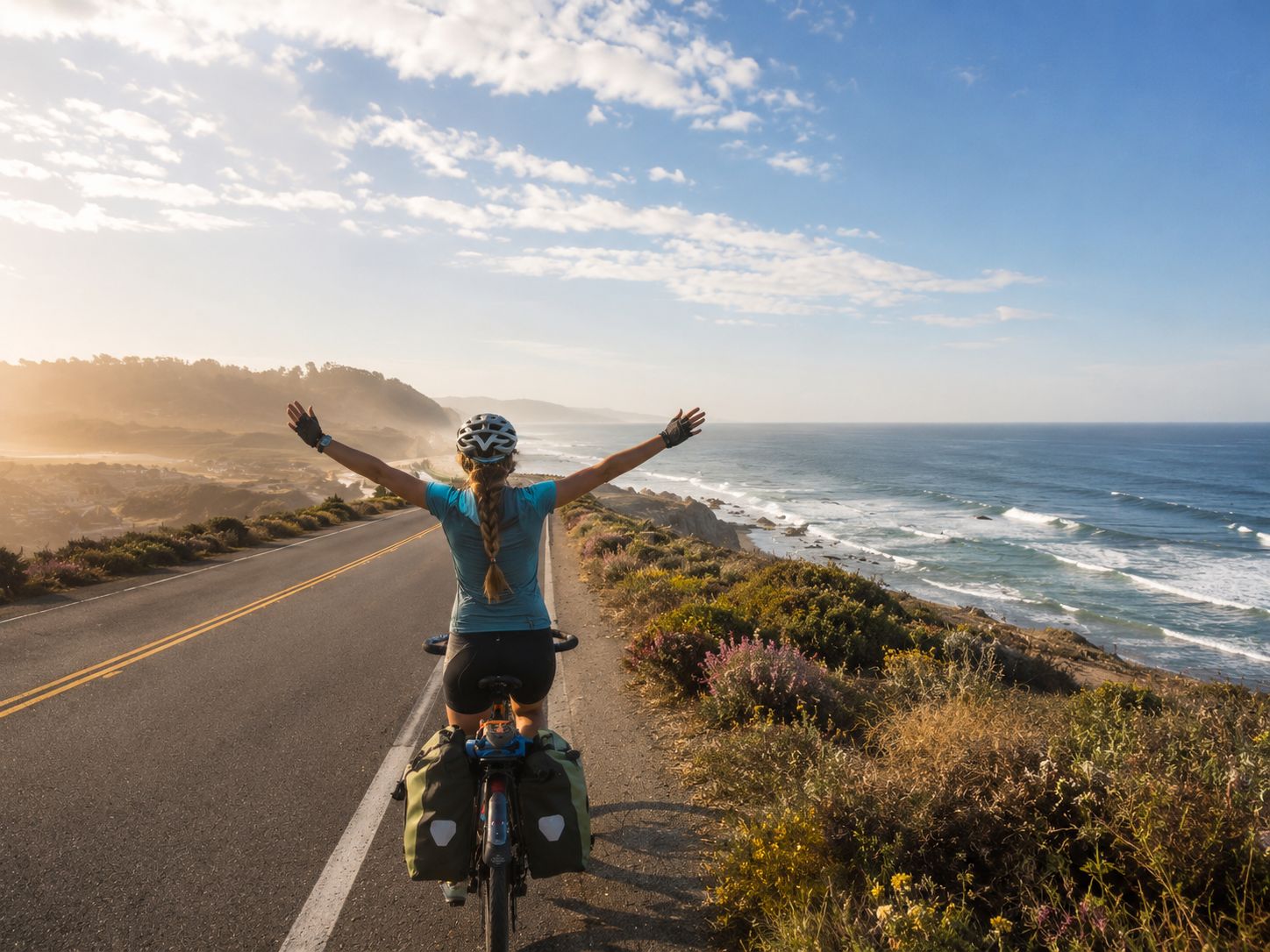
The Pacific Coast Highway adds another dimension: a long, linear and exposed journey shaped by the ocean, the distances involved and the need for a bicycle that remains comfortable day after day.
The Route des Grandes Alpes introduces a different kind of evolutionary pressure. Here, the challenge is not merely carrying luggage. It is finding a balance between weight, long climbs and seemingly endless Alpine descents. The bicycle must remain stable when loaded, yet efficient uphill and secure under braking after tens of kilometres of descending.
In Europe, this approach now finds its fullest expression in the EuroVelo network, which is not a single route but a system of major long-distance cycle routes. Here, the challenge is not overcoming a technical obstacle, but riding for weeks with continuity, reliability and comfort.
These routes differ greatly from one another, yet they share the same underlying principle: when the challenge is simply to live in the saddle, the answer is a stable, reliable bicycle capable of carrying everything you need.
This is how modern Road Touring was born.
| Iconic route | Evolutionary pressure | Representative solution |
|---|---|---|
| Via Claudia Augusta, Pacific Coast Highway, Route des Grandes Alpes, EuroVelo network | Loaded stability, comfort, reliability and self-sufficiency on paved roads | Surly Disc Trucker, the modern archetype of the traditional touring bike |
Looking for a bicycle for long-distance road touring?
→ Explore all our traditional touring bikes
→ Or build your own touring frameset
Gravel / All-Road: When Speed Meets Travel
For many years, road touring and off-road travel followed almost parallel paths.
On one side stood traditional touring bikes, designed to carry heavy loads over long distances.
On the other stood the mountain bike, created to tackle technical trails with little concern for long-term self-sufficiency.
Between these two worlds, one type of bicycle was still missing: a bike capable of turning a multi-day journey into a genuinely sporting experience.
A bicycle that would allow riders to travel light, maintain speed and enjoy an engaging ride while moving seamlessly between asphalt, gravel roads and smooth dirt tracks.
This is the context in which the modern gravel bike found its identity.
Events such as Unbound Gravel in the United States, The Traka in Catalonia, SBT GRVL in Colorado and the British Dirty Reiver demonstrated that it was possible to cover long distances across mixed terrain while maintaining remarkable efficiency.
The solutions developed for these events did not remain confined to racing.
They quickly influenced the way lightweight touring itself was interpreted.
Riders tackling weekend bikepacking trips, multi-day crossings or lightweight self-supported adventures discovered that they could preserve a dynamic, responsive riding style without sacrificing the autonomy required for camping or travelling through remote landscapes.
The design response was a new generation of bicycles.
Progressively wider tyres.
Greater tyre clearance.
More stable geometry than traditional road bikes.
Disc brakes.
Drivetrains capable of climbing loose gravel without compromising efficiency on pavement.
This is how the modern Gravel / All-Road category was born.
Bicycles such as the Salsa Warbird helped define this philosophy, while more recent models such as the Salsa Flyway represent its natural evolution, with increasingly efficient and aerodynamic geometry inspired by modern performance gravel racing.
These are not bicycles designed to cross continents in complete self-sufficiency.
They were created for riders who want to travel light without giving up speed, pedalling efficiency and the pleasure of an engaging, performance-oriented ride.
| Iconic route | Evolutionary pressure | Representative solution |
|---|---|---|
| Unbound Gravel, The Traka, SBT GRVL, Dirty Reiver | Travelling light while maintaining a fast, sporty ride across mixed terrain | Salsa Warbird, now evolved into the Salsa Flyway |
Dirt Road Touring: When Unpaved Roads Become the Destination
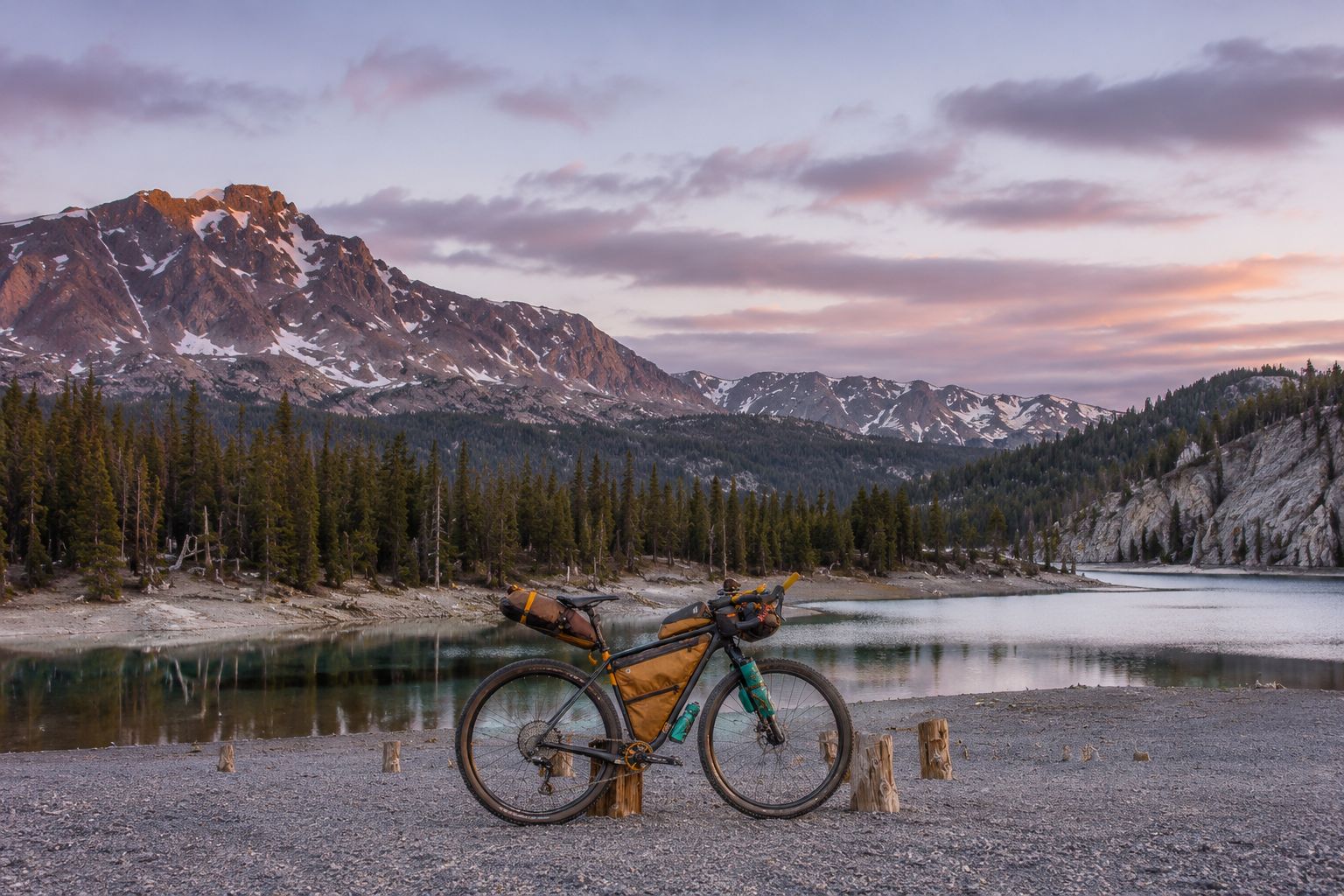
If modern gravel proved that mixed terrain could be ridden quickly and efficiently, the Great Divide asked a completely different question.
What happens when dirt roads are no longer part of the journey, but become the journey itself?
For decades, unpaved roads were little more than a transition.
A link between two paved roads.
Or simply an inconvenience.
The Great Divide Mountain Bike Route changed that perspective completely.
For more than 4,000 kilometres, it follows the Canadian and American Rocky Mountains almost entirely on forest roads, mining roads and endless dirt tracks. It does not seek out the most spectacular trail. It seeks continuity. It proved that a rideable dirt road could become the destination itself.
The challenge changed completely.
The bicycle no longer had to carry heavy loads alone.
It also had to remain efficient for weeks across surfaces that absorb energy, increase vibration and multiply fatigue.
Every watt saved today becomes energy available a thousand kilometres later.
This is where progressively wider tyres, more compliant frames, balanced geometry for mixed terrain and less cumbersome luggage systems began to emerge.
When the Tour Divide was created, following the same route as a self-supported race, this evolution accelerated even further.
The Great Divide posed the problem. The Tour Divide pushed it to the extreme. It was from the experience accumulated along this route that the Salsa Cutthroat was born, arguably the first frame designed specifically to transform a self-supported race of more than 4,000 kilometres into a dedicated platform for ultra-long-distance dirt road touring.
Thousands of riders experimented with different solutions, compared materials and refined seemingly minor details that became decisive over such enormous distances.
This is how what we now call Dirt Road Touring was born: not simply travelling on dirt roads, but optimising every component to cover immense distances while maintaining the highest possible efficiency.
| Iconic route | Evolutionary pressure | Representative solution |
|---|---|---|
| Great Divide MTB Route | Maximum efficiency over ultra-long unpaved routes | Salsa Cutthroat, the benchmark modern drop-bar platform for Dirt Road Touring |
Looking for a bike built for epic dirt-road journeys such as the Great Divide?
→ Explore all our Gravel & Dirt Road Touring bikes
→ Or choose a Gravel / All-Road frameset and build it your way
Adventure Bike: When a Mountain Bike Becomes a Touring Bike
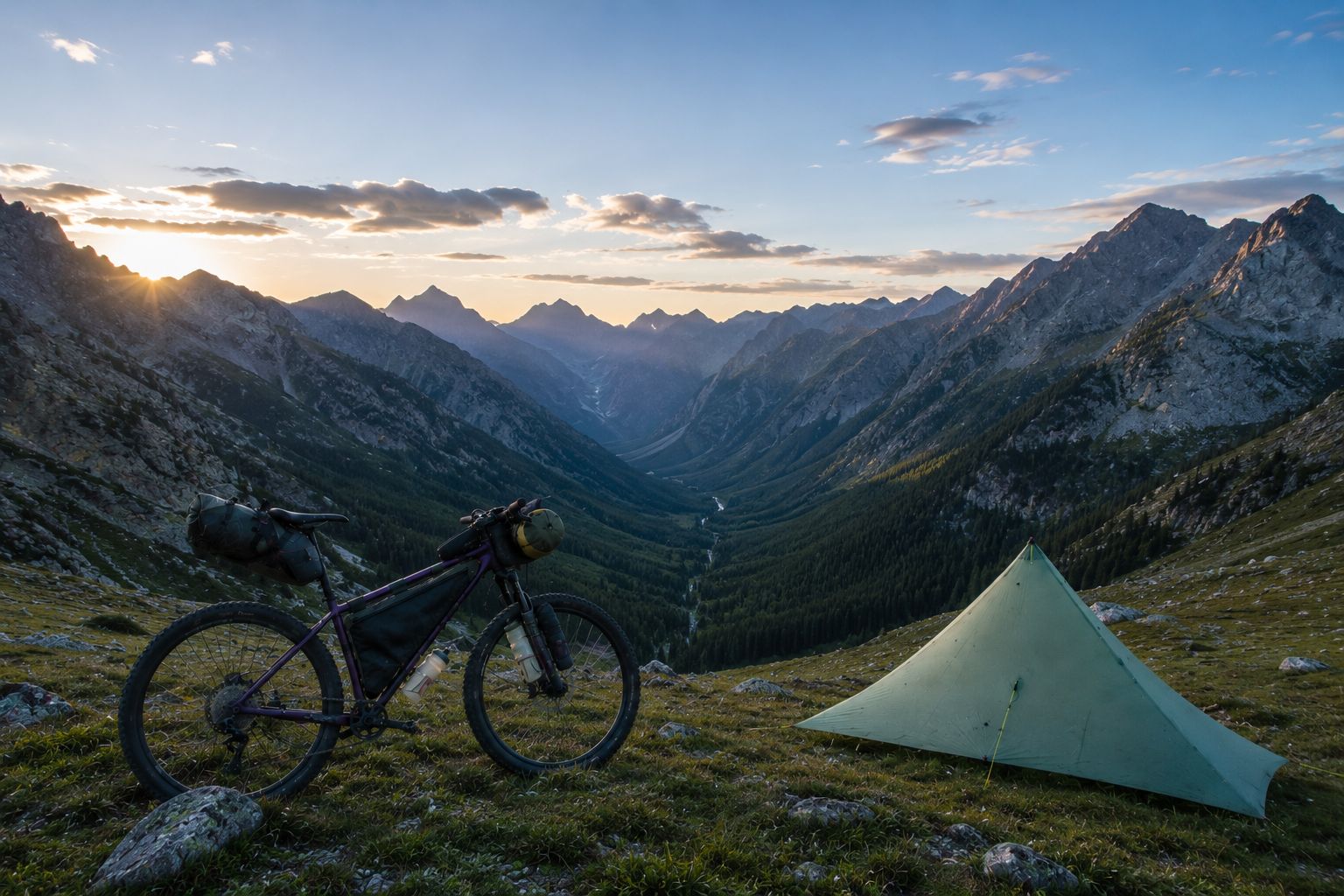
The Colorado Trail was never created for bikepacking.
It was conceived as one of America's great mountain bike trails.
Nearly 800 kilometres across the Rocky Mountains, with more than thirty high mountain passes, long sections above 3,500 metres, rock gardens, roots, switchbacks, technical descents and countless stretches where riding simply is not possible.
For a long time, this route was considered incompatible with bicycle travel.
Not because it was too long.
But because it seemed to belong to an entirely different discipline.
On one side stood traditional bicycle touring.
On the other, mountain biking.
The Colorado Trail is one of the places where these two worlds gradually began to meet.
Anyone attempting to cross it unsupported quickly discovered that none of the bicycles available at the time offered a satisfactory answer.
A traditional touring bike carries heavy loads with remarkable stability, but quickly becomes cumbersome when the trail demands rocky steps, technical terrain or extended hike-a-bike sections.
A mountain bike, on the other hand, handles the terrain effortlessly, yet was designed for rides lasting only a few hours—not for carrying a tent, sleeping bag, food and everything required to live for days away from civilisation.
This is where a completely new design question emerged.
How do you turn a mountain bike into a true touring bicycle without sacrificing the qualities that make it a mountain bike?
The answer was not simply to pack lighter.
It was to rethink entirely how that luggage was carried.
Large panniers gradually gave way to luggage systems that remained within the bike's overall profile.
The weight moved closer to the bike's centre of gravity.
Handling remained predictable on technical terrain.
The bicycle continued to ride like a mountain bike while gaining a level of self-sufficiency that had previously seemed impossible.
It is a subtle difference, but a decisive one.
A new category did not emerge because someone invented a new name.
It emerged because a route proved that the problem itself had changed.
Today we call this family Adventure Off-Road.
But before it became a commercial category, it was a technical solution developed to travel through environments that had previously seemed incompatible with bicycle touring.
| Iconic route | Evolutionary pressure | Representative solution |
|---|---|---|
| Colorado Trail | Preserving true mountain-bike handling while adding self-sufficiency | Surly Karate Monkey, the versatile hardtail that became one of the benchmark platforms for Adventure Off-Road |
Looking for a mountain bike built for Adventure Off-Road and trail bikepacking?
→ Explore the Salsa Cycles Adventure & Bikepacking collection
→ Or discover all our hardtail frames
Trail Bikepacking: When the Trail Stops Being the Limit
If the Colorado Trail proved that a mountain bike could become a true touring bicycle, the Arizona Trail pushed the concept even further.
Here, the challenge is not simply riding technical singletrack.
It is accepting that, for long sections, the very idea of a "rideable trail" loses its meaning.
Nearly 1,300 kilometres across Arizona, from the Mexican border to Utah. The Sonoran Desert, pine forests, canyons, high plateaus, giant cacti and some of North America's most spectacular scenery. But also rock steps, long stretches where the bicycle must be carried on your shoulders, and sections where hike-a-bike is not the exception—it is an integral part of the route.
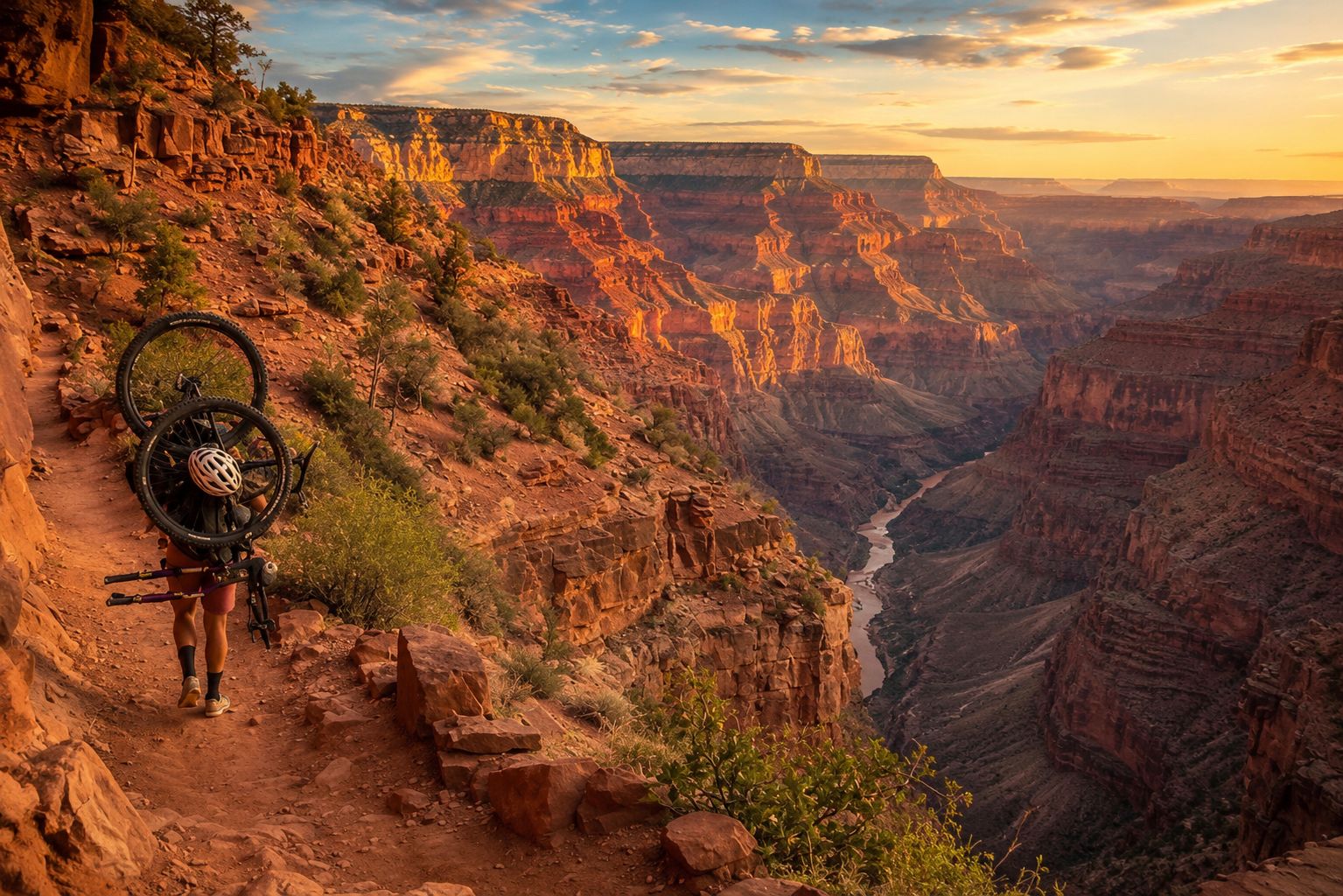
No place illustrates this philosophy better than the crossing of the Grand Canyon.
Riding is prohibited here.
For dozens of kilometres, the bicycle is carried, dismantled, balanced and transported along the trails descending into and climbing out of one of the world's most iconic canyons.
It is not an unexpected obstacle.
It is part of the journey itself.
The Arizona Trail demonstrates that, in some environments, the continuity of the journey depends not on riding continuously, but on the ability of the bike-and-luggage system to adapt constantly to the terrain.
It represents a profound change in perspective.
On the Great Divide, the goal was to keep riding for as long as possible.
On the Colorado Trail, the objective was to preserve mountain-bike handling without sacrificing self-sufficiency.
The Arizona Trail introduced another evolutionary pressure: the bicycle must remain manageable even when it temporarily stops being a means of transport.
The challenge is no longer just weight.
It is bulk, balance and how easily the bike can be lifted, pushed, dragged or carried.
It is one of the routes that most clearly defines what we now call Trail Bikepacking: not simply travelling with a mountain bike, but designing the entire bike-and-luggage system around the certainty that, at regular intervals, it will be the rider carrying the bicycle.
| Iconic route | Evolutionary pressure | Representative solution |
|---|---|---|
| Arizona Trail | Keeping the journey going even through extended hike-a-bike sections | Integrated bike-and-luggage system |
Looking for a bike built for trail bikepacking?
→ Explore our Adventure Touring bikes
→ Or build your own Adventure frameset
Extreme Bikepacking: When the Environment Becomes the Real Challenge
Until now, the terrain has been the main character.
Then a number of routes demonstrated that terrain alone was no longer enough to explain the complexity of the journey.
The true challenge became the environment itself.
A completely different evolutionary pressure emerged.
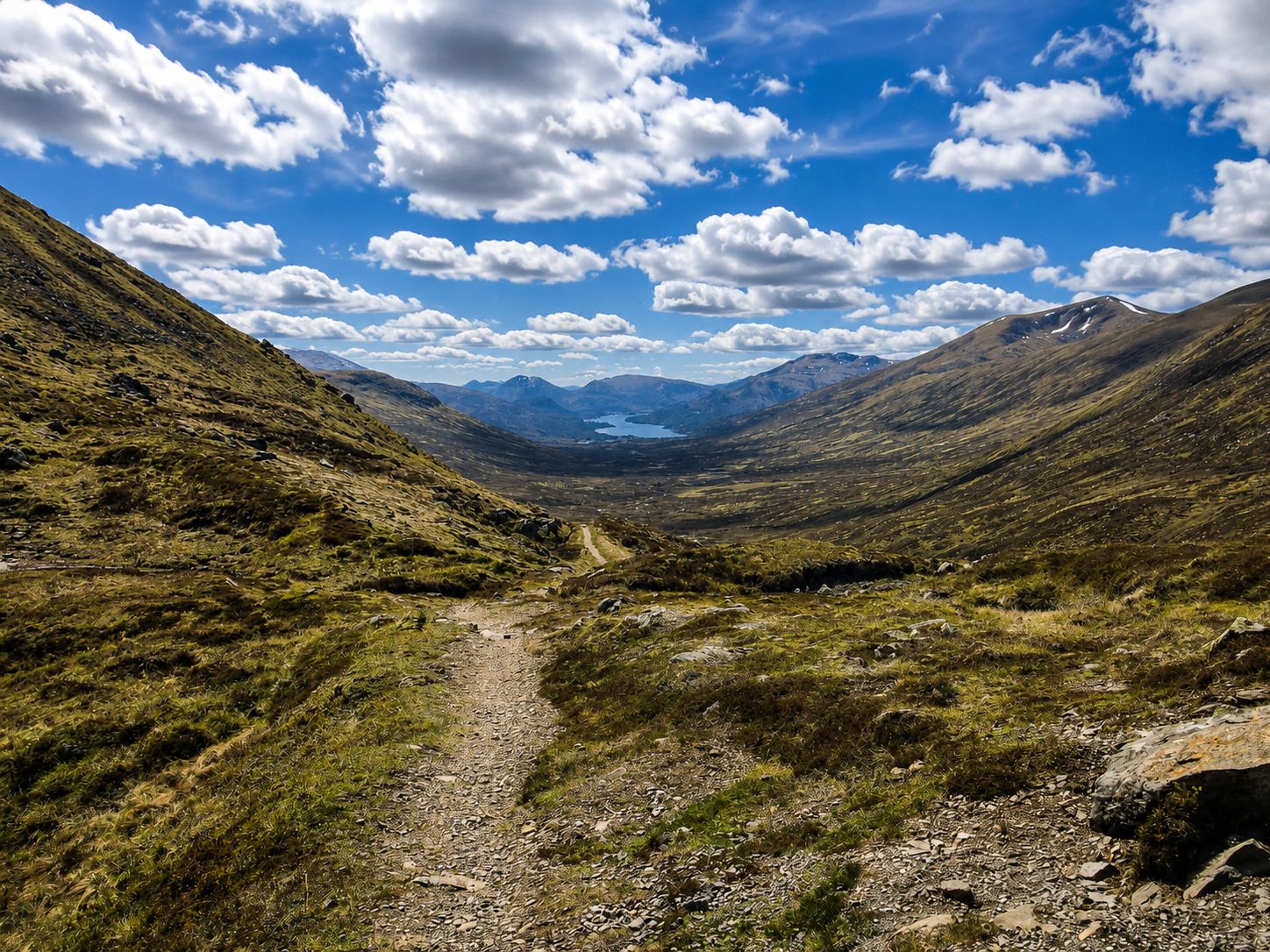
The Highland Trail 550, in the Scottish Highlands, is probably one of the earliest modern examples of this shift.
Spectacular singletrack, open moorland, peat bogs, old military roads, mountain passes, remote glens and endless hike-a-bike sections are combined with one element that no designer can control: the weather.
In Scotland, people often say you can experience all four seasons in a single day.
The Highland Trail seems designed to prove exactly that.
Driving rain, wind, cold, sunshine, fog and waterlogged ground can all arrive within a matter of hours.
Here, the challenge is no longer simply finding a bicycle capable of handling technical trails.
The entire system must be reconsidered.
Clothing.
Waterproofing.
Load distribution.
The ability to dry equipment quickly.
Choosing where to stop for the night.
The famous Scottish bothies—simple shelters scattered across the Highlands—become just as important as the frame or the tyres.
In this environment, details that now seem almost obvious gained enormous importance: dropper seatposts becoming increasingly common in technical bikepacking, ever more stable luggage systems, and solutions such as the Revelate Terrapin or the more recent Spinelock, both developed to keep the rear bag perfectly stable and under control even on long, rough descents.
This is one of the routes that clearly demonstrates that bikepacking is not simply a bicycle fitted with bags.
It is an integrated system designed to adapt continuously to its environment.
| Iconic route | Evolutionary pressure | Representative solution |
|---|---|---|
| Highland Trail 550 | Continually adapting to climate and environment | Stable, waterproof bikepacking luggage systems |
Discover Adventure Touring bikes designed for the world's most demanding routes.
↓
When the Ground Disappears
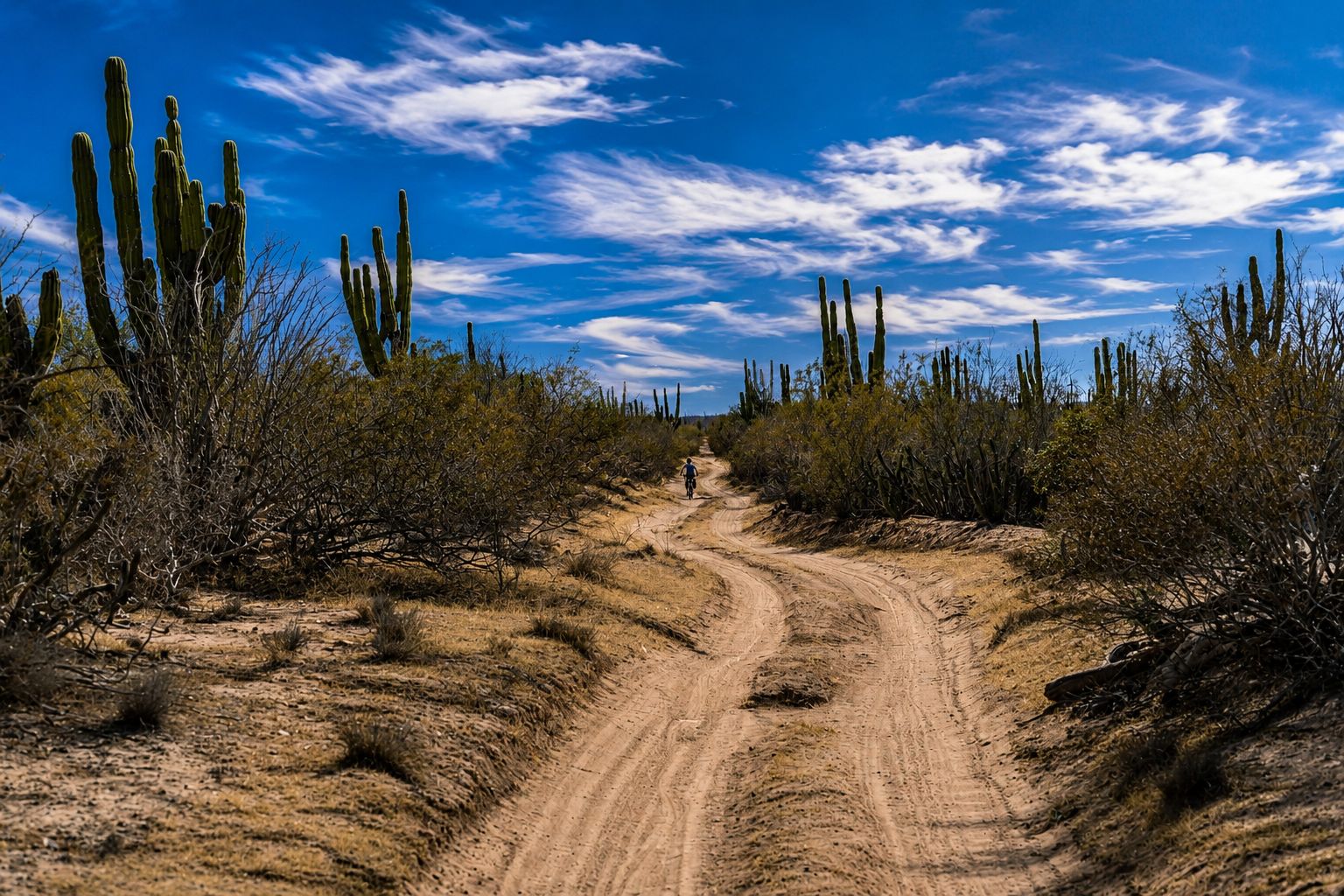
If the Highland Trail makes the weather unpredictable, the Baja Divide challenges an even more fundamental assumption.
That the ground should always be rideable.
More than 2,700 kilometres along the Baja California Peninsula cross deserts, military roads, dry riverbeds, deep sand, endless washboard tracks, giant cacti and some of the most isolated landscapes in North America.
Here, speed loses almost all meaning.
A different question takes its place.
How do you keep moving when the terrain constantly drains your energy?
Sand, rock gardens and relentless rough tracks demand a completely different philosophy from the routes we have explored so far.
Tyres become even larger.
Tyre pressure becomes a design tool.
Water becomes one of the most critical factors in planning the journey.
Food autonomy is measured in days rather than hours.
No entirely new category of bicycle is created.
But a new interpretation of expedition travel certainly is.
The Baja Divide demonstrates that there are environments where comfort, flotation, traction and the ability to carry large water reserves matter far more than absolute efficiency.
Together with other routes featuring soft, sandy or highly deformable terrain, it also contributed to the spread of 29+ setups, proving just how dramatically tyre volume can change the behaviour of a bicycle.
The Surly Krampus probably represents this philosophy better than any other model: a platform created to take full advantage of high-volume tyres whenever flotation matters more than outright speed.
| Iconic route | Evolutionary pressure | Representative solution |
|---|---|---|
| Baja Divide | Flotation, traction and water autonomy | Surly Krampus (29+) |
Interested in this type of platform?
When the Landscape Feels Like Another Planet
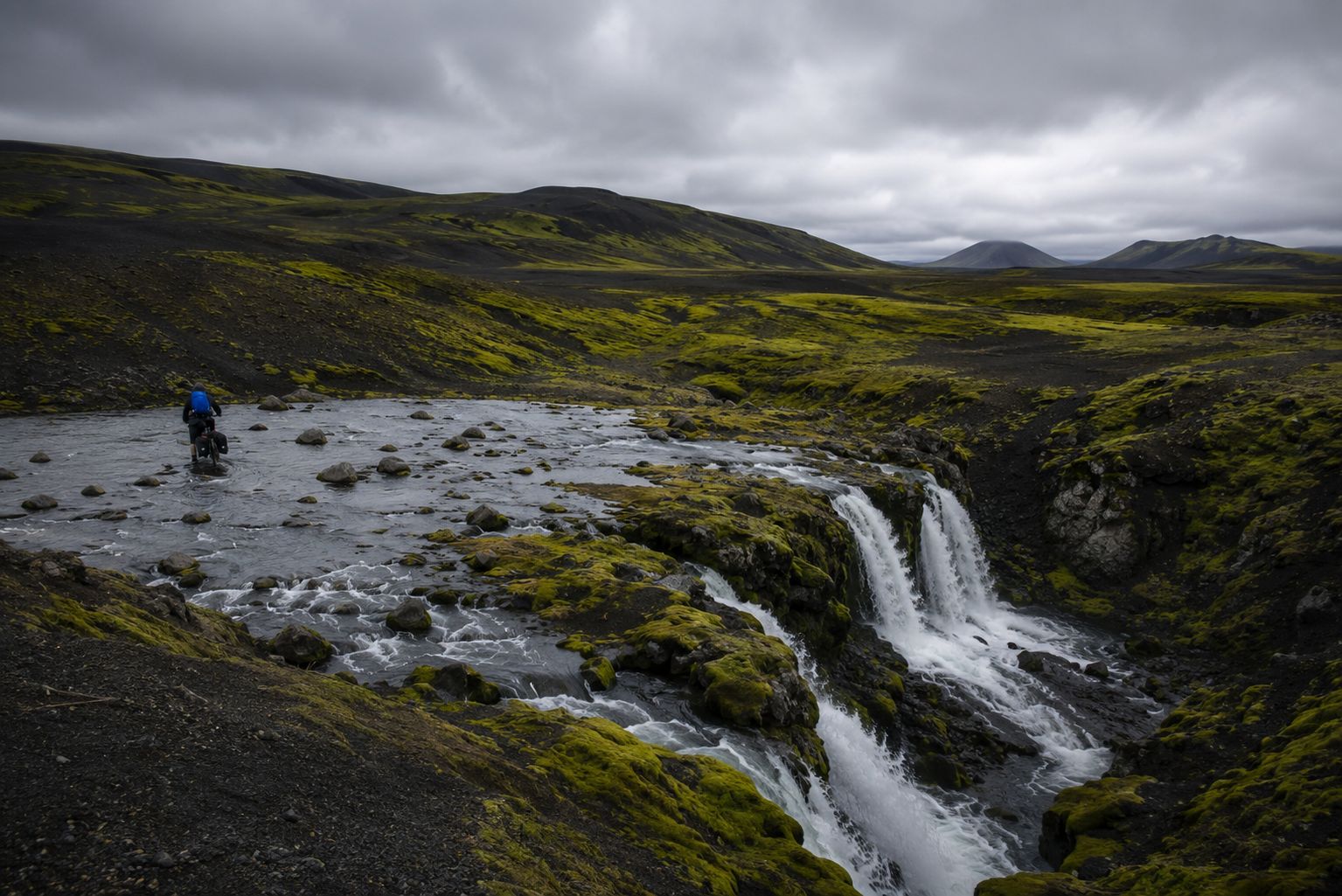
If the Baja Divide takes bicycle travel into the desert, the Iceland Divide changes the scenery completely.
Solidified lava.
Glaciers.
Glacial rivers.
Volcanic sand.
Barren mountains.
For days, you ride through a landscape that seems closer to the Moon than to Earth.
Here, the challenge is no longer the trail.
It is nature itself.
The wind can be strong enough to make progress impossible.
River crossings can change depth within just a few hours.
Tracks may disappear beneath glacial floods.
The Icelandic Highlands are accessible only during a very short summer window and demand planning that is almost alpine in nature.
It is no surprise that many riders have chosen the fat bike as the ideal machine for this route.
Not because of snow, but because of its ability to float over volcanic sand, absorb the harshness of lava fields and tackle countless river crossings with greater confidence.
The Salsa Mukluk, one of the world's most iconic expedition fat bikes, perfectly embodies this philosophy: not a bicycle designed for one particular terrain, but one designed to keep moving when the environment overwhelms everything else.
The Iceland Divide demonstrates better than almost any other route that no bicycle is universally "right".
It is simply more—or less—suited to the problem it is meant to solve.
| Iconic route | Evolutionary pressure | Representative solution |
|---|---|---|
| Iceland Divide | Adapting to extreme environments | Salsa Mukluk |
Looking for a bike built for the world's harshest environments?
↓
↓
When Expedition Takes on a New Meaning
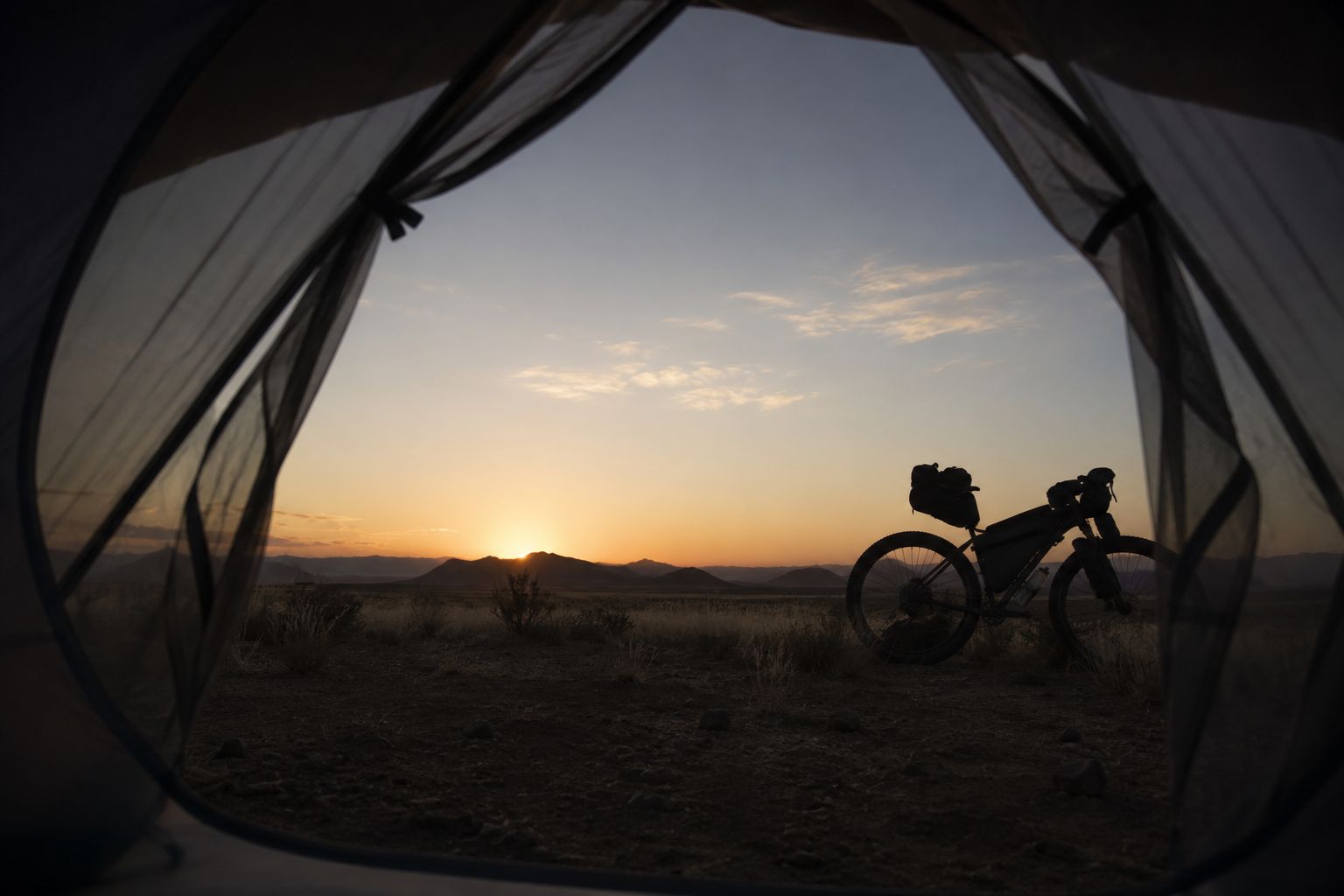
The word expedition often evokes images of deserts, glaciers or distant continents.
In reality, there is no precise point at which a journey becomes an expedition.
What changes is the level of self-sufficiency required.
The more remote the landscape becomes, the simpler, more reliable and easier to repair the bicycle must be.
Major African crossings such as Cape Town–Victoria Falls illustrate this evolution perfectly.
The challenge is not necessarily the terrain.
It is time.
Two months.
Three months.
Four months.
The bicycle is subjected to a level of long-term wear that no short ride could ever replicate.
Every component must withstand dust, heat, vibration, imperfect maintenance and thousands of consecutive kilometres.
On journeys like these, absolute performance matters less than durability.
An expedition bike does not have to be the fastest.
It has to keep working when the journey becomes long enough to wear out everything that is not truly essential.
Platforms such as the Salsa Fargo were born precisely with this philosophy: tackling long off-road expeditions by prioritising self-sufficiency, reliability and the ability to adapt to radically different environments simply by changing the build and luggage setup.
| Iconic route | Evolutionary pressure | Representative solution |
|---|---|---|
| Cape Town–Victoria Falls | Durability, simplicity and self-sufficiency | Salsa Fargo |
Central Asia: The Same Region, Different Bikes
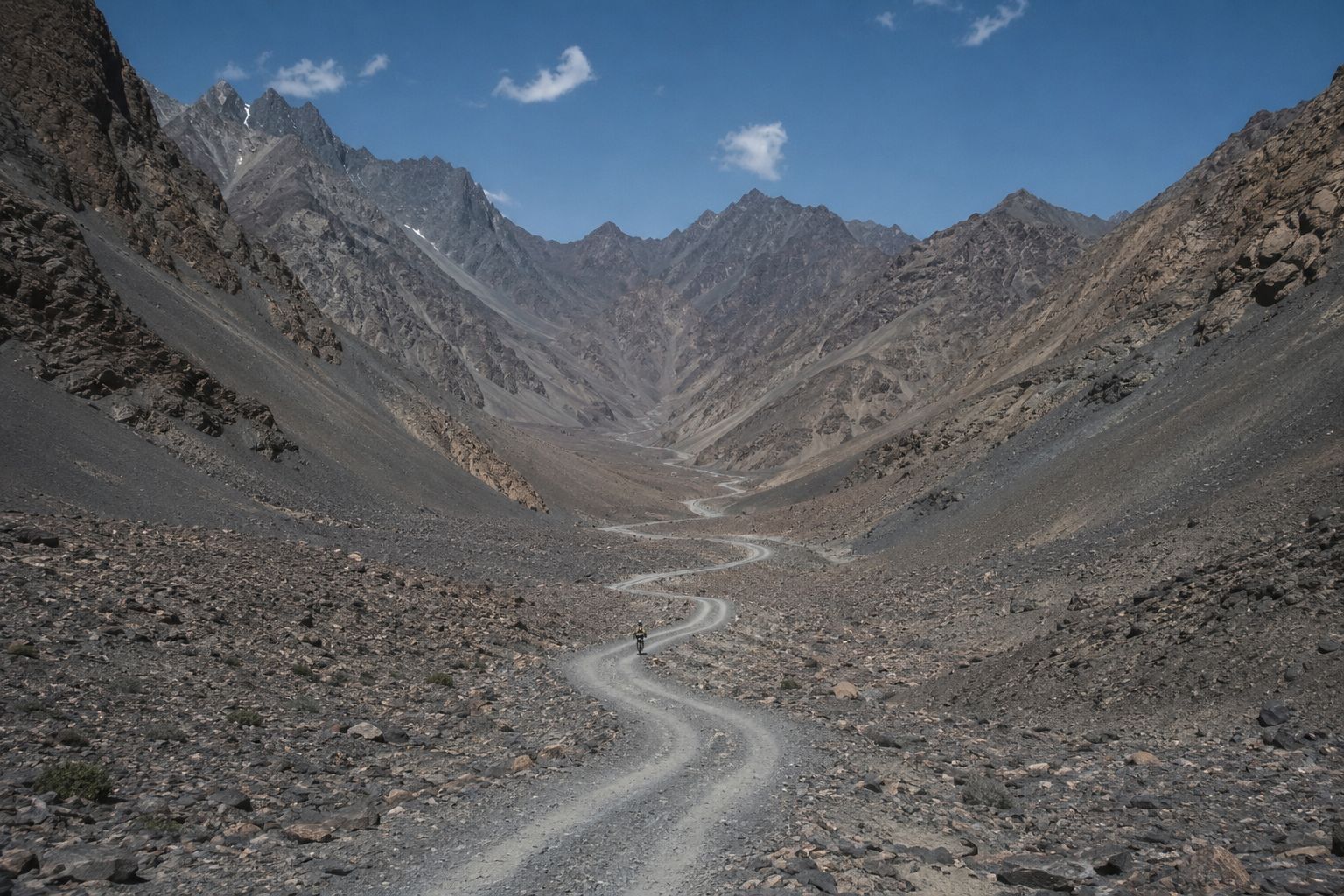
Perhaps more than anywhere else in the world, Central Asia demonstrates that it is the challenge—not the continent—that determines the bicycle.
The Silk Road Mountain Race, the Pamir Highway, the Wakhan Valley and the Bartang Valley often cross the very same mountain ranges.
Yet they demand profoundly different bicycles.
The Silk Road Mountain Race is a race.
The objective is to cover enormous distances in the shortest possible time.
Every gram matters.
Every watt matters.
Every decision that helps maintain a higher average speed matters.
The Pamir Highway tells a completely different story.
Here, the challenge is not speed.
It is isolation.
For days, riders cross plateaus above 4,000 metres with only a handful of villages, relentless winds, huge temperature swings and virtually no access to spare parts.
The Wakhan Valley adds remote dirt roads, river crossings and even more demanding logistics.
The Bartang Valley pushes everything to the limit with broken tracks, landslides, river fords and long sections where adaptability matters far more than speed.
The same region therefore generates completely different technical solutions.
Racing favours lightweight, highly efficient bicycles.
Expeditions demand reliability, mechanical simplicity, very low gearing and greater carrying capacity.
It is one of the clearest demonstrations that bicycle categories are not defined by continents.
They are defined by the problems each journey presents.
| Iconic route | Evolutionary pressure | Representative solution |
|---|---|---|
| Pamir Highway, Wakhan Valley, Bartang Valley | Reliability, self-sufficiency and mechanical simplicity | Salsa Fargo |
| Silk Road Mountain Race | Maximum efficiency in self-supported high-altitude racing | Bombtrack Cale |
The same region can require completely different bicycles.
It is the type of journey—not the destination—that determines the most appropriate platform.
When Altitude Changes the Way You Travel
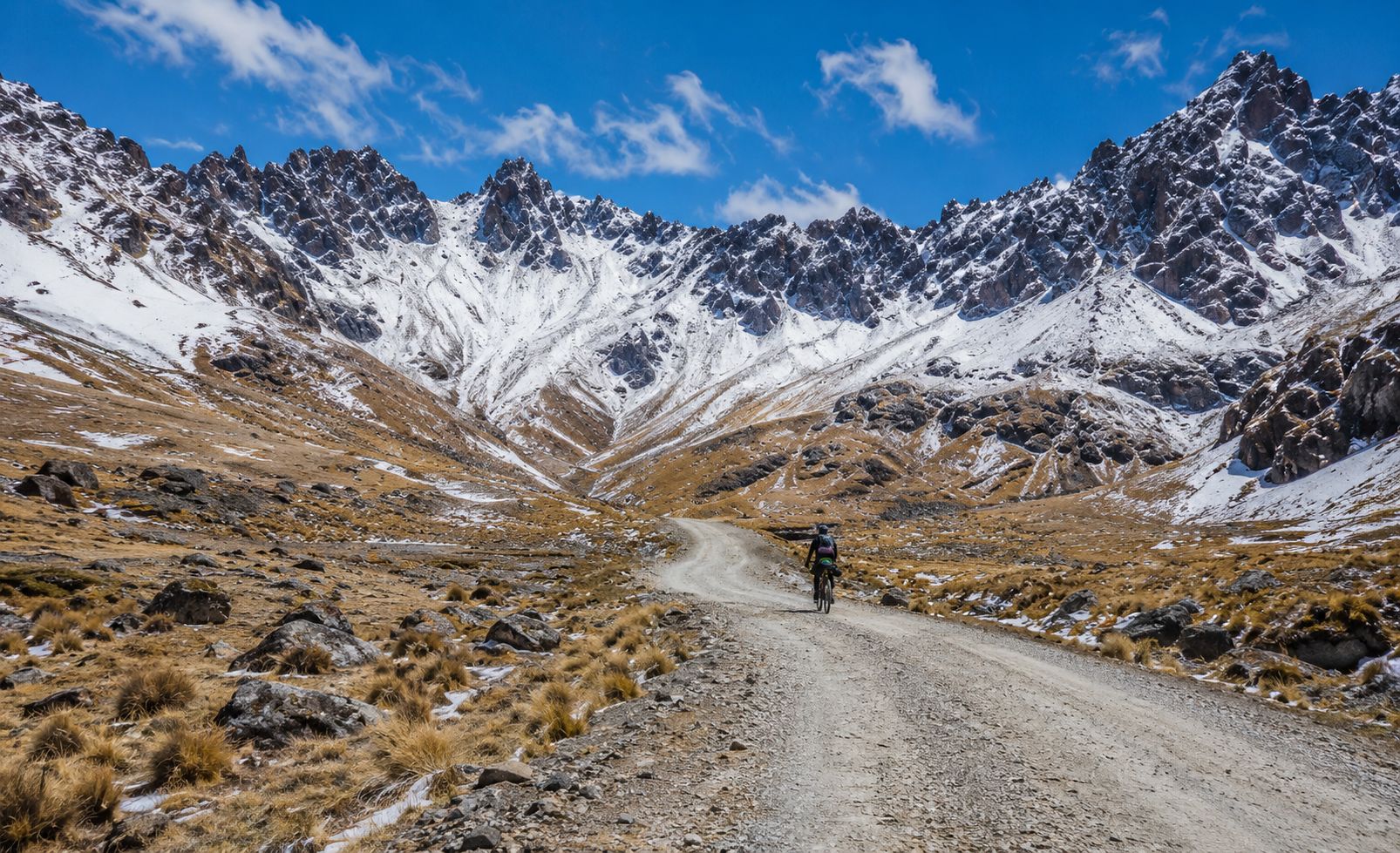
Many great routes cross mountain ranges.
Only a few, however, turn altitude into the primary design challenge.
Above 4,000 metres, everything changes.
Available power decreases.
Recovery slows down.
Nights become extremely cold, even in midsummer.
The distance between resupply points increases.
Mistakes become far more costly.
Routes such as the Pamir Highway, the Silk Road Mountain Race and the Inca Divide demonstrate that high altitude changes more than the physical demands of a journey.
It also changes the way bicycles are designed.
Even lower gearing is required.
A riding position that conserves energy.
Reliable brakes capable of handling prolonged descents.
Strong, dependable wheels.
And weight distribution that keeps the bike predictable, even when fatigue begins to affect handling.
Altitude alone does not create a new bicycle category.
But it has undoubtedly been one of the factors that most refined modern self-supported touring platforms.
As altitude increases, every detail of the bicycle becomes even more important.
Gearing, reliability, load distribution and mechanical simplicity matter far more than saving a few hundred grams.
When the Clock Drives Evolution
Many innovations are not born during journeys.
They are born during races.
Ultra-distance racing has become an extraordinary accelerator of technical evolution.
When the clock becomes part of the challenge, every detail is pushed to its limit.
The Tour Divide proved that a bicycle could cover more than 4,000 kilometres of dirt roads carrying only the bare essentials.
The Silk Road Mountain Race added altitude, isolation and technical difficulty.
The Atlas Mountain Race brought bikepacking into the mountains of Morocco.
The Hellenic Mountain Race pushed hike-a-bike sections even further.
Each race became an enormous open-air laboratory.
Many of the solutions we now take for granted—more stable bikepacking bags, optimised cockpits, stronger wheels, increasingly reliable tubeless tyres, single-chainring drivetrains and integrated dynamo lighting systems—were first tested in competition before being adopted by long-distance travellers.
These races did not create new bicycle categories.
They accelerated the evolution of the ones that already existed.
| Iconic route | Evolutionary pressure | Representative solution |
|---|---|---|
| Silk Road Mountain Race | Maximum efficiency in self-supported high-altitude racing | Bombtrack Cale |
An Evolutionary Map of Touring Bikes
| Evolutionary pressure | Iconic route | Evolutionary category | Representative example |
|---|---|---|---|
| Long-distance road touring with heavy luggage | Via Claudia Augusta, Pacific Coast Highway, EuroVelo network | Road Touring | Surly Disc Trucker |
| Travelling light without giving up a sporty ride across mixed terrain | Unbound Gravel, The Traka, SBT GRVL, Dirty Reiver | Gravel / All-Road | Salsa Warbird, now evolved into the Salsa Flyway |
| Covering thousands of kilometres of dirt roads while maintaining efficiency | Great Divide MTB Route | Dirt Road Touring | Salsa Cutthroat |
| Tackling technical trails while remaining self-sufficient | Colorado Trail | Adventure Off-Road | Surly Karate Monkey |
| Keeping the journey going through extended hike-a-bike sections | Arizona Trail | Trail Bikepacking | Integrated bike-and-luggage system |
| Continually adapting to climate and environment | Highland Trail 550 | Technical Bikepacking | Stable, waterproof bikepacking luggage systems |
| Crossing sand, deserts and highly deformable terrain | Baja Divide | Adventure / Expedition | Surly Krampus (29+) |
| Travelling through extreme environments | Iceland Divide | Expedition | Salsa Mukluk |
| Travelling for weeks or months through remote regions | Pamir Highway, Wakhan Valley, Bartang Valley, Cape Town–Victoria Falls | Expedition | Salsa Fargo |
| Maximum efficiency in self-supported high-altitude racing | Silk Road Mountain Race | Ultra-Distance Bikepacking | Bombtrack Cale |
Every Bike Is Born to Solve a Problem
Today, we naturally divide touring bikes into categories.
Road Touring.
Gravel.
Dirt Road Touring.
Adventure.
Expedition.
Ultra-Distance.
Yet none of these categories was invented by a marketing department.
Each one is the answer to a problem encountered somewhere along a route.
Every iconic journey left a legacy.
Every expedition contributed a solution.
Every race accelerated an evolution that had already begun.
Which is why the most important question is not:
"Which is the best touring bike?"
But rather:
"What problem does my bike need to solve?"
That is where every true touring bicycle begins.
Tell Us About the Journey You're Planning
Every route requires different compromises.
We'll help you choose the platform, frameset and build that truly match the experience you want, avoiding costly mistakes and unsuitable purchases.
FAQ
Which routes have had the greatest influence on the evolution of touring bikes?
No single route has changed the way touring bikes are designed. Road Touring evolved along Europe's and North America's great paved routes, the Great Divide shaped the development of Dirt Road Touring, the Colorado Trail and Arizona Trail helped define modern trail bikepacking, while the Baja Divide, Highland Trail 550, Pamir Highway and Silk Road Mountain Race pushed designers and riders to develop new solutions for extreme environments.
What is the difference between the Great Divide and the Tour Divide?
The Great Divide Mountain Bike Route is a permanent route of more than 4,000 kilometres running through the Rocky Mountains from Canada to Mexico.
The Tour Divide is a self-supported race that follows almost exactly the same route.
The route created the technical challenge; the race accelerated its evolution.
Why is the Salsa Cutthroat considered such an iconic bike?
The Salsa Cutthroat was one of the first frames designed specifically for the Tour Divide, combining speed, efficiency, comfort and load-carrying capability across the endless dirt roads of the Great Divide. It has become one of the benchmarks for modern Dirt Road Touring.
Why are bikepacking bags preferred over panniers on the Colorado Trail?
On the Colorado Trail, the challenge is not simply carrying luggage but maintaining precise handling through technical terrain and long hike-a-bike sections.
Bikepacking bags keep the weight close to the bicycle's centre of gravity, improving balance, control and handling compared with traditional pannier systems.
Why is the Arizona Trail considered one of the defining routes for trail bikepacking?
Because it proves that travelling does not necessarily mean riding all the time.
Crossing the Grand Canyon requires riders to carry their bicycles for long distances, making the bike-and-luggage system an essential part of the overall journey.
Why are very wide tyres used on the Baja Divide?
Deep sand, endless washboard and highly deformable terrain require greater flotation and traction.
High-volume tyres allow lower tyre pressures, improving comfort, control and efficiency in desert environments.
Are fat bikes only useful on snow?
No.
Routes such as the Iceland Divide demonstrate that fat bikes can also be extremely effective on volcanic sand, lava fields, rough tracks and river crossings, where their large-volume tyres provide superior flotation and stability.
What is the difference between an Adventure Bike and an Expedition Bike?
An Adventure Bike prioritises agility, technical trail handling and self-sufficiency on demanding terrain.
An Expedition Bike places greater emphasis on reliability, carrying capacity, mechanical simplicity and long-term durability for remote, extended journeys.
Is there one bicycle that is suitable for every great route?
There is no perfect bicycle for every route.
There are, however, highly versatile platforms that can adapt to very different uses by changing tyres, gearing, setup and luggage.
The right choice always depends on the problem the journey presents.
Why does Central Asia require different bicycles depending on the route?
The Pamir Highway, Wakhan Valley and Bartang Valley all cross the same region, yet present very different challenges.
The terrain, remoteness, resupply opportunities and technical difficulty all change.
As a result, the most effective bicycle designs change as well.
Why do the Silk Road Mountain Race and the Pamir Highway require different bikes?
Although both share the same high-altitude environment, the Silk Road Mountain Race is a competition where weight, speed and efficiency take priority.
The Pamir Highway is generally ridden as a multi-week expedition, where reliability, self-sufficiency and carrying capacity become far more important.
Why did Sofiane Sehili choose a Bombtrack Cale to win the Silk Road Mountain Race?
The rigid-fork Bombtrack Cale reflects a philosophy centred on mechanical simplicity, low weight, reliability and carrying capacity.
In the Silk Road Mountain Race, every component must minimise the risk of failure while maintaining maximum efficiency across thousands of kilometres of high-altitude dirt roads.
Have races really changed touring bikes?
Yes—but not in the way many people imagine.
Most innovations originate during real journeys.
Races accelerate that process by turning years of individual experimentation into thousands of real-world tests concentrated over just a few days.
What is the difference between Gravel, Dirt Road Touring and Trail Bikepacking?
Modern gravel bikes prioritise speed and efficiency across mixed terrain.
Dirt Road Touring focuses on covering extremely long distances on continuous dirt roads while maintaining a high degree of self-sufficiency.
Trail Bikepacking develops on technical singletrack, where bike handling and hike-a-bike become an integral part of the journey.
How do I choose the right bicycle for a major route?
The decision should always begin with the characteristics of the route itself.
Terrain, duration, remoteness, resupply opportunities, climate, altitude and luggage requirements all matter far more than the commercial category assigned to the bicycle.
Did bikepacking come before bikepacking bikes?
Yes. Bikepacking as a way of travelling existed long before bicycles were specifically designed for it.
Routes such as the Colorado Trail, Arizona Trail and Great Divide exposed the limitations of existing bicycles, encouraging riders and manufacturers to develop entirely new solutions.
Are categories such as Gravel, Adventure and Expedition just marketing inventions?
No. The commercial names came afterwards.
The different families of touring bikes were created to solve real problems encountered on major routes: carrying heavy loads on paved roads, riding endless dirt roads, tackling technical trails, surviving extreme environments, crossing high mountains or completing long self-supported expeditions.
Why Doesn't the Perfect Touring Bike Exist?
Because there is no such thing as the perfect journey.
Every route presents different challenges: some require carrying heavy luggage for weeks on paved roads, others demand thousands of kilometres of dirt roads, technical singletrack with extended hike-a-bike sections, or remote deserts, high plateaus and mountain ranges where reliability and self-sufficiency become the highest priorities.
Modern touring bikes were born as answers to these very different challenges. A bicycle designed for the Tour Divide will not necessarily be the best choice for an expedition across Central Asia, just as a platform developed for the Baja Divide will never be the most efficient option for a long road tour.
The right question, therefore, is not "Which is the best touring bike?", but "What problem does my bicycle need to solve?".
That is where every good decision should begin.
👉 Learn more: How to Choose the Right Touring Bike for Your Route.