
- Which bike to choose for mixed routes and fast, non-technical dirt
- Gravel and All-Road: efficiency on variable surfaces
- Dirt-Road Touring: when dirt becomes the dominant surface
- Drivetrain and continuity of stress
- Tyres: the real balance point
- Where this family sits compared to the others
- Decision framework
- In summary
Which bike to choose for mixed routes and fast, non-technical dirt
There is a wide middle ground between pure tarmac and technical off-road. This is the territory of firm compact dirt roads, rough or broken asphalt, fast forest roads, and mixed connections that alternate hard surfaces with non-technical dirt.
A real-world example of riding on mixed terrain, with long white roads, steep climbs and sections that can deteriorate quickly, is the Tuscany Trail, where the choice between a gravel bike and a hardtail depends largely on the worst-case conditions of the terrain.
You do not need an extreme platform here.
You need a bike that is coherent with medium but continuous stress: a true mixed-surface bike that stays efficient without becoming nervous when the surface changes.
Gravel, All-Road and Dirt-Road Touring belong to this family. The difference is not the commercial label, but the intensity of the surface and the continuity of the load.
Gravel and All-Road: efficiency on variable surfaces
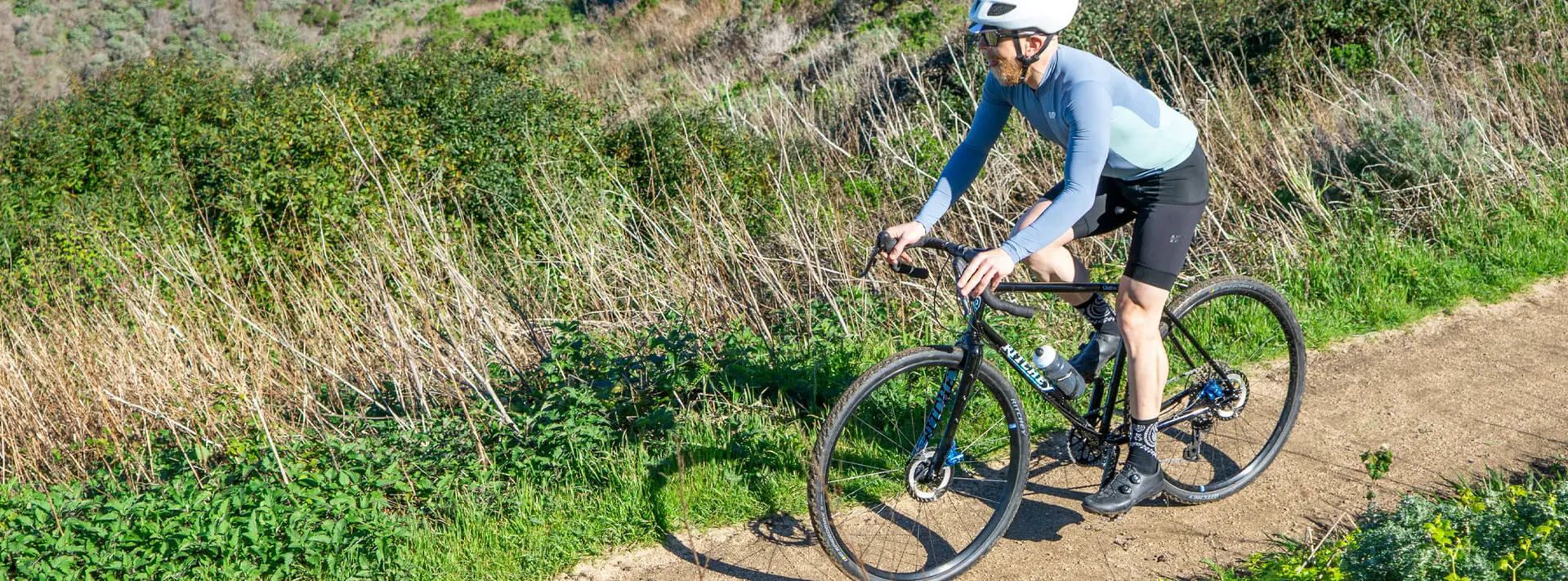
When the terrain is mostly fast and readable — broken tarmac, compact white roads, hardpacked dirt — rolling efficiency remains the priority.
A well-designed gravel platform allows you to:
- hold steady speed on tarmac
- absorb light vibration on dirt
- run generously sized tyres without losing precision
This is where bikes in the Gravel & All-Road category work best, built to balance stability and dynamic efficiency.
They are not technical trail bikes.
They are not expedition heavy-duty platforms.
They are designed for mixed routes where the surface changes but remains readable.
If you are starting from a frameset, the same logic applies to Gravel & All-Road frames, with balanced geometry, real tyre clearance and modern compatibility.
Dirt-Road Touring: when dirt becomes the dominant surface
The context changes when dirt is no longer an occasional section, but the prevailing surface.
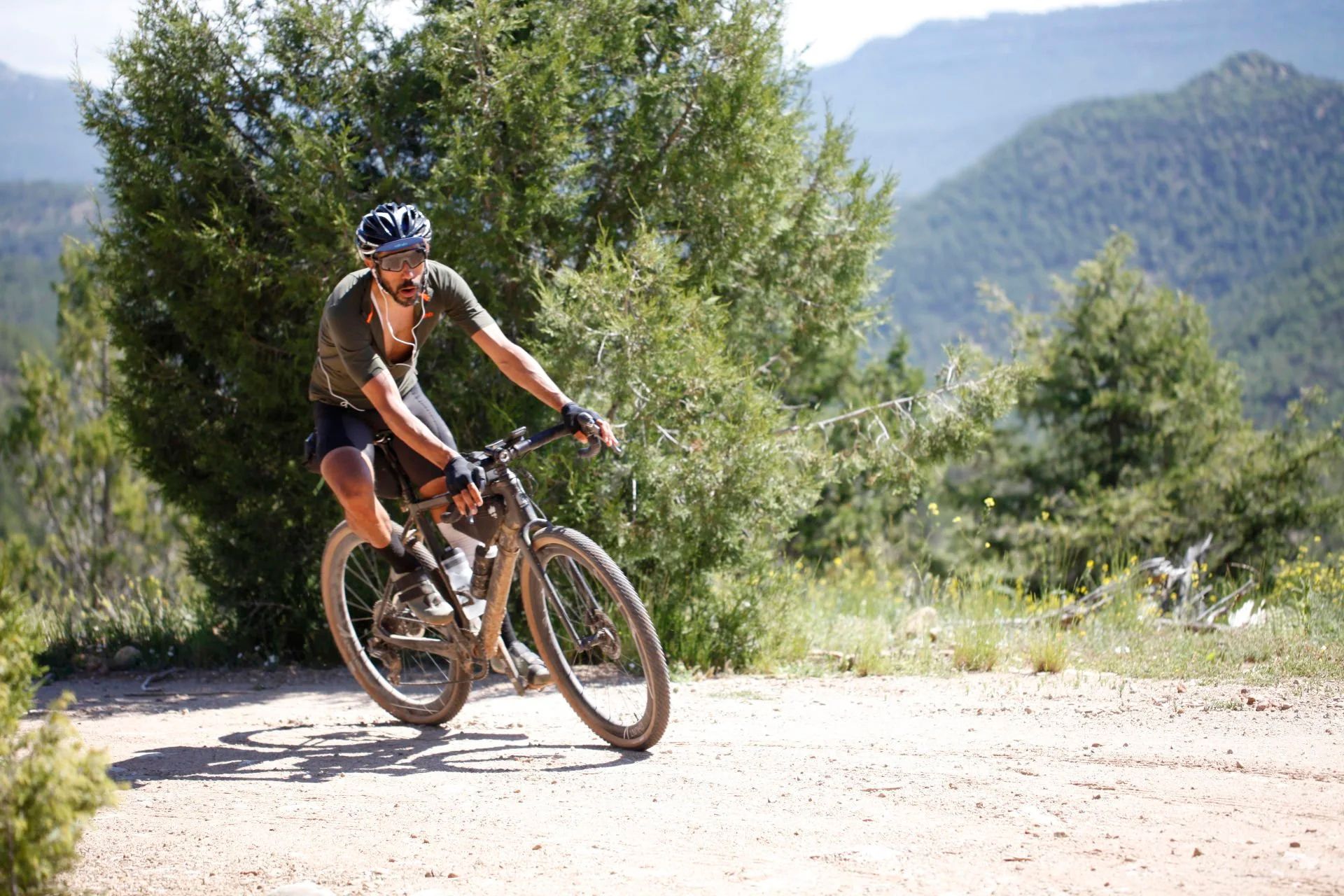
Deteriorated dirt roads, long forest roads, firm but continuous roughness. It is not technical singletrack, but it is not simply fast gravel either.
In this scenario, more stable platforms come into play, often described as monstercross or “evolved touring”: bikes with generous tyre volume, balanced setup, and real modular load capability.
The point is not to “go anywhere”.
It is to remain coherent when dirt stretches on for hours.
The difference compared to pure Adventure is not the type of dirt, but its severity and the need for continuous structural load. In Dirt-Road Touring the surface can be rough and persistent, but it does not require the same management of remote, continuous mechanical stress typical of Off-Road & Adventure.
Drivetrain and continuity of stress
On mixed routes, gearing is not a secondary choice. Changes in surface, gradient and traction require a wide progression and smooth control of development.
A drivetrain too focused on pure speed becomes limiting when dirt slows progress. By contrast, a coherent range lets you keep cadence and control even on variable surfaces.
To go deeper into the technical logic behind gearing choices, see the Drivetrain Guide.
Tyres: the real balance point
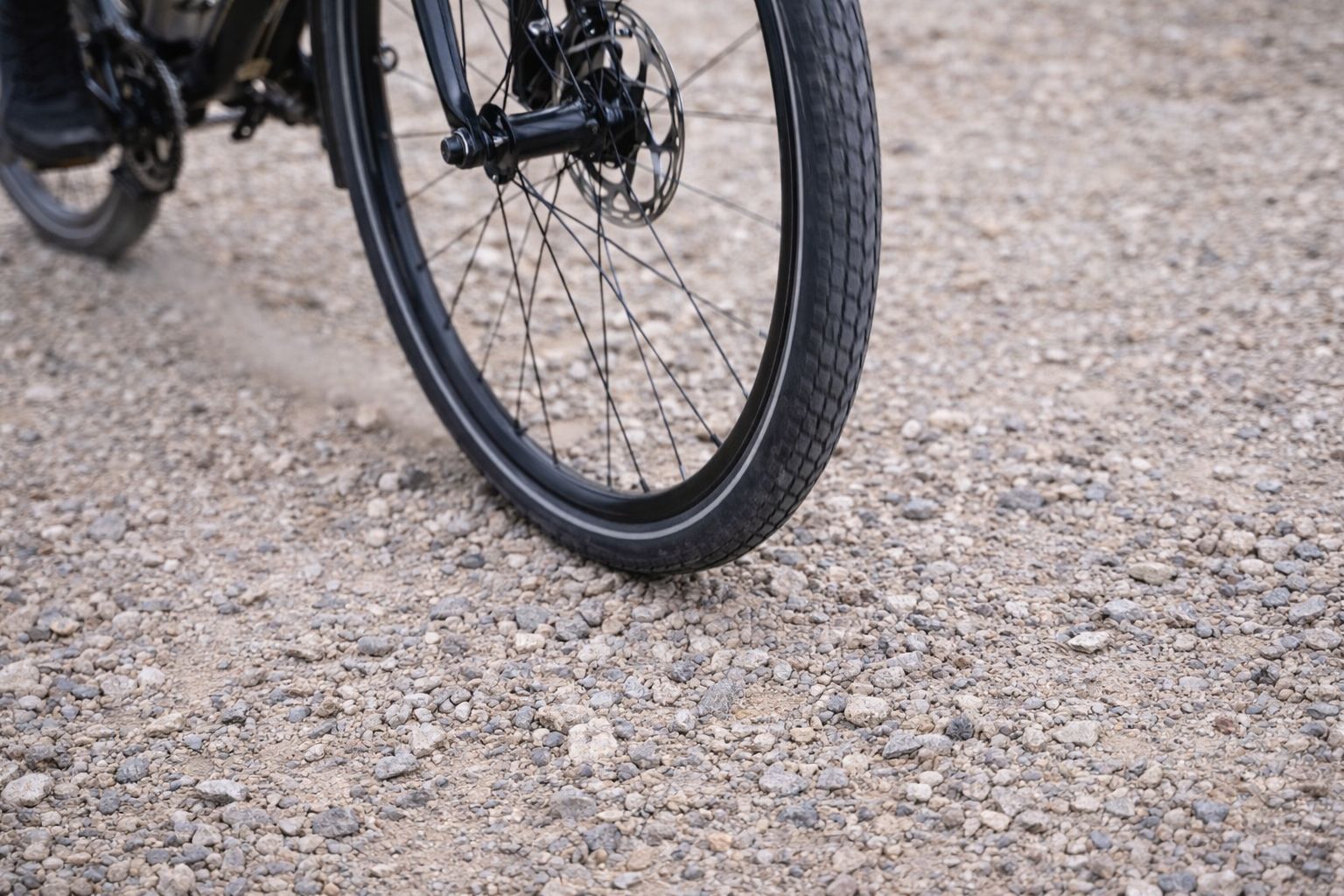
In this family of routes, tyres are the key element. Not to survive extreme technical moves, but to manage continuous vibration and dynamic comfort.
Appropriate width, correct pressure, and real frame clearance make the difference between a bike that “rolls” and one that becomes fatiguing.
To understand how pressure and volume affect comfort and control, read Tyres and comfort — Guide.
Where this family sits compared to the others
Gravel, All-Road and Dirt-Road Touring are not:
- technical off-road with singletrack
- remote expedition riding with structural load
- classic touring that is predominantly on paved roads
They are the balance point for riders who pedal on mixed surfaces continuously, with light or modular load and medium to long distances.
Coherent management of modular load directly affects the overall stability of the platform (see Load distribution — Guide).
If you want a structural comparison between categories, the complete distinction is in Adventure, Gravel or Touring?.
Decision framework
Broken tarmac + compact dirt roads
→ Gravel / All-Road
Predominantly non-technical dirt, long forest roads, modular load
→ Dirt-Road Touring
Technical, remote dirt or continuous structural load
→ Off-Road & Adventure
The distinction does not depend on the bike’s commercial label, but on surface intensity and the amount of stress the platform must manage over time.
In summary
Gravel, All-Road & Dirt-Road Touring means dealing with:
- mixed and variable surfaces
- moderate but continuous vibration
- light or modular load
- medium to long distances
The right platform is not the most extreme.
It is the one that stays efficient when the surface changes, without becoming unstable or fatiguing over the long term.