
- Low-Riders, Cargo Cages and Structural Limits of the Fork
- When Front Load Truly Makes Sense
- When Fork Load Becomes a Problem
- Low-Riders and Cargo Cages: Two Different Logics
- Not All Forks Are Equal
- Common Mistakes When Loading the Fork
- The Real Limit Is Not Weight, but Coherence
- In Summary
- FAQ – Loading the Fork on a Touring Bike
Low-Riders, Cargo Cages and Structural Limits of the Fork
Loading the fork is one of the most delicate — and most misunderstood — aspects of bicycle travel.
It is often associated with the idea of “expedition” or total self-sufficiency, but from a technical standpoint it is neither mandatory nor always advantageous.
Adding load to the fork directly changes how the bike behaves.
For this reason, it should not be considered a simple accessory, but a structural decision that must be coherent with the frame, geometry, type of journey and duration of stress.
To understand when front load is truly coherent with real-world touring, it is useful to start from Touring bike – Complete guide to choosing the right one.
When Front Load Truly Makes Sense
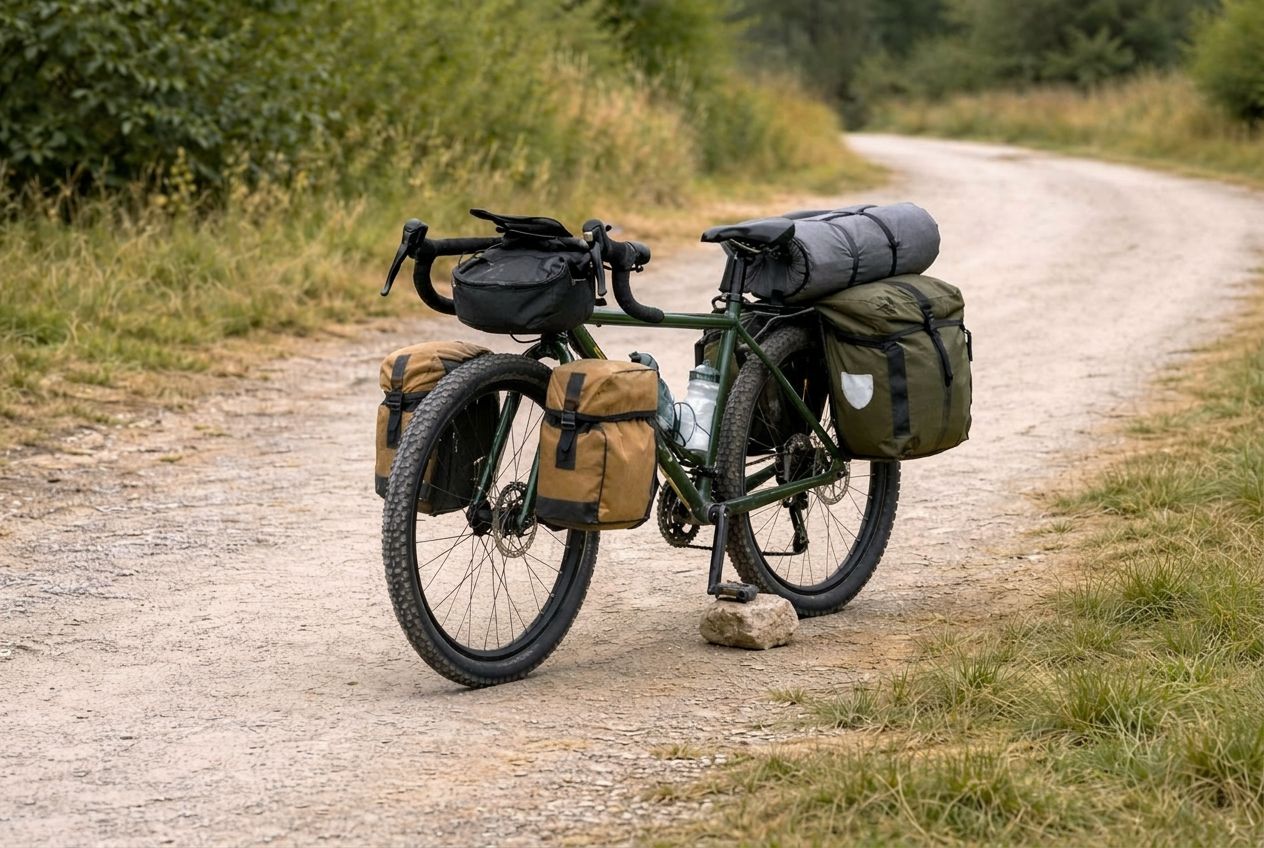
Front load is functional when total weight is continuous and predictable, and when the bike is designed to work stably under load.
In classic asphalt touring and long-duration adventure travel, distributing part of the weight at the front:
-
lowers the overall centre of gravity
-
stabilises directional control
-
reduces concentrated stress on the rear triangle
-
makes handling more predictable over time
The full logic behind balancing front and rear load is explained in Load distribution — Guide.
In these contexts, traditional low-rider racks or structured front panniers are not about “carrying more,” but about carrying better.
It is no coincidence that many travel-oriented platforms — such as those developed by Salsa, Surly and Bombtrack — integrate forks designed to handle continuous front loads without compromising ride quality.
When Fork Load Becomes a Problem
Loading the fork is not always a good idea.
It becomes counterproductive when used to compensate for an incoherent setup or to pursue an “adventure” aesthetic that does not reflect real use.
In light bikepacking or hybrid travel:
-
the load is variable
-
the bike is often ridden unloaded
-
responsiveness and manoeuvrability matter more than absolute stability
In these cases, adding weight at the front can:
-
unnecessarily burden the steering
-
make the bike slower to manoeuvre
-
increase arm and shoulder fatigue
Front load is not a universal solution.
It is a targeted choice that works only in specific scenarios.
Low-Riders and Cargo Cages: Two Different Logics
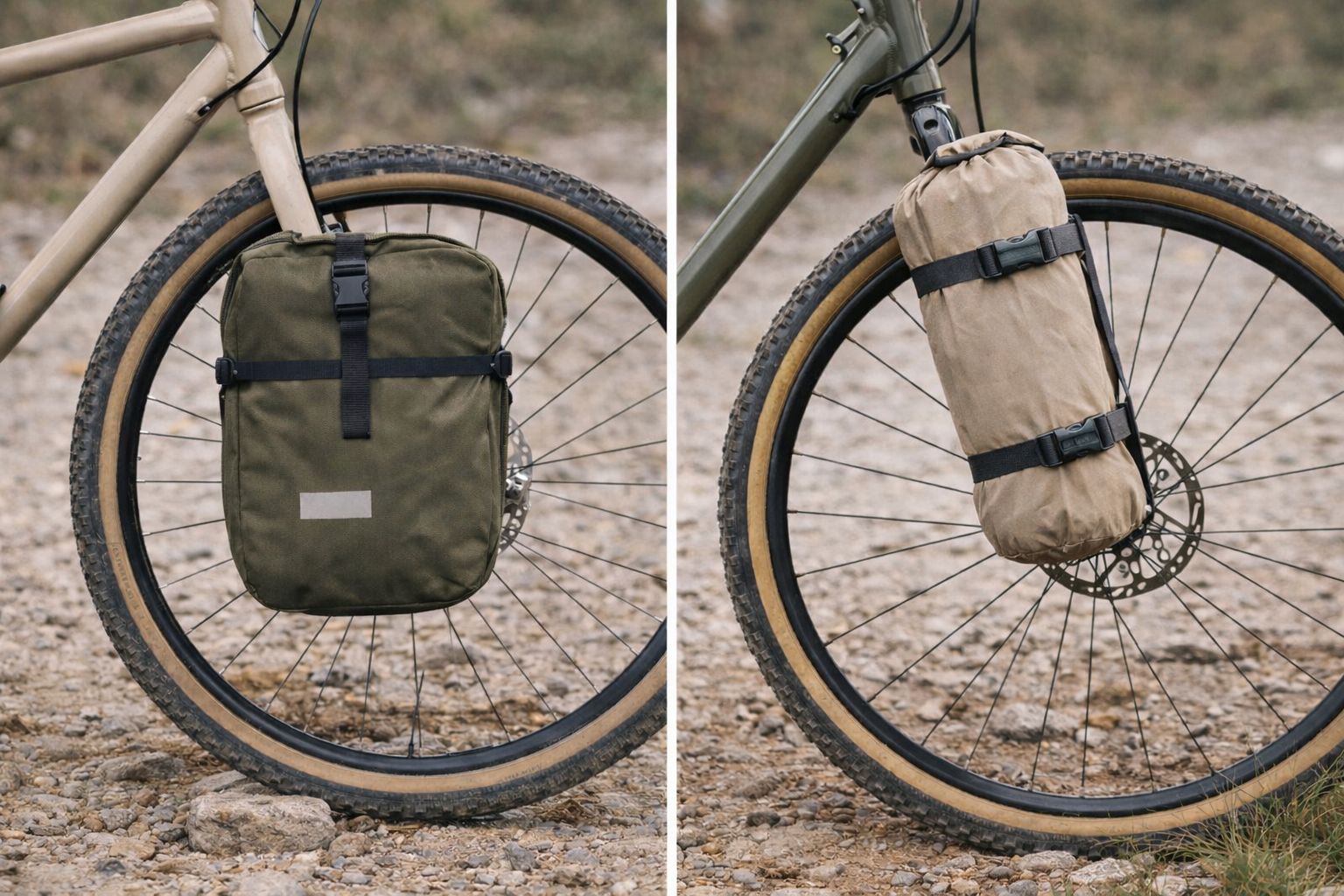
Low-riders and cargo cages are often confused, but they follow different technical principles.
The traditional low-rider rack is designed to work with structured panniers, keeping the weight low and close to the wheel axle. It is intended for continuous, stable and repeatable loads. It performs best when paired with a rigid fork designed for this stress and a touring-oriented geometry.
Fork-mounted cargo cages serve a different purpose: adding modular load in adventure or bikepacking contexts, often using lightweight cylindrical bags. Here, the limitation is not volume itself, but the mechanical leverage that the weight applies to the fork.
In both cases, the critical point is not “how much can I carry,” but how that weight influences handling over time.
Not All Forks Are Equal
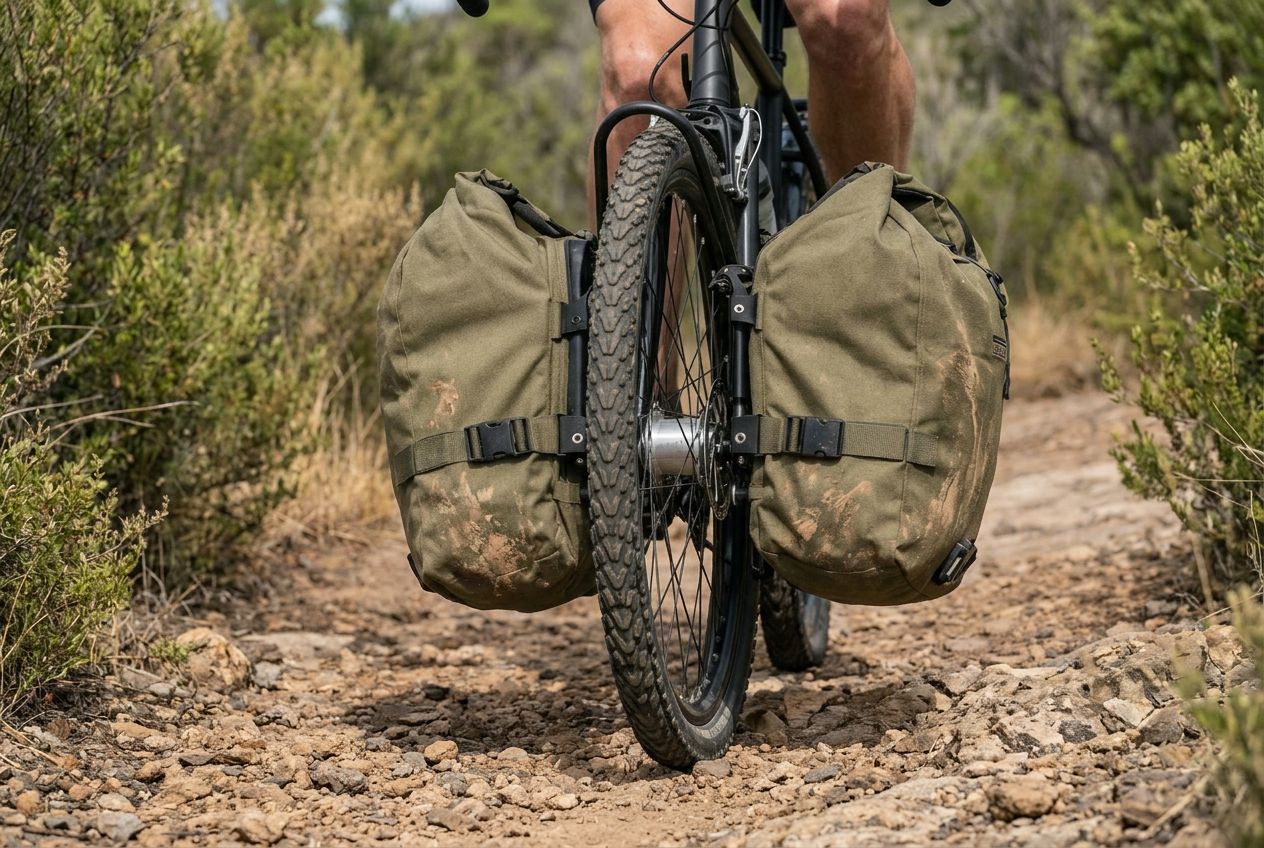
One of the most common mistakes is assuming that mounting points automatically mean the fork can safely carry load. How the fork reacts to added weight depends directly on the bike’s overall geometry, a core topic in Travel bike geometry — Guide.
Not all forks with mounting points are designed to handle load in the same way. Travel, expedition, gravel and trail adventure forks follow different technical approaches depending on geometry, intended use and stress over time. If you’d like to explore the differences, compatibility and real-world use cases, see also Travel & Expedition Rigid Forks and Trail Adventure & Off-Road Forks.
A fork designed for load:
-
has adequate structural strength
-
distributes stress along the blade
-
maintains torsional coherence under strain
A fork designed for sport use, even if fitted with mounts, may:
-
flex unpredictably
-
reduce steering precision
-
accumulate structural stress over time
This is especially true for lightweight forks not intended for continuous loads. Front weight amplifies every design limitation.
Common Mistakes When Loading the Fork
Many problems arise not from the load itself, but from how it is interpreted.
A common mistake is adding front load to “balance” a bike already overloaded at the rear, without considering whether the frame and geometry can work properly in that configuration.
Another mistake is using front load for short or variable trips, where it adds complexity without real benefit.
Finally, riders often underestimate cumulative effects: a fork may feel stable in the first days, but become fatiguing after hundreds of consecutive kilometres.
The Real Limit Is Not Weight, but Coherence
On a journey, the fork does not simply “carry weight.”
It works under stress.
The real limit is not a number stated by the manufacturer, but the ability of the bike system to remain:
-
stable
-
predictable
-
readable
-
minimally fatiguing
Loading the fork only makes sense when it contributes to this overall balance.
In Summary
Fork load:
-
is useful when load is continuous and the design supports it
-
is unnecessary or harmful when driven by fashion or compensation
-
requires forks engineered to work under sustained stress
-
profoundly changes real-world handling
In touring, what matters is not how many bags you can mount,
but how long the bike continues to function well.
Not sure which bike rack to choose? Read the guide →
FAQ – Loading the Fork on a Touring Bike
Does it always make sense to load the fork?
No. It makes sense when the load is continuous and predictable, and when the bike is designed to work stably with front weight.
What is the difference between a low-rider and a cargo cage?
A low-rider is designed for structured panniers and continuous loads. Cargo cages are intended for lighter, modular loads typical of adventure or bikepacking trips.
Can all forks be loaded?
No. The presence of mounting points does not guarantee that the fork is designed to handle continuous loads without compromising handling.
Does front load always improve stability?
Only if integrated into a coherent design. On bikes not intended for front load, it can make steering heavy and fatiguing.
How much weight can I load on the fork?
There is no universal value. Distribution, mechanical leverage and stress continuity matter more than a declared number.
Is it useful in light bikepacking?
Usually not. In variable-load bikepacking, front weight often adds complexity without proportional benefit.
Does loading the fork reduce rear stress?
Yes, if done correctly. A more balanced distribution can improve stability and reduce concentrated stress on the rear triangle.
How can I tell if front load is excessive?
If the bike becomes slow to manoeuvre, strains your arms and shoulders or loses steering precision, front load is likely excessive or poorly distributed.
Is a suspension fork compatible with load?
Generally no for continuous loads. Suspension forks are not designed to work stably with sustained additional weight.