
- Which bike for technical and remote off-road
- When the terrain is technical: control and line clarity
- When technical becomes remote: stability under load
- The role of front load off-road
- Weight distribution on rough ground
- Loose surfaces and continuous vibration
- What is not included in this family
- Decision framework
- In summary
Which bike for technical and remote off-road
Not all dirt is the same.
There is a substantial difference between a fast, smooth gravel road and a technical track that stays irregular for hours; between firm hardpack and a continuous sequence of rock, sand, washboard and elevation changes that put sustained stress on the frame, wheels, and rider.
This section does not compare commercial categories.
It analyses a specific family of routes: technical and remote off-road, where control, stability and structural consistency become decisive criteria.
This is not about “adapting” a bike.
Choosing a bike for technical and remote off-road means selecting a platform that keeps working when the surface deteriorates and stress repeats day after day.
When the terrain is technical: control and line clarity
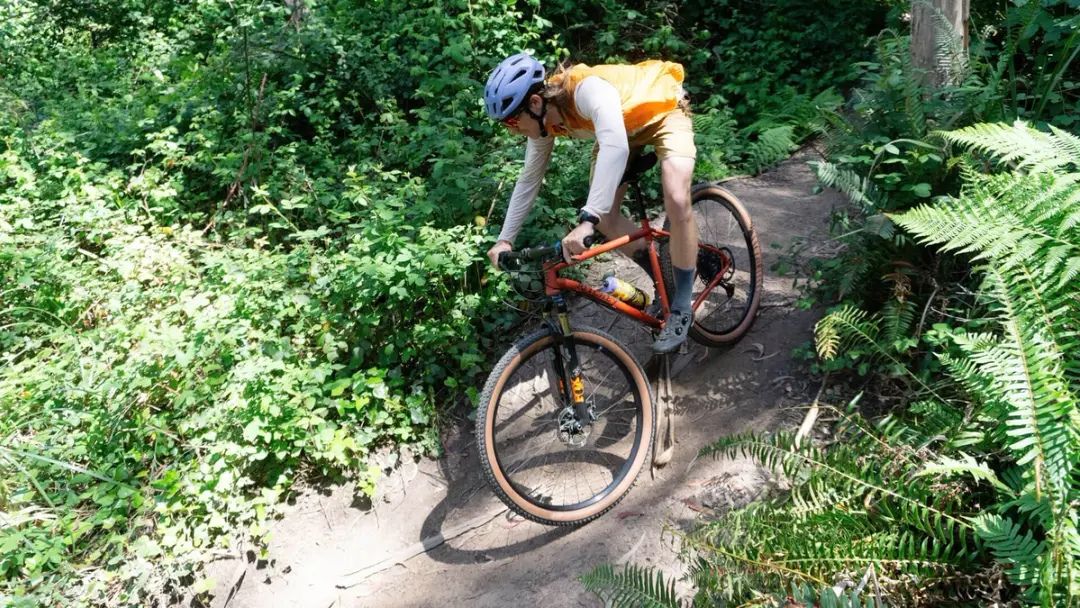
Rocky singletrack, rooty trails, rock gardens, mandatory lines on descents.
In these contexts the priority is not carrying capacity, but dynamic precision.
A platform that is too long, or primarily designed for structural load, can feel less responsive in slow manoeuvres and tight technical sections. By contrast, a base built for control on irregular ground keeps the line readable even at low speed, where a line-choice mistake has immediate consequences.
This is where Hardtail frames make sense: designed for continuous, technical off-road, with modern geometry, compatibility with appropriate suspension forks, and real tyre clearance.
This is not XC race territory, but solid platforms intended to support technical bikepacking and prolonged use on rough ground.
When technical becomes remote: stability under load
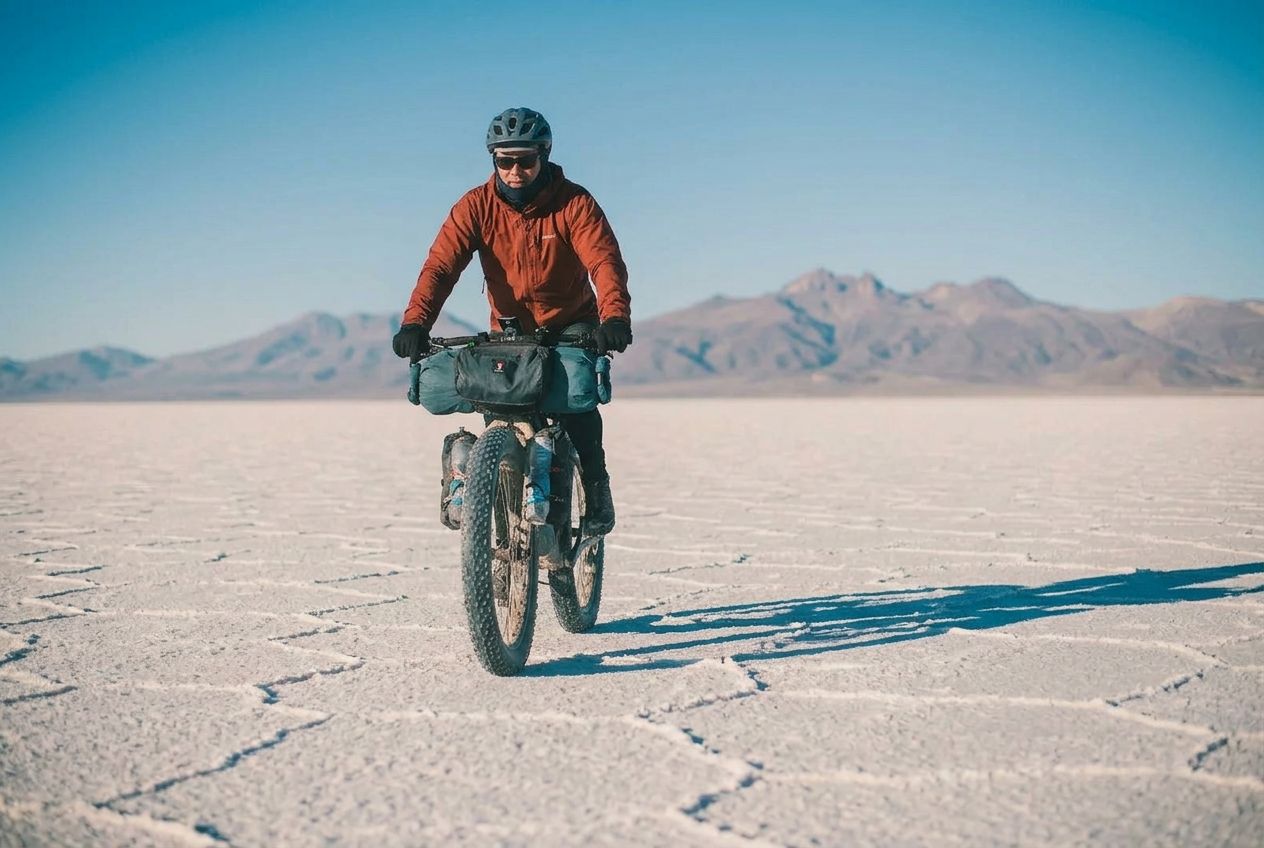
The context changes when technical terrain is paired with distance, autonomy, and constant load. It is no longer only about control, but about behaviour over time.
On a remote off-road trip, the bike must:
- remain predictable on descents even with weight mounted
- avoid excessive lightening of the front end
- distribute impacts and vibrations without amplifying them
This is where platforms built for continuous stress come into play, such as Adventure Touring frames and the related Adventure Touring bikes, designed to work with front and rear loads without distorting the ride.
Appropriate wheelbase, coherent fork torsional stiffness, and stable behaviour under weight are not details. They are what separates a structural platform from an adapted gravel bike.
The role of front load off-road
On purely technical terrain, front load must be managed carefully.
In structurally remote riding, it can become necessary to keep the overall balance.
But not all geometries accept it in the same way. A front end that is too nervous amplifies every change in weight; a design meant to work with load keeps the line readable even as the surface deteriorates.
To understand when and how it makes sense to load the front, see Front load — Guide.
Weight distribution on rough ground
On tarmac, many setups “seem to work”.
On continuous technical terrain, the differences emerge.
Poor weight distribution:
- increases micro-corrections
- lightens the front end
- amplifies muscular fatigue
When stress repeats for hours, a balance error does not stay neutral. It becomes accumulated fatigue.
Consistent mass management is part of the project itself.
To understand the technical principle behind it, refer to Load distribution — Guide.
Loose surfaces and continuous vibration
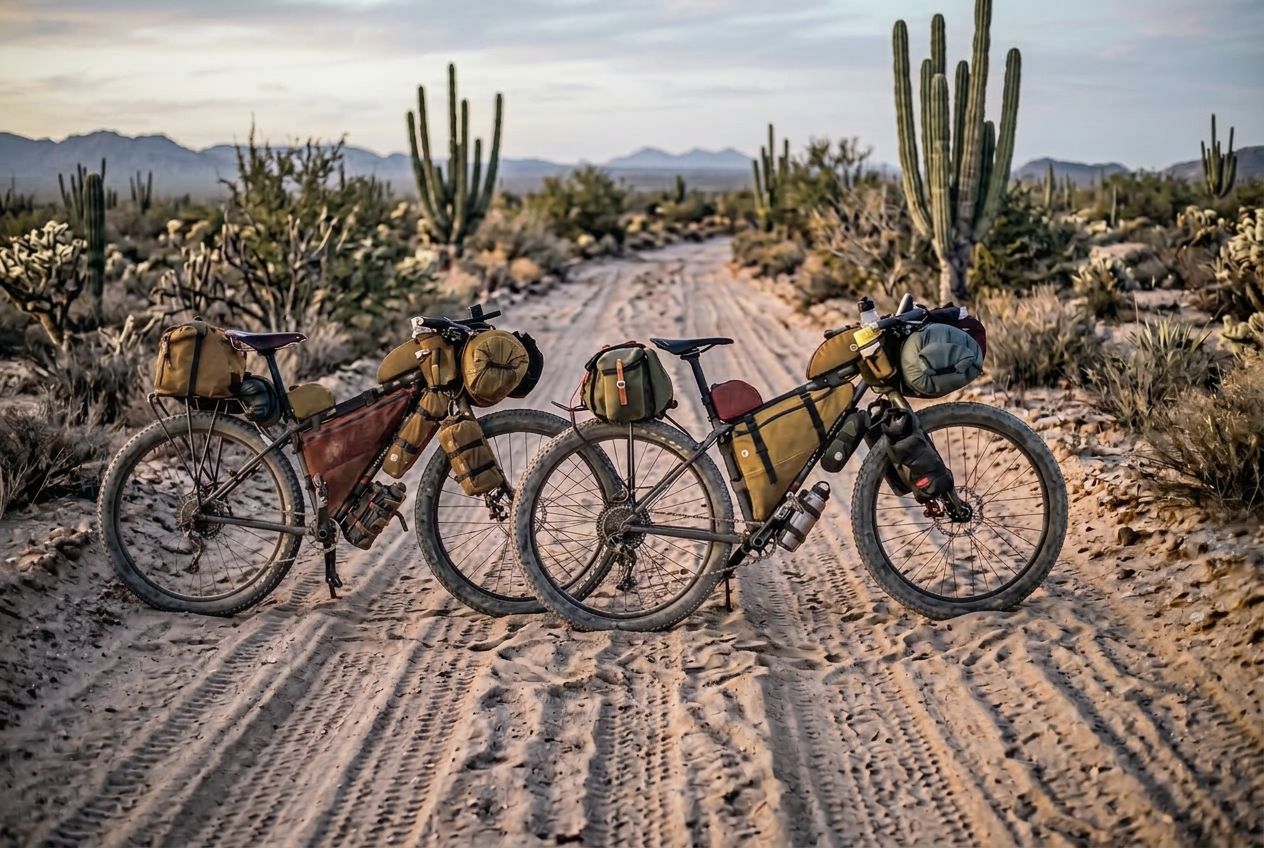
There is an even more extreme variant: sand, deep gravel, continuous washboard. Here the issue is not only control, but flotation and absorption of repeated vibrations.
Tyre volume, directional stability and behaviour under load become central. An unsuitable platform may not make the route impossible, but it will make it inefficient and physically more costly.
A real-world example of remote, loose-surface riding is the Baja Divide, where the terrain alternates rock, sand and corrugated sections for hundreds of kilometres. In these contexts, structural consistency matters more than absolute weight.
What is not included in this family
This context is not about:
- fast gravel on firm, smooth dirt roads
- touring that is predominantly on paved roads
- light, intermittent bikepacking
Here we are talking about technical or continuously deteriorated off-road: irregular ground that does not offer relief, and load that becomes an integral part of the structure.
If your terrain is mixed but mostly smooth and fast, the choice shifts toward Gravel & All-Road.
If your use is primarily on tarmac, the correct reference is road touring.
Decision framework
If your route is technical, with tight sections and irregular ground, but does not require prolonged autonomy or structural load, a control-oriented hardtail platform is the most coherent choice.
If the context is technical and remote, with constant load and stress repeated for days, you need an Adventure Touring base designed to work stably under weight.
If the surface is mixed but mostly smooth, with firm dirt and alternating tarmac, the correct reference is a Gravel & All-Road platform, more efficient and lighter over the medium term.
The difference is not the declared category, but the type of stress the terrain imposes on the bike.
In summary
Trail & Adventure Off-Road means dealing with:
- technical, discontinuous terrain
- repeated mechanical stress
- load that changes the bike’s dynamics
- the need for control and stability over time
The right platform is not the most extreme, nor the lightest.
It is the one that keeps working when the terrain gets worse and the hours add up, without forcing the rider into continuous compensations.