
How to Choose Your Bombtrack Hook EXT: the Complete Guide to Models, Materials, and Use Cases
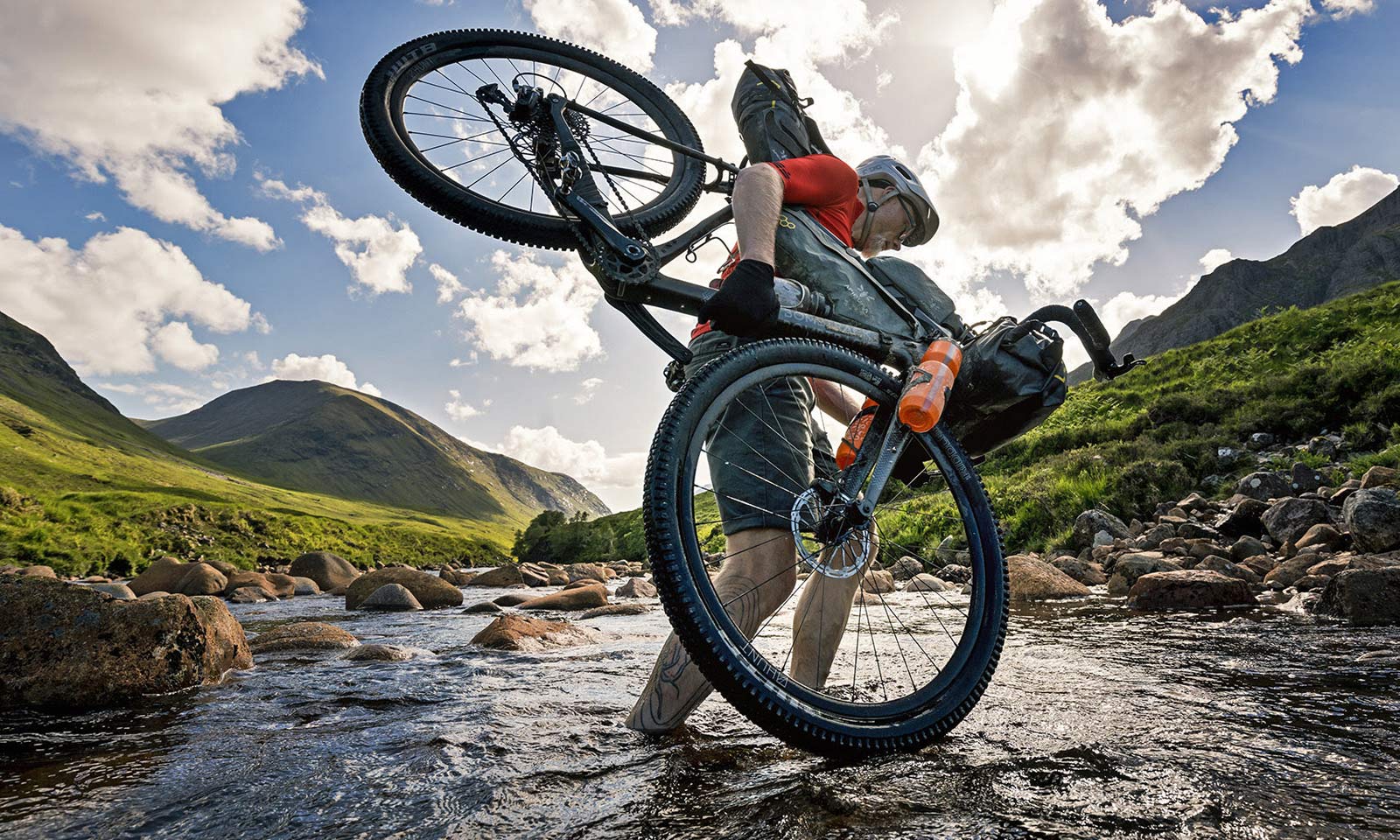
The Bombtrack Hook EXT has become a “modern classic” in the adventure / bikepacking scene because it brings together three things that rarely coexist this well: stability when the terrain gets rough, space and mounts for real-world carrying capacity, and a ride that stays “fun” even when you’re not traveling.
In this guide we’ll help you choose the right Hook EXT for you, clarifying:
-
what truly changes compared to the “standard” Hook (more traditional, faster-rolling gravel),
-
which differences actually matter between the various builds (Apex Eagle, SX Eagle, Rival, Rival AXS, Carbon AXS, Ti),
-
why material (steel / carbon / titanium) is often the real decision,
-
and how to read a few “right” geometry numbers without being a super-nerd.
Practical note: if you want to see all Bombtrack (and similar) adventure bikes on one page right away, start from the Adventure/Touring and Gravel/Allroad/Bikepacking categories:
– https://www.bikejamming.it/en/1094-adventure-touring/
– https://www.bikejamming.it/en/948-gravel-allroad-bikepacking/
(The “standard” Hook family is in the second category.)
What Is the Bombtrack Hook EXT?
Where the Model Comes From (and Why It Makes Sense)
The Hook EXT was born as the off-road evolution of the Hook platform: same core idea (drop bars, efficiency, “gravel” speed), but with a different goal: go farther and feel calmer when the surface gets demanding.
In real-world terms, that means:
-
more stability as speed and rocks increase,
-
more confidence with knobbier tires and on proper dirt descents,
-
more purpose once you add bags (especially up front).
Why It’s Different from a “Classic” Gravel Bike
The difference isn’t a buzzword (“monster gravel”), but a coherent set of choices:
-
More stable geometry: the bike needs fewer corrections on technical terrain and stays predictable when loaded.
-
Wheels and tires designed for off-road: the Hook EXT is built with a “trail-friendly” approach.
-
Adventure-focused builds: mounts and details that matter for travel (adventure fork, multiple mounting points, lighting/dynamo cable management depending on the build).
Hook vs Hook EXT: the Conceptual Difference (and When to Choose One or the Other)
“Standard” Hook: Fast-Rolling, Versatile Gravel

The Hook is the right choice if you want a “classic” gravel bike: lots of mixed riding, pavement, fast dirt, and a setup closer to traditional gravel. If you want to see the Hook as a complete bike: Bombtrack Hook
Content note: Hook often changes its stock wheel size depending on frame size (small sizes vs large). The Hook EXT, instead, is born with a more “standardized off-road” approach.
Hook EXT: Adventure/Off-Road, Without Losing Efficiency

The Hook EXT is the right choice if:
-
you ride lots of rough dirt, forest roads, rocky tracks, and “real” gravel roads,
-
you want a bike that doesn’t get unsettled once you add bags,
-
you want that “I’m on the right bike” feeling when the route isn’t perfect.
The Main Differences Within the Hook EXT Family (Models and Use Cases)
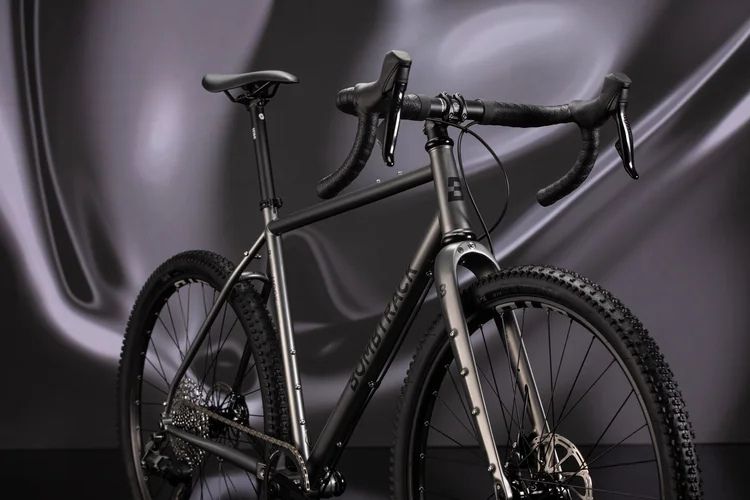
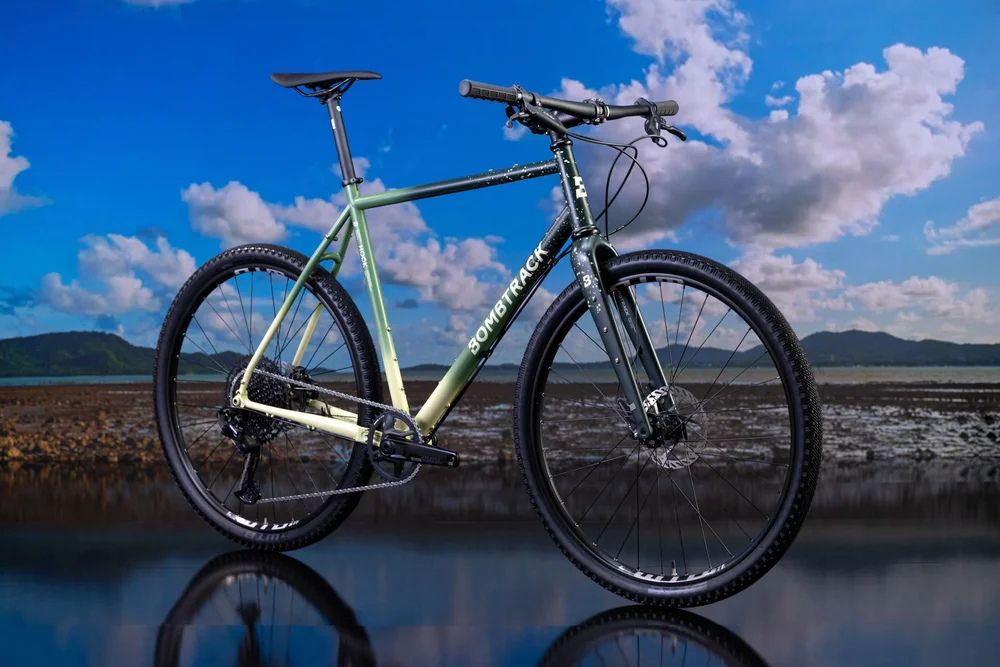
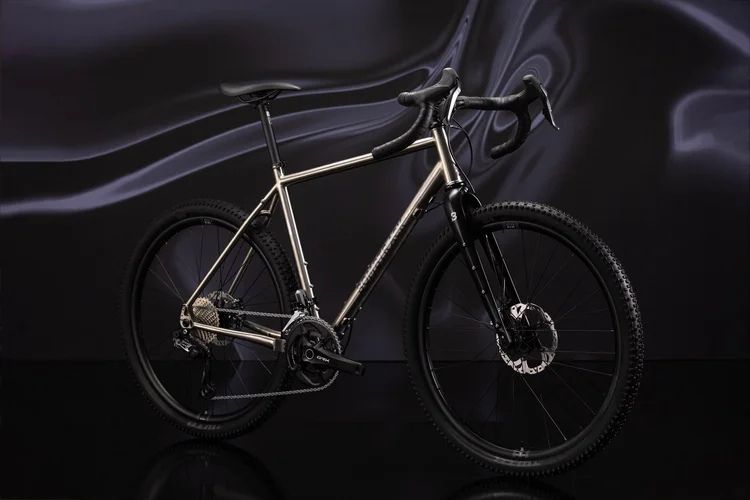
Below you’ll find the most useful way to read the lineup—the one that actually makes the decision: cockpit (drop or flat), drivetrain (1x/2x, mechanical/electronic), material.
“Quick but Real” Table (Hook EXT Family)
| Model (Hook EXT family) | Cockpit | Character | Who we recommend it to |
|---|---|---|---|
| Bombtrack Hook EXT Rival | Drop bar | Balanced adventure | For riders who want the “classic” EXT idea: off-road, comfort, load carrying, without extremes |
| Bombtrack Hook EXT Apex Eagle | Drop bar | Simple off-road & bikepacking | Travel, real dirt, steep climbs, robust setups |
| Bombtrack Hook EXT SX Eagle | Flat bar | Control and confidence | If you want a more MTB-like feel on technical terrain and descents |
| Bombtrack Hook EXT Rival AXS | Drop bar | “Modern” adventure | If you want wireless electronic shifting and functional cleanliness |
| Bombtrack Hook EXT C Apex AXS | Drop bar | Fast/light adventure | Fast & light, more responsive, more “performance” |
| Bombtrack Hook EXT TI | Drop bar | The ultimate | Comfort + durability + precision, long and demanding distances |
| Bombtrack Hook EXT Frameset | (your choice) | Custom steel build | If you want to choose everything: wheels, tires, gearing, cockpit |
| Bombtrack Hook EXT Ti Frameset | (your choice) | Custom titanium build | If you want “the ultimate bike” built to your spec |
Content note (short): the “big” choice here is drop vs flat and 1x vs electronic. Everything else refines (material, weight, feel).
Wheels and Tires: Stock Diameter and the 700C Option (Without Confusion)
Stock Wheels: Why the Hook EXT Is “Born 27.5”
On the Hook EXT (steel and titanium), the stock configuration is 27.5” (650B): it’s the choice that makes the bike more stable, adds traction, increases comfort, and feels more “easy” over rough surfaces.
The simple rule:
-
If your off-road is real (rocks, holes, descents, slow sections): 27.5 is the EXT’s native language.
-
If you mostly ride fast dirt and pavement: you may want more momentum and speed, and that’s where 700C comes in.
The 700C Option: When It Makes Sense (and What the “Real” Limit Is)
The Hook EXT can run 700C, but it makes the most sense when:
-
you want a more “fast-rolling” ride on mixed terrain and pavement,
-
your off-road is less technical and faster,
-
you’re building a second wheelset to switch seasons/routes.
Content note (short and “safety-minded”): on 700C, with steel/titanium, we think in a allroad/road direction more than “extreme knobs.” If you want to define the ideal tire precisely for your case, we’ll do it in consultation because it depends on route, rim, and priorities (rolling speed vs grip vs reliability).
Materials Compared: Steel, Carbon, Titanium (The Choice That Changes the Trip)
This is the part that brings the most satisfaction—because often you’re not choosing a name, but a style of adventure.
Steel: The “Reliable” Adventure Bike That Forgives
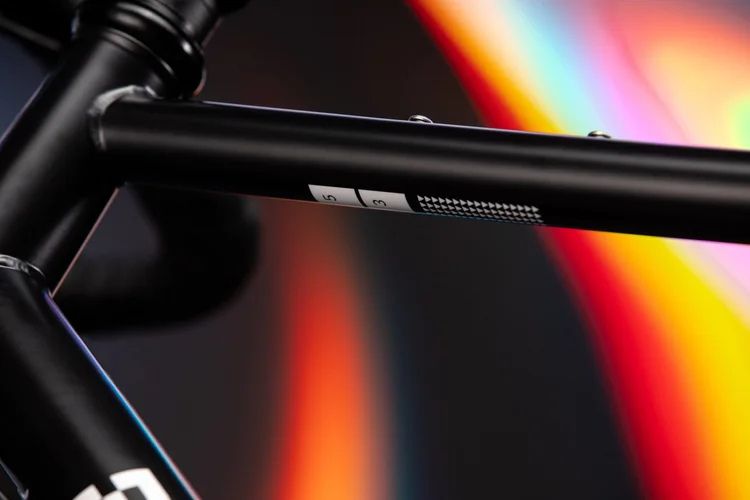
If you want peace of mind and a bike that doesn’t make you anxious, steel is almost always the answer.
What really changes:
-
Natural comfort and a “composed” ride: when the road is rough, the bike stays predictable.
-
It thrives under load: it doesn’t get twitchy and doesn’t demand micro-corrections.
-
Perfect for: long trips, heavy loads, relaxed pace, and anyone who wants a bike that always “just works.”
Content note (short): steel = “more serenity” when the terrain doesn’t cooperate, especially with wide tires and bags.
Carbon (Hook EXT C): Fast & Light, Still Adventure
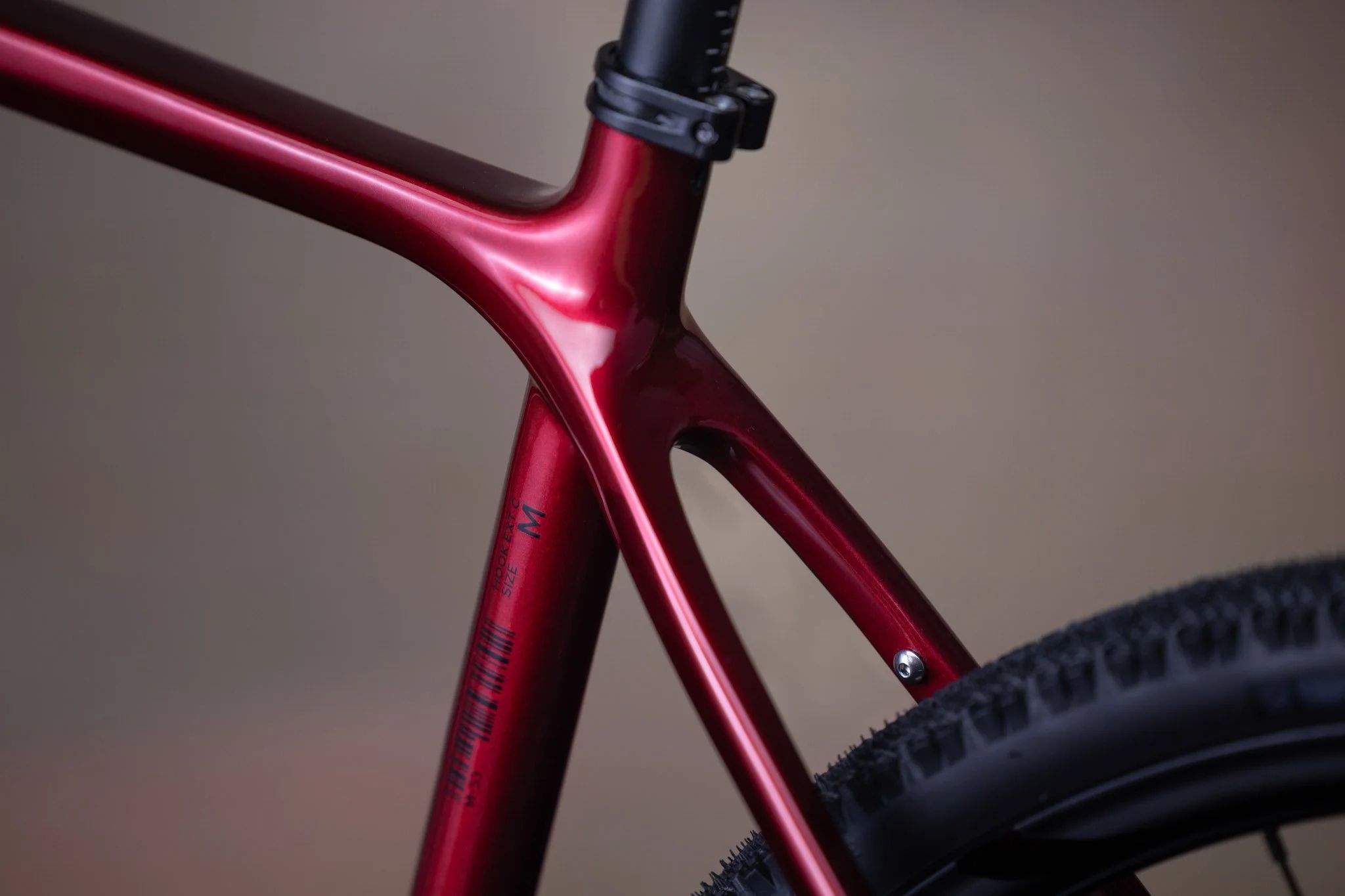
Carbon here isn’t “race only”: it’s the fastest EXT within the same concept.
What really changes:
-
More responsiveness when you push (climbs, accelerations, fast sections).
-
A more “precise” front-end feel.
-
Makes a lot of sense if your bikepacking is “fast & light” (few bags, sustained pace).
Content note (short): carbon = when you want an EXT that climbs and accelerates better, without losing the adventure mindset.
Titanium (Hook EXT TI): Premium Comfort + Real-World Durability
Titanium has a kind of comfort that isn’t “soft”: it’s less fatigue accumulated over many hours.
What really changes:
-
a smooth feel and high-quality vibration damping,
-
long-term durability (a bike you truly keep for a long time),
-
and it’s often the choice for people who want “buy once, buy right.”
Content note (short): titanium = if you ride a lot and want a bike that keeps feeling “right” year after year.
Geometry: A Few “Right” Numbers to Understand the Ride (Without Being Technical)
No need for an encyclopedia here: 4–5 parameters are enough to understand stability, confidence, and loaded handling.
Essential Geometry Table: Hook EXT (drop bar) — What It Means in Practice
Note: values change by size; below is the “medium size idea” with typical numbers for the Hook EXT drop-bar platform.
| Parameter | Hook EXT (drop bar) | How it feels on the bike |
|---|---|---|
| Head angle | ~71–71.5° | more stability and confidence on rough ground |
| Chainstay | ~425 mm | traction and stability, helpful when loaded |
| Wheelbase | ~1030–1050 mm | less twitchy |
| BB drop | ~66–71 mm | stable feel; more “in” the bike |
| Trail | ~60–64 mm | predictable steering, excellent on technical gravel |
Plain-English translation: the Hook EXT is designed to make you feel “safe” when the surface gets rough, especially with wider tires and bags.
Geometry: Drop Bar vs Flat Bar (SX Eagle)
The SX Eagle changes the cockpit setup, and that strongly affects perception:
-
more leverage and control on technical terrain,
-
a more “centered,” intuitive position,
-
perfect if you come from MTB or want maximum confidence on descents and messy lines.
Drivetrains: 1x vs “Electronic” (and Why It’s Not Just About Price)
Useful comparisons here, not forum talk.
1x “For Travel and Real Dirt”: Apex Eagle
Why it’s a very strong bikepacking choice:
-
single chainring = less complexity, fewer worries,
-
gearing designed for steep climbs and slow surfaces,
-
perfect when the route is “uncertain” and you just want to pedal.
When you’ll almost certainly choose it:
-
big elevation gain,
-
rough dirt,
-
bags,
-
trips where you want practical reliability.
Content note (short): 1x = “mental” simplicity and reliability. On a trip, it matters more than it seems.
Wireless Electronic: When It Makes Sense (Rival AXS and Carbon AXS)
It makes sense if:
-
you do lots of long rides and want consistently precise shifting,
-
you like a “modern,” clean bike,
-
you want an EXT with a more premium drivetrain experience.
Content note (short): electronic = consistent precision and functional cleanliness. Not mandatory, but if you like it, you feel it every ride.
Which Hook EXT Is Right for You? (Guided Choice, No Doubts)
If you want long trips, real dirt, and heavy loads → Hook EXT Apex Eagle
-
a “safe” choice because it’s made for that
-
stock 27.5, with tires and geometry in their natural habitat
If you want maximum control and an MTB feel → Hook EXT SX Eagle
-
flat bar, more security on technical terrain
-
great if you come from MTB or want a bike with “no compromises” on descents
If you want a modern EXT, clean and premium in shifting → Hook EXT Rival AXS
-
wireless, “high-end” feel
-
perfect if you ride adventure but also want aesthetics and precision
If you want fast adventures (fast & light) and more rolling speed → Hook EXT C Apex AXS
-
the most “responsive” in the family
-
stock 700C and a faster character
If you want “the ultimate bike” for comfort and durability → Hook EXT TI
-
titanium: premium comfort + longevity
If you want to build it your way (wheels/gearing/bags to spec) → Frameset
-
makes sense if you truly want to optimize: tires, wheels, cockpit, gearing, and racks around your trips
Real-World Setup Examples (Bikepacking) — 3 Practical Scenarios
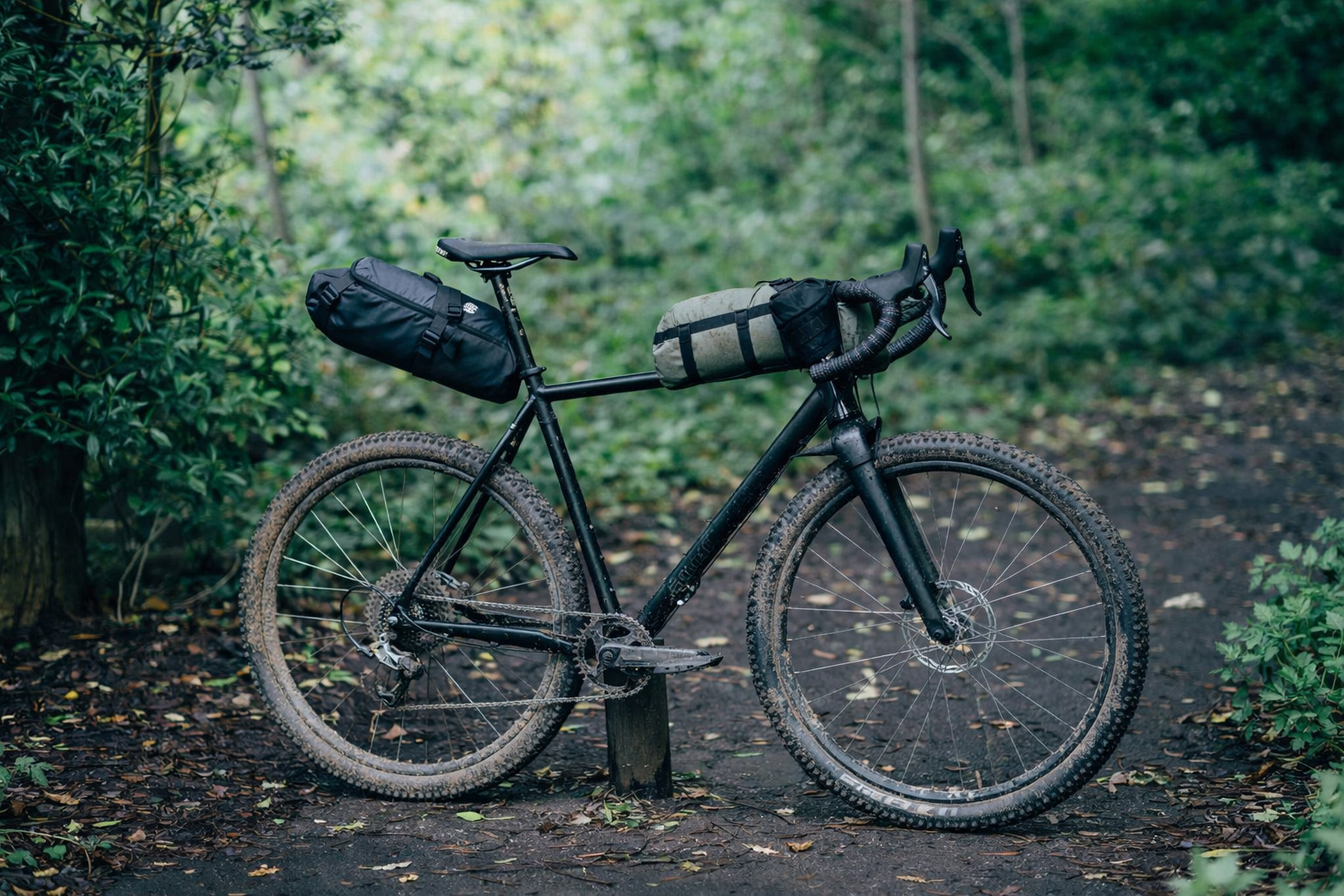
Setup 1: Weekend Fast & Light
-
tires: fast-rolling but solid (grip up front, speed out back)
-
bags: compact (frame bag + seat pack)
-
goal: speed and fun, no frills
-
ideal base: Bombtrack Hook EXT C Apex AXS
Setup 2: Multi-Day Adventure (Serious Dirt)
-
wheels: stock 27.5
-
tires: real tread, high volume
-
bags: medium/high capacity, stability-focused
-
ideal base: Bombtrack Hook EXT Apex Eagle
Setup 3: Remote Self-Supported Expedition (Weeks)

-
priority: comfort and long-term reliability
-
watch-out: front/rear load balance and “mistake-proof” tire choice
-
ideal base: Bombtrack Hook EXT TI
or, if you want a custom build: Bombtrack Hook EXT Ti Frameset
Final Summary Table (Decision Matrix with Integrated Legend)
Legend (how to use the labels in the table)
-
Terrain: fast = compact dirt roads | mixed = alternating pavement and dirt | technical = rocks, ruts, slow descents
-
Load: light = small bags | medium = full bags | heavy = also gear and long self-sufficiency
-
Pace: relaxed = steady pace | sustained = accelerations, “pushed” climbs, fast & light
-
Priority: comfort / control / performance / durability
| Profile (Terrain · Load · Pace · Priority) | Recommended model | Why (one line) | Useful link |
|---|---|---|---|
| technical · heavy · relaxed · control/comfort | Hook EXT Apex Eagle | simple 1x + calm off-road setup | Hook EXT Apex Eagle |
| technical · light/medium · (any) · control | Hook EXT SX Eagle | flat bar = more confidence and leverage on technical terrain | Hook EXT SX Eagle |
| mixed · medium · relaxed/sustained · comfort/precision | Hook EXT Rival AXS | wireless = consistent, clean shifting in any conditions | Hook EXT Rival AXS |
| fast/mixed · light · sustained · performance | Hook EXT C Apex AXS | carbon + 700C = responsive and fast-rolling (fast & light) | Hook EXT C Apex AXS |
| mixed/technical · medium/heavy · relaxed · comfort/durability | Hook EXT TI | titanium = premium comfort and longevity | Hook EXT TI |
| (any) · (any) · (any) · “I want to choose everything” | Hook EXT Frameset / Ti Frameset | to build wheels, tires, gearing, and cockpit to your needs | Frameset · Ti Frameset |
| fast/mixed · light/medium · (any) · rolling speed | Hook (not EXT) | more “classic” gravel, more efficient on the road | Hook |
Conclusion
The Hook EXT is appreciated because it makes adventure simpler: it lets you ride with confidence when the surface is rough and it allows you to carry gear without turning the bike into an unstable compromise.
Your final choice depends on what you want to optimize: simplicity and solidity (steel/Apex Eagle), control (SX), wireless modernity (Rival AXS), speed (Carbon AXS), or the “ultimate bike” (Titanium).
Final Mini-Step - Technical Consultation (5 Questions That Make the Choice 100% Clear)
If you answer even briefly, we’ll tell you which EXT is the best match and how to set up wheels/tires and bags.
-
Real percentage of your use: how much road and how much dirt (e.g., 30/70)?
-
Dirt: more fast (hardpack roads) or more technical (rocks, roots, slow descents)?
-
Load: do you go light, medium, or heavy (tent/stove/food for days)?
-
Pace: do you want a bike to grind or to push (fast & light)?
-
Cockpit preference: do you feel more “at home” with a drop bar, or do you want flat-bar control?
With these 5 answers, choosing between Apex Eagle / SX Eagle / Rival AXS / C Apex AXS / TI becomes immediate, and we can also advise whether a second 700C wheelset makes sense for a more road/allroad-focused setup.
FAQs – Bombtrack Hook EXT
1) What is the Bombtrack Hook EXT and what is it really designed for?
The Hook EXT is a trail-friendly gravel/adventure bike. It’s designed to stay stable and predictable when terrain gets rough and when real luggage is added, without losing the ability to be efficient on mixed surfaces. Its key strength is a frame and geometry that work convincingly both on technical off-road and, with the right setup, on road and fast mixed terrain.
2) What’s the real difference between the Bombtrack Hook and the Hook EXT?
The standard Hook is a more traditional gravel bike, optimized for mixed riding, compact dirt roads and asphalt. The Hook EXT is more off-road oriented, with more stable geometry and a stronger focus on control when terrain deteriorates and loads increase. The EXT is also designed as a highly adaptable platform that works exceptionally well with two different wheelsets.
3) Which Hook EXT should I choose: Apex Eagle, SX Eagle, Rival, Rival AXS, Carbon AXS or Ti?
The choice depends on cockpit, drivetrain and frame material. Apex Eagle is the most robust and travel-oriented option; SX Eagle prioritizes control and MTB-like confidence thanks to the flat bar; Rival is the balanced EXT; Rival AXS adds wireless shifting and a cleaner, modern setup; Carbon AXS is the fast & light, more reactive option; Ti is the long-term, comfort-focused “final bike”.
4) Drop bar or flat bar on the Hook EXT: which makes more sense?
Choose a drop bar if you want efficiency over long distances and a classic gravel/adventure riding position. Choose the flat bar (SX Eagle) if you want maximum control on technical terrain, more leverage on descents and a riding feel closer to an MTB, especially on slow, rough lines.
5) For bikepacking and long trips: Apex Eagle 1x or Rival/AXS?
Apex Eagle 1x is ideal if you value simplicity, very low gearing for steep climbs and minimal complexity while traveling. Rival/AXS makes sense if you ride long distances and want consistently precise shifting (wireless in the AXS case), with a cleaner, more modern drivetrain setup.
6) Hook EXT 27.5 (650B) vs 700C: which should I choose, and why do two wheelsets matter?
The Hook EXT (steel and titanium versions) is designed around 27.5 (650B) wheels to maximize control, traction and comfort on technical off-road terrain—this is its natural habitat. A 700C setup makes sense when you want more rollover and efficiency on road and fast mixed terrain. The real advantage is that with two wheelsets you effectively get two high-performing bikes: a 27.5 setup for rough off-road and loaded travel, and a 700C setup for road and fast all-road riding, without compromising the frame’s intended behavior.
7) How much does the frame material change the riding experience: steel vs carbon vs titanium?
It defines the character of the bike. Steel offers the most composed and forgiving ride, especially under load and on rough terrain. Carbon delivers a faster, more reactive feel for riders aiming at fast & light adventure. Titanium combines long-distance comfort with exceptional durability, making it ideal for riders looking for a true lifetime platform.
8) Can the Hook EXT work as a true one-bike solution?
Yes—especially if your riding spans very different scenarios. If you ride technical off-road and bikepacking routes but also want to ride road and fast mixed terrain, the Hook EXT becomes a genuine “one bike, two builds” platform. With two dedicated wheelsets, it covers technical adventure riding and efficient all-road use in a way few bikes can. If your riding is mostly asphalt and smooth gravel with minimal load, the standard Hook remains the more efficient single-bike option.