
Choosing a bike rack: where to start

Choosing a bike rack is not just about adding carrying capacity, but about deciding how the bike will behave under load, both on the road and off it.
It is one of those components that seem simple until you get into real-world use. As long as the bike is unloaded, almost all racks look equivalent. But once panniers, a tent, gear, and long days in the saddle come into play, very real differences emerge: stability, compatibility, stiffness, volume management, and overall bike behavior.
That is why this guide does not start from marketing claims, but from a more useful logic: what bike you have, what kind of trip you want to do, and what type of load you want to carry.
If you want to first clarify how the bike behaves depending on the load system, you can start with our guide to load systems for travel bikes.
Why the right bike rack really makes a difference
A good bike rack goes unnoticed when it works. The bike stays predictable, the load does not shift, the bags stay where they should, and the trip simply flows. But when the rack is out of context, you feel it almost immediately: swaying, interference, forced installation, weight that works poorly, and a general feeling that the bike is less coherent.
In real-world cycle touring, the bike rack is not a secondary accessory. It is part of the load system, and as such it affects the quality of the trip at least as much as the choice of bags.
That is why it makes sense to think not only about “how much it can carry,” but about how it manages the load and how well it matches the bike you are actually using.
If you want to go deeper into this aspect, our guide to load distribution helps explain why two setups with the same total weight can behave very differently.
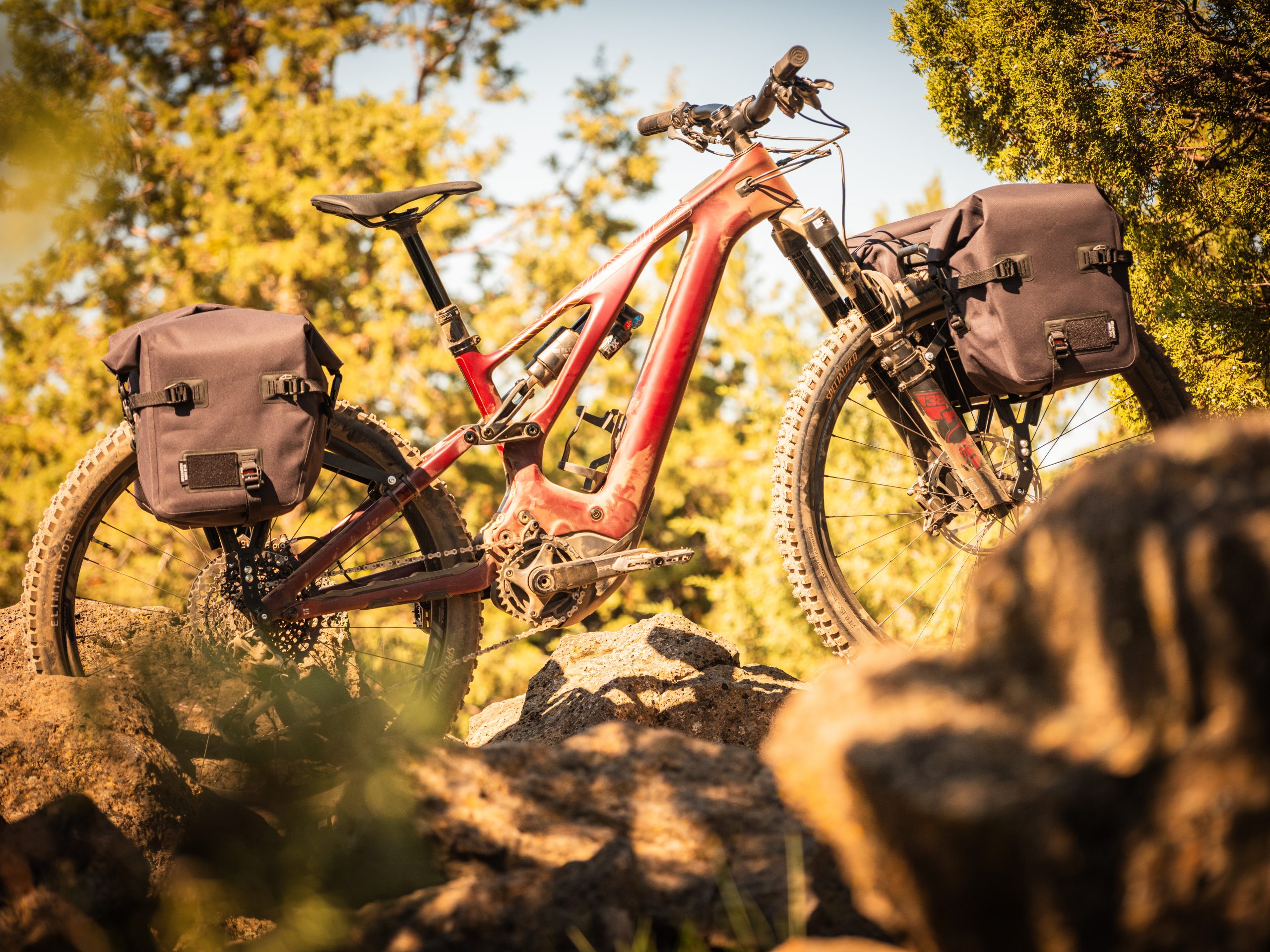
How to choose a bike rack: the 3 key factors
1. The bike
The first question is not “which bike rack is best,” but “what bike will you mount it on.” A classic touring bike with eyelets opens up very different possibilities compared to a modern gravel bike without mounts, an MTB with wide tires, or a full suspension bike.
In other words: the right rack does not exist in absolute terms. The right rack exists for a specific bike.
If you are still defining the bike or frame you want to start from, the best place to begin is our guide to bikes and frames cluster.
2. The type of use
A long-distance travel setup is one thing, a mixed setup between commuting and weekend rides is another, and a light bikepacking setup with extra carrying capacity is something else again. An expedition rack, a mixed-use rack, and a bikepacking rack may look close on paper, but they do not work in the same way.
3. The load system
A rack should always be considered together with the bags. Classic panniers, a drybag strapped to the top platform, hybrid setups, cargo cages, or combinations between multiple systems completely change the demands in terms of rack shape, stiffness, and positioning.
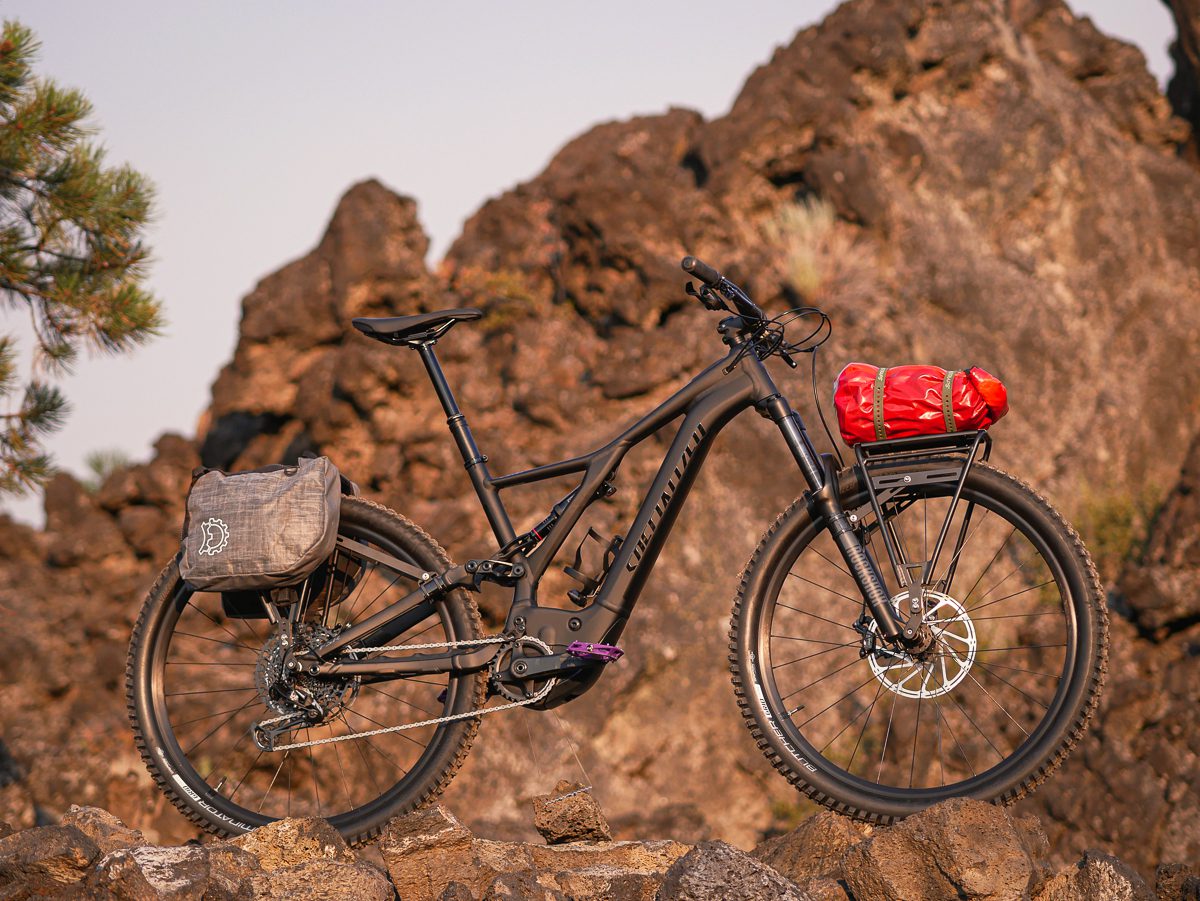
Front or rear bike rack: what really changes
Rear bike rack
It is the most common starting point. It makes sense because it simplifies the setup, offers more capacity, and adapts well to many contexts: commuting, medium-distance trips, long-distance travel, and classic rear-load configurations with two side panniers.
For many riders, it is the natural first choice, especially when the goal is a simple, readable, and easy-to-manage system.
Front bike rack
Front loading is not only about “adding space,” but about distributing weight more effectively. When it is well designed and properly used, it lowers the center of gravity and makes the bike more balanced. That is why front lowriders (racks with low side rails that position the panniers close to the wheel axle, lowering the center of gravity and improving stability) still make a great deal of sense in long-distance travel and technical setups.
If you want to explore this topic further, here is our guide to front loading on a travel bike.
Types of bike racks: which one to choose based on use
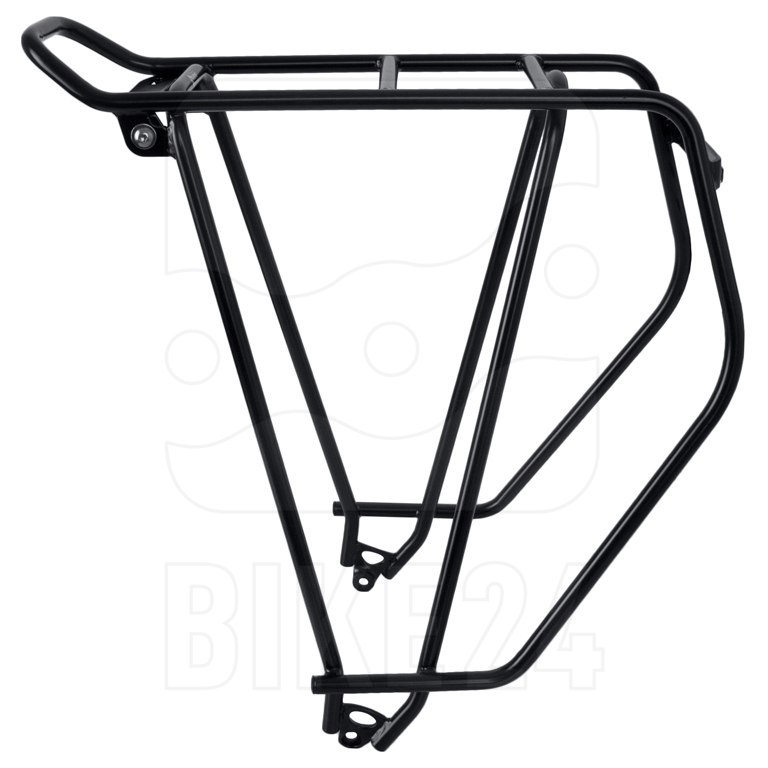
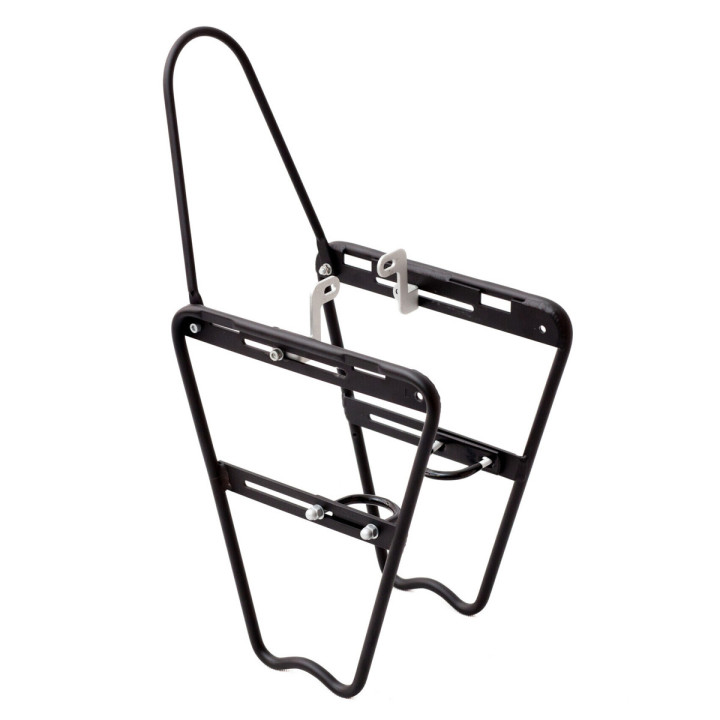
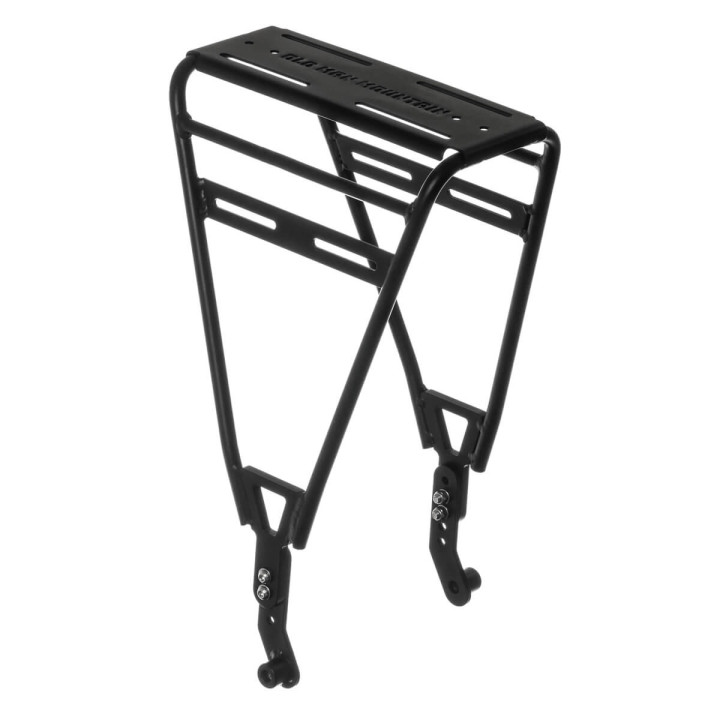
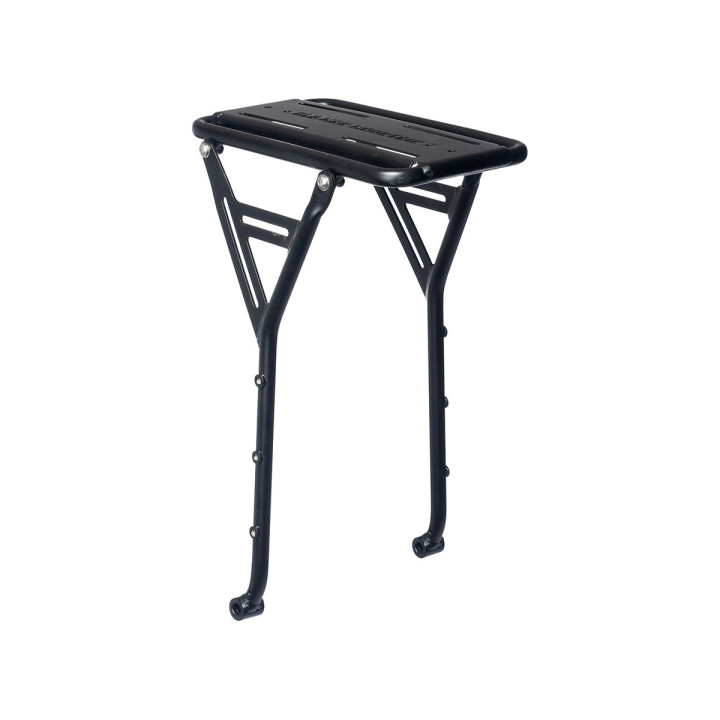
Classic touring racks
This category includes racks designed for real travel, continuous use, and predictable behavior under load. These are the models that make sense when a bike is designed or built to travel in a structured way.
This is classic Tubus territory: travel racks built around different design logics depending on the load, mounting position, and level of specialization.
Universal and adaptive racks
There are also solutions whose main role is to make a bike load-capable even when it was not originally designed that way. In these cases, the value lies less in the purity of the solution and more in the practical possibility of mounting bags on bikes that would otherwise remain excluded.
This is where universal racks and more accessible lowriders come in.
Racks for modern bikes without mounts
This is the segment that has become particularly interesting in recent years. Modern gravel bikes, MTBs, full suspension bikes, and bikes with thru-axles often do not work well with the traditional touring rack. In these cases, different systems are required, often axle-mounted, designed not to “force” compatibility but to solve the problem in a structural way.
Racks for hybrid setups
Between classic touring and pure bikepacking there is a very real middle ground: riders who want a light and dynamic bike but do not want to give up carrying capacity entirely. This is where slimmer racks come into play, often front-mounted or usable at the rear as well, designed for drybags, cargo cages, and lighter configurations.
Bike rack compatibility: what to check before buying
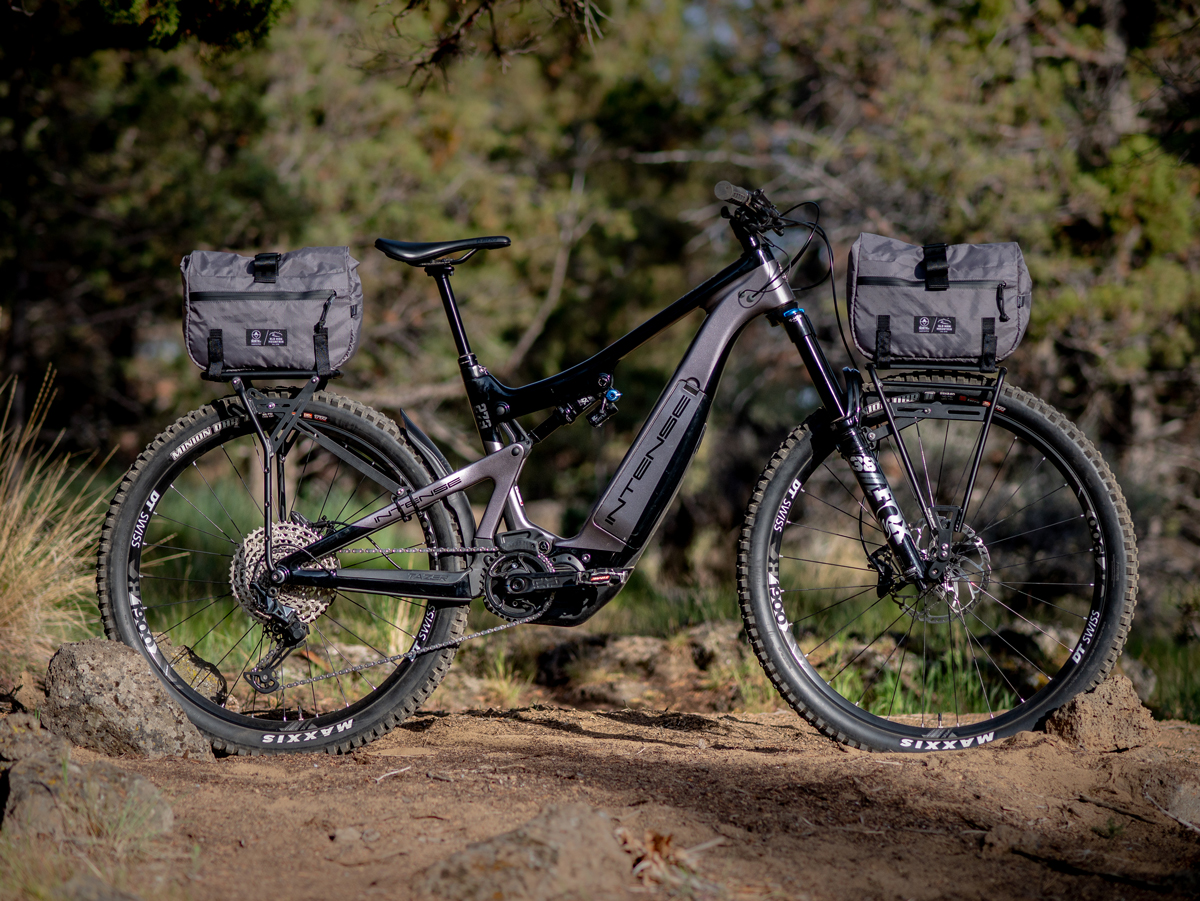
Compatibility remains the first real check to make before purchasing. In particular, you should verify:
- presence of eyelets on the frame or fork
- axle type: quick release or thru-axle
- clearance for tires, fenders, and brake calipers
- fork type and mount position
- actual tire size
This matters even more on modern bikes, where the issue is often not the quality of the rack, but the fact that many bikes are simply not built with classic load-carrying provisions.
If the route you have in mind requires a different bike or a more stable platform to start from, it may also be useful to read the cluster choosing the right bike based on the route.
When to use a bike rack (and when to avoid it)
A bike rack makes sense when the load is real, continuous, or simply substantial enough to require a dedicated structure. It is the natural choice for riders using panniers, for multi-day travel, and for those who prefer a tidy, modular, and predictable system.
It makes less sense in very minimalist setups, on technical trails, or when the total load volume is small enough to be handled in other ways.
So this is not an ideological question of “rack” versus “no rack”: it depends on the kind of trip you are building and on how you want the bike to react once it is truly loaded.
How to choose the right bike rack
Quick selection: find your setup
| Situation | Solution | Models |
|---|---|---|
| Bike with eyelets + long-distance travel | Classic touring setup | Tubus Cargo Evo (rear) + Tubus Tara stainless steel (front) |
| Bike with eyelets + mixed use | Balanced setup | Tubus Logo Evo (rear) + Tubus Tara stainless steel (front) |
| Bike with eyelets + wide tires / 29" | Adventure setup | Tubus Logo Classic 29 (rear) |
| Bike with eyelets + bulky loads | Expedition setup | Tubus Cargo Evo (rear) + Tubus Grand Expedition Front |
| Bike with eyelets + weight priority | Lightweight setup | Tubus Airy titanium |
| Fork with dual eyelets (internal + external) | Specific solution | Tubus Duo Titanium |
| Bike without eyelets | Universal solution | Thule Tour Rack |
| Bike without eyelets + want a lowrider | Accessible solution | Crosso Low-Rider Front Rack |
| Budget-focused but real-world use | Practical solution | Crosso Aluminum Rear Rack |
| Bike without eyelets (modern gravel / MTB) | Structural solution | Old Man Mountain Divide |
| Bike with thru axle | Axle-mounted setup for maximum stability | Old Man Mountain Divide |
| MTB / full suspension | Rack for modern non-touring bikes | Old Man Mountain Divide |
| Fat bike / extra-wide tires | Rack for tires over 3" | Old Man Mountain Divide Fat |
| Bikepacking + extra capacity | Light hybrid setup | Old Man Mountain Elkhorn (27.5" or 700), Elkhorn 29" |
| Stable front load on gravel / smooth off-road | Advanced lowrider setup | Old Man Mountain Impala Lowrider |
There is no universal bike rack
This is probably the most useful conclusion. There are highly versatile racks, more specialized racks, adaptive racks, and true travel racks, but there is no single solution that is simultaneously the best for every bike and every use case.
A classic touring bike with eyelets tends to reward different solutions compared to a modern gravel bike with a thru-axle. In the same way, a setup for heavy commuting or a long weekend should not be evaluated with the same logic as an expedition trip or an event like the Tuscany Trail.
If you want a more concrete sense of the contexts in which these setups really come into play, you can also take a look at the iconic bike routes section.
A technical choice, but a very practical one
The right bike rack is not the one with the longest spec sheet or the highest stated load rating. It is the one that works well on your bike, with your load, and in the context where you will actually ride.
That is why in our catalog we select only models with a clearly defined role: classic touring, expedition, adapting bikes without mounts, hybrid bikepacking, or technical front loading. Every rack has a precise reason to be there.
If you are unsure about compatibility or the most suitable setup, write to us at info@bikejamming.it: we generally reply within 24 hours with practical, context-based support.
FAQ – Bike racks
Can I mount a bike rack on a bike without eyelets?
Yes, but you need a dedicated solution. Some bike racks use clamp-based systems or axle-mounted systems (thru-axle or QR) to adapt to modern bikes, gravel bikes, or MTBs that are not rack-ready. In these cases, it is essential to verify compatibility and mounting type.
Is a front or rear bike rack better?
It depends on the type of trip. A rear bike rack is simpler and offers greater capacity. A front rack, especially in lowrider configuration (a rack with low side rails), helps distribute weight more effectively and improve stability on long-distance trips.
How many kilos can a bike rack carry?
It depends on the model. Classic touring racks can support even 25–40 kg, while lighter or universal solutions have lower limits. In any case, it is important not to consider only the maximum load rating, but also how the weight is distributed on the bike.
Do you really need a bike rack for bike travel?
No, but it depends on the type of trip. For minimalist setups or light bikepacking, you can also do without one. But when the load increases or you are using panniers, a bike rack becomes the most stable and functional solution.
What is the difference between a bike rack for a touring bike and one for an MTB?
Classic touring bike racks are designed for bikes with eyelets and distributed loads. MTBs and modern bikes often require different systems, such as axle mounting, to ensure compatibility and stability even on more technical terrain.