
Choosing the Right Bike for Paved Routes and Structured Urban Use
There is a family of use cases where the surface is not the problem.
Tarmac is continuous, readable, predictable. Yet that very regularity generates a different kind of stress: repeated stress.
Daily mileage, kilometres accumulated over time, constant load, frequent stops, urban traffic. In this scenario you do not need an extreme bike. You need a platform that is coherent with a regular rhythm and progressive wear.
Choosing a bike for tarmac and urban use means reasoning not around obstacles, but around continuity of stress.
This is not the family of technical off-road.
It is not mixed gravel.
It is not remote expedition riding.
It is the context where the continuity of tarmac and repetition over time become the real design variable.

Continuous tarmac and a steady rhythm
When the surface is predominantly paved, the priority is not obstacle capability, but long-term sustainability.
On paved-road touring the rhythm is steady and predictable.
You ride for hours with regular cadence, stable load and readable lines.
The bike must:
- maintain directional stability for many hours
- absorb light but constant vibration
- work with load without altering the ride
- reduce progressive fatigue
Here the difference is not the commercial category, but continuity of stress. Riding 15 km a day for years generates a structural load that is different from a single long ride.
Platforms oriented to Classic paved-road Touring are designed to work well under load on regular surfaces, with predictable behaviour and a stable setup.
But this page does not describe the platform.
It describes when that logic becomes necessary.
Structural load on the road
On paved-road touring, load is not occasional. It is part of the use case: rear panniers, sometimes front panniers, everyday gear or travel equipment.
Coherent weight management affects stability and wear over time. An unbalanced distribution increases micro-corrections and fatigue even on regular surfaces.
To understand the technical principle behind it, refer to the Load distribution — Guide.
In the same way, bag choice affects ergonomics and continuity of use. Read more here: Travel bags and load systems — Guide.
On paved-road touring, stability under load matters more than sporty reactivity.
Intensive urban use and stop & go
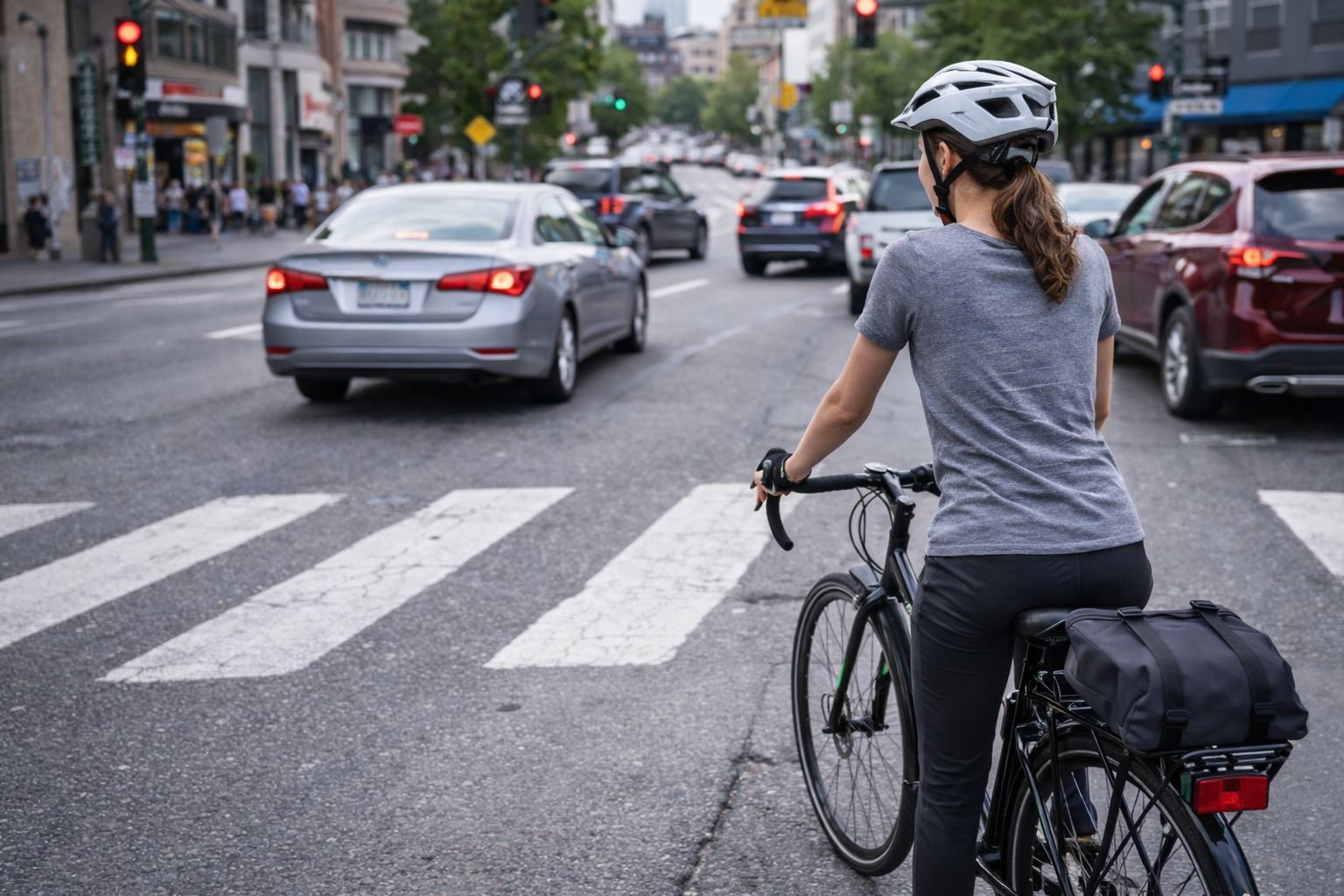
The urban context adds a different variable: discontinuous rhythm.
In structured urban use, rhythm is fragmented and uneven.
Frequent accelerations, braking, direction changes, traffic and intersections continuously change the bike’s dynamic load.
It is necessary to distinguish between:
- light, occasional commuting
- structured, daily urban use
In the second case, the bike must withstand:
- repeated load
- frequent braking
- exposure to weather
- outdoor parking
- accelerated wear of brakes and drivetrain
Drivetrain choice also affects long-term management and maintenance (see the Drivetrain Guide).
Platforms oriented to urban mobility are found in the Urban category, while for more demanding transport needs the correct reference is the Cargo category.
This is not about dirt.
It is about traffic, exposure and repetition.
Maintenance and long-term sustainability
In paved and urban contexts, the real difference shows up after months or years.
Widely available components, compatibility with load systems, ease of service, and structural coherence matter more than absolute lightness.
A bike designed for this scenario does not need to impress on the first rides. It needs to remain reliable when accumulated mileage becomes significant.
This is the separation point compared to gravel and off-road: here stress does not come from irregular terrain, but from daily repetition.
Decision framework
Predominantly tarmac, long rides with panniers, steady and predictable rhythm
→ Paved-road touring
Daily urban use, moderate load, frequent stop & go
→ Urban
Structured transport, bulky or professional loads
→ Cargo
The distinction does not depend on the bike’s commercial label, but on the type of use repeated over time.
In summary
Paved-road Touring & Urban Utility means dealing with:
- regular and predictable surfaces
- accumulated mileage
- repeated everyday load
- urban traffic and stop & go
- progressive wear over time
The right platform is not the most extreme.
It is the one that remains stable, reliable and sustainable when use becomes continuous.