
- How to choose cockpit, wheels and components without mistakes
- Real-world configuration examples
- How bike configuration really works
- Cockpit: position and control
- Wheels: behaviour and stability
- Drivetrain: managing effort
- The role of load
- When a custom configuration makes sense
- Summary
- Essential FAQ
How to choose cockpit, wheels and components without mistakes
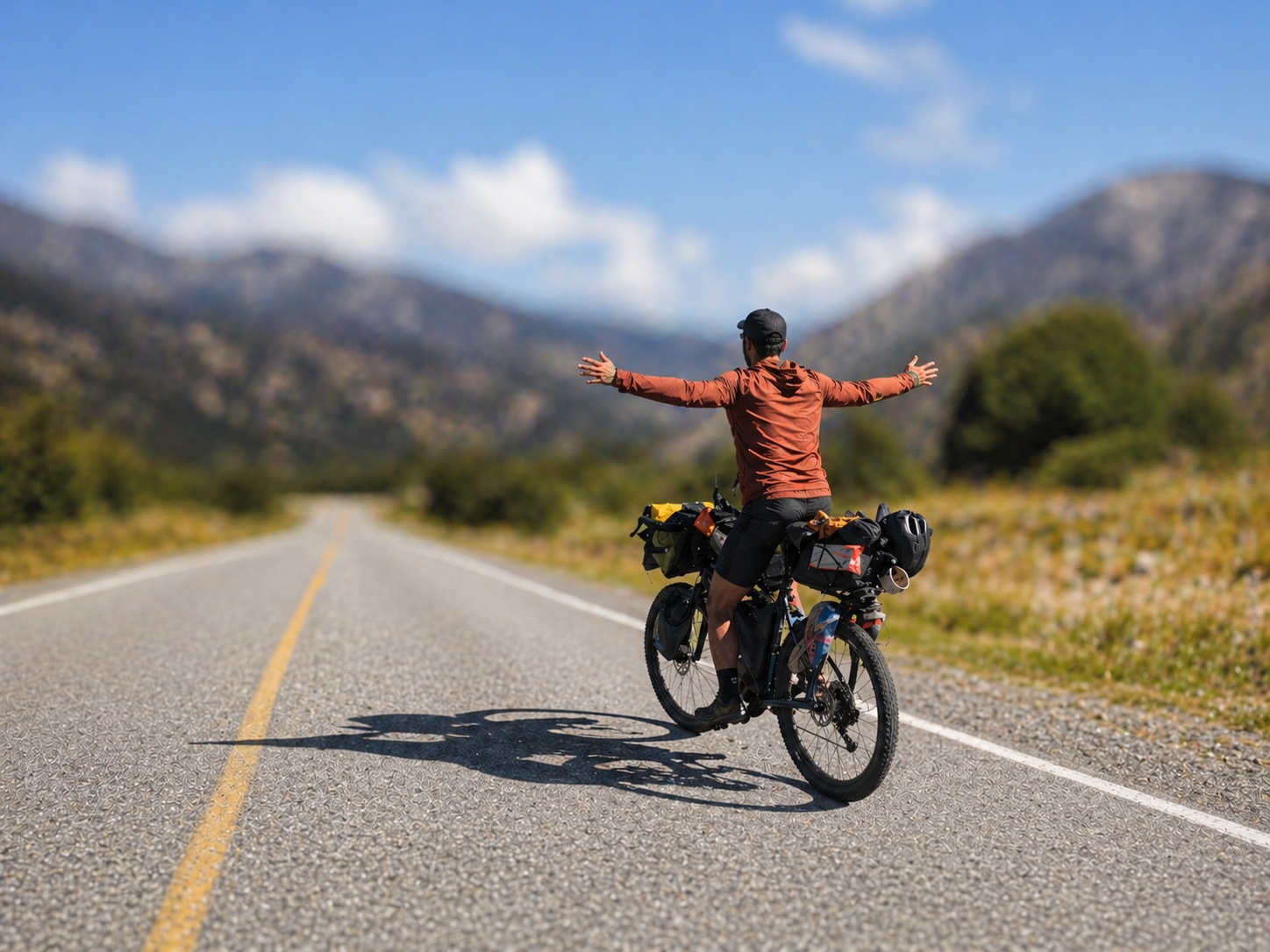
Configuring a travel bike does not mean choosing individual components, but building a coherent system.
Cockpit, wheels and drivetrain work together. When one of these elements is out of balance, the bike becomes more tiring, less stable and less predictable — especially over long distances or with luggage.
For this reason, before going into the details, you will find below three real-world configuration examples. They are the quickest way to understand what really changes.
Real-world configuration examples
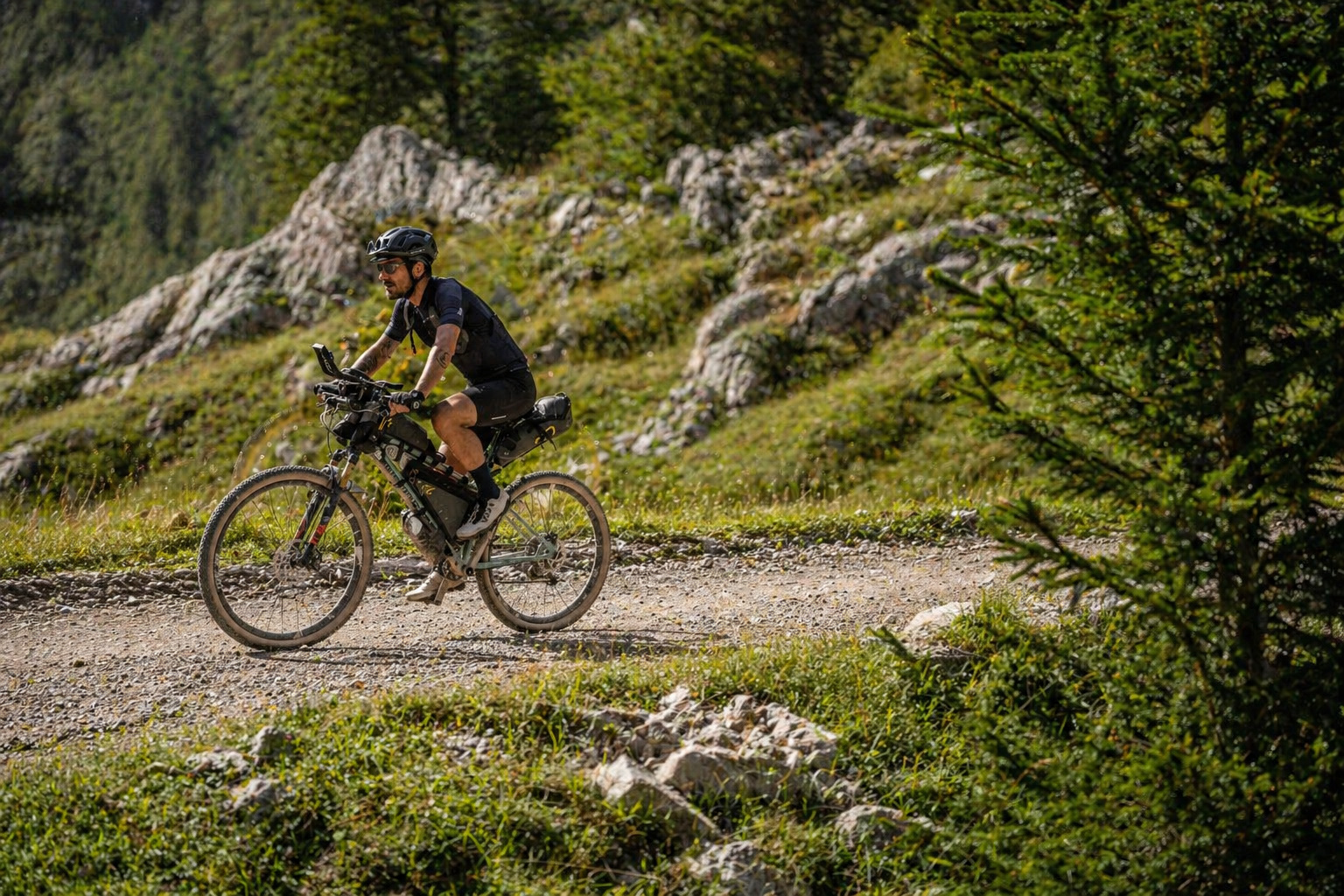
1. Long-distance travel on mixed routes
- flared drop bar
- slightly raised riding position
- robust wheels
- low climbing gears
👉 goal: reduce fatigue over many hours and maintain a sustainable pace
2. Light and fast bikepacking
- compact drop bar
- more compact riding position
- fast-rolling wheels
- balanced gearing
👉 goal: efficiency and consistent pedalling
3. Technical off-road terrain and load
- flat bar or multi-position bar
- open and stable riding position
- robust wheels
- very low gears
👉 goal: control and safety, especially at low speeds
CTA
If you recognise yourself in one of these scenarios but are not sure how to configure your bike:
👉 write to us with terrain, load and intended use
👉 we will help you define a coherent setup without unnecessary steps
How bike configuration really works
A configuration works when all elements point in the same direction.
The three factors that really matter are:
👉 terrain
👉 load
👉 pace
Not the single component.
Cockpit: position and control
.jpg)
The cockpit determines how you sit on the bike.
If you want to understand how the ride really changes between different solutions:
👉 see drop bars for gravel and travel
👉 or flat bars and touring bars
- lower position → more efficiency, more weight on the hands
- higher position → more comfort and less fatigue
- compact setup → more control
- stretched setup → better efficiency over long distances
Most common mistake: changing the handlebar to solve a fit problem.
Wheels: behaviour and stability
Wheels change the bike more than it may seem.
- fast-rolling wheels → more speed on regular surfaces
- robust wheels → more stability with load and on gravel
- self-sufficiency-oriented wheels → useful on long-distance trips
Here, absolute weight is not what matters most. Coherence with real use does.
Drivetrain: managing effort
The drivetrain is there to help you maintain a sustainable rhythm.
Travel riding is almost always a mix of situations:
- gears low enough → to manage climbs and load without stress
- gears long enough → to avoid spinning out on faster sections
👉 the point is not choosing one or the other, but having a gear range that matches your real use.
For more details, see our guide to touring bike drivetrains.
The role of load
Load changes everything.
- more weight → more stability is needed
- front load → greater need for control
- poor weight distribution → bike becomes harder to handle
CTA
If you are evaluating a bike or frame and want to avoid mistakes that are hard to correct later:
👉 we can help you build a complete configuration — cockpit, wheels and components — that is coherent with your real-world use. Contact us.
When a custom configuration makes sense
- when you start from a frameset
- when you want to improve an existing bike
- when you are unsure between different solutions
- when you want a bike ready for real-world use
If you are considering a frameset, you can see the available options in the framesets and travel bikes section.
Summary
There is no best configuration in absolute terms.
There is the right one for:
👉 your terrain
👉 your load
👉 your way of riding
Final CTA
If you want a concrete answer, write to us.
Tell us:
- where you actually ride
- how much load you carry
- what kind of rides you do
We will reply with a coherent configuration, without unnecessary complications.
Essential FAQ
1) Do I really need a custom configuration?
Not always, but it helps avoid mistakes that only emerge after many hours in the saddle.
2) Is it better to start from the components or from the frame?
From the frame. Components are there to make it coherent.
3) Do wheels really make a difference?
Yes, especially with load and on gravel or rough terrain.
4) Does the cockpit affect comfort?
A lot. More than many riders expect.