
- How to Choose the Right Handlebar for Adventure, Touring, and Everyday Riding
- Why the Handlebar Matters More Than You Think
- Quick Decision Guide (If You Want the Short Answer)
- Drop Bar: When It Is the Most Logical Choice
- Flat Bar: When It Truly Simplifies Riding
- Two Platforms That Clearly Show the Difference (Without Forcing the Point)
- Bombtrack Hook EXT: One Idea, Two Interpretations
- Genesis Croix de Fer: One Platform, Many Personalities
- Terrain, Load, and Pace: The Real Decision Triangle
- Fit and Comfort: Where Most Mistakes Happen
- Practical Application by Category
- Two Opposite (and Complementary) Travel-Adventure Examples
- Bombtrack Beyond 1 — Travel Adventure with Flared Drop Bar
- Beyond+ ADV with Jones Bar — An Evolved Flat Bar, Not a Straight One
- Final Comparison Table — Drop Bar vs Flat Bar (Travel / Adventure Focus)
- Three-Line Summary: How to Choose Without Overthinking
- Advisory
- Essential FAQs – Drop bar vs Flat bar for adventure and cycle touring
How to Choose the Right Handlebar for Adventure, Touring, and Everyday Riding

Choosing between a drop bar and a flat bar is not a matter of looks or trends.
It is a decision that directly affects comfort, control, fatigue, load management, and safety, especially when we talk about adventure bikes, touring, classic cycle touring, and modern urban bikes.
This guide is meant to clarify when one option truly makes sense over the other, without shortcuts and without product-sheet logic. The goal is to help you make a choice that is consistent with how you actually ride, not with an abstract idea of what a bike “should” be.
Why the Handlebar Matters More Than You Think
The handlebar is the main interface between rider and bike, and one of the components that most strongly shapes how a bike feels. It affects how your weight is distributed, how the bike reacts on rough terrain, how many hand positions you have on long rides, and how confident you feel at low speed or on technical sections.
That’s why the same platform can work extremely well with either a drop bar or a flat bar, as long as the choice is consistent with terrain, pace, and load. A handlebar doesn’t change the bike’s nature—it emphasizes or softens certain characteristics.
Quick Decision Guide (If You Want the Short Answer)
If you frequently ride technical terrain, rough gravel, or slow descents, a flat bar usually offers more immediate control.
If you do long rides, many hours in the saddle, and extended asphalt or smooth-gravel transfers, a drop bar remains more efficient and sustainable over time.
If the bike is also used in urban traffic, with frequent maneuvers, the flat bar often feels more intuitive; if the city is only part of a longer route, a drop bar can still make sense.
This is not a strict rule, but a very solid starting point.
In short:
If you often ride on technical terrain, rough gravel or slow descents, a flat bar provides more immediate control and intuitive handling.
→ Explore: flat and touring handlebars
If you ride long distances, spend many hours in the saddle and cover mixed but flowing terrain, a drop bar is more efficient and sustainable over time.
→ Explore: drop handlebars for gravel and touring
If you’re unsure, the choice depends on terrain, load and riding style — these are the factors that really define position and bike behaviour.
→ See all options: handlebars and cockpit
This isn’t a strict rule, but a practical starting point to make a clear decision without overcomplicating things.
Drop Bar: When It Is the Most Logical Choice
The main advantage of a drop bar is the variety of hand positions. Being able to change hand, wrist, and shoulder position over the course of a long day significantly reduces fatigue, especially after three or four hours in the saddle. This is one of the key reasons drop bars remain central to modern cycle touring and travel-oriented adventure riding.
On contemporary touring bikes such as the Beyond 1, the drop bar is no longer narrow or purely road-oriented. It is flared, meaning the drops angle outward. This detail is crucial: it widens hand placement options, increases stability when riding in the drops, and makes off-road control far more natural than with traditional road drop bars. The result is a handlebar that stays efficient on transfers but becomes much more forgiving when the surface deteriorates.
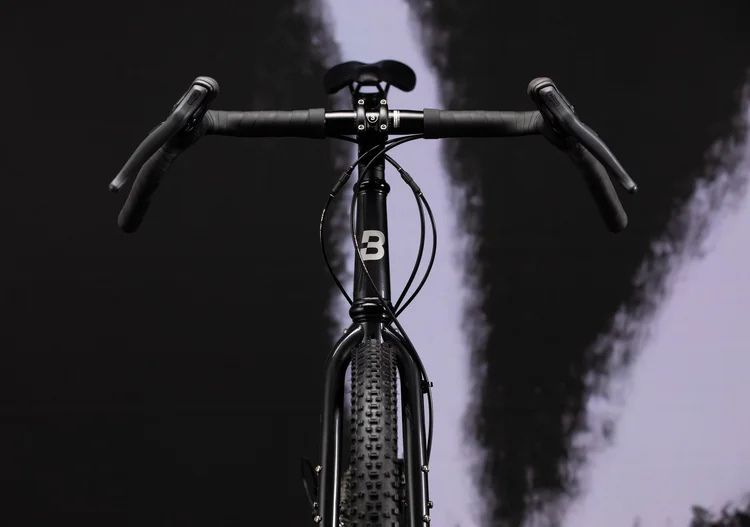
A drop bar also allows a more compact posture when needed, offering clear advantages in headwinds and long connecting sections. On very rough, slow, or technical terrain, however, it requires more precision and delivers less instinctive control than a flat bar. This is not a flaw, but a characteristic worth understanding.
Flat Bar: When It Truly Simplifies Riding
A flat bar provides direct leverage and immediate steering response. It feels intuitive and reassuring, especially for riders coming from an MTB background or those tackling irregular terrain at moderate speeds. Confidence is instant, particularly in slow sections, rough descents, or when line corrections need to happen quickly.

In everyday riding—traffic, tight turns, frequent stops, accessories mounted on the bar—the flat bar is often more natural and readable. This explains its widespread use on modern urban bikes and on adventure setups focused on control rather than efficiency.
With front load or on technical descents, many riders experience a stronger sense of security with a flat bar. That mental ease often matters just as much as the technical performance itself.
Two Platforms That Clearly Show the Difference (Without Forcing the Point)
This is not about “what to buy,” but about platforms that exist in both configurations, making them ideal examples.
Bombtrack Hook EXT: One Idea, Two Interpretations
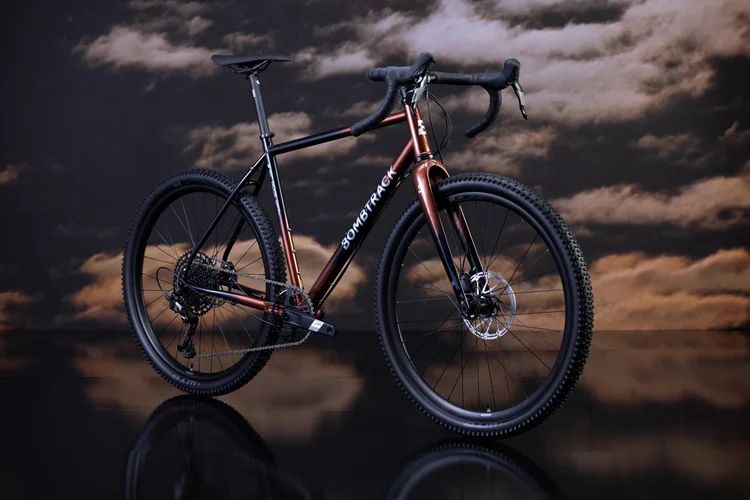
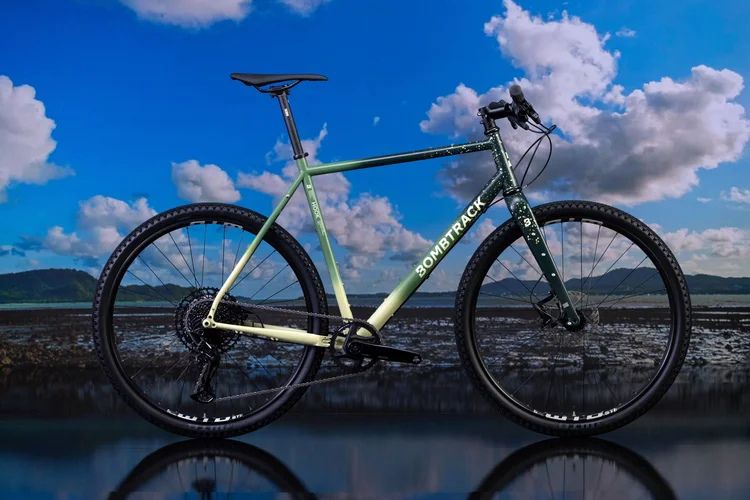
The Hook EXT is designed as an adventure / off-road bike and is offered with both drop bars and flat bars (SX).
With drop bars, the setup leans toward gravel-adventure: balanced efficiency, comfort, and long-distance stability.
With flat bars, the same platform becomes more control-oriented, especially on technical terrain.
It’s a clear example of how the frame does not dictate the handlebar—the use case does.
Genesis Croix de Fer: One Platform, Many Personalities
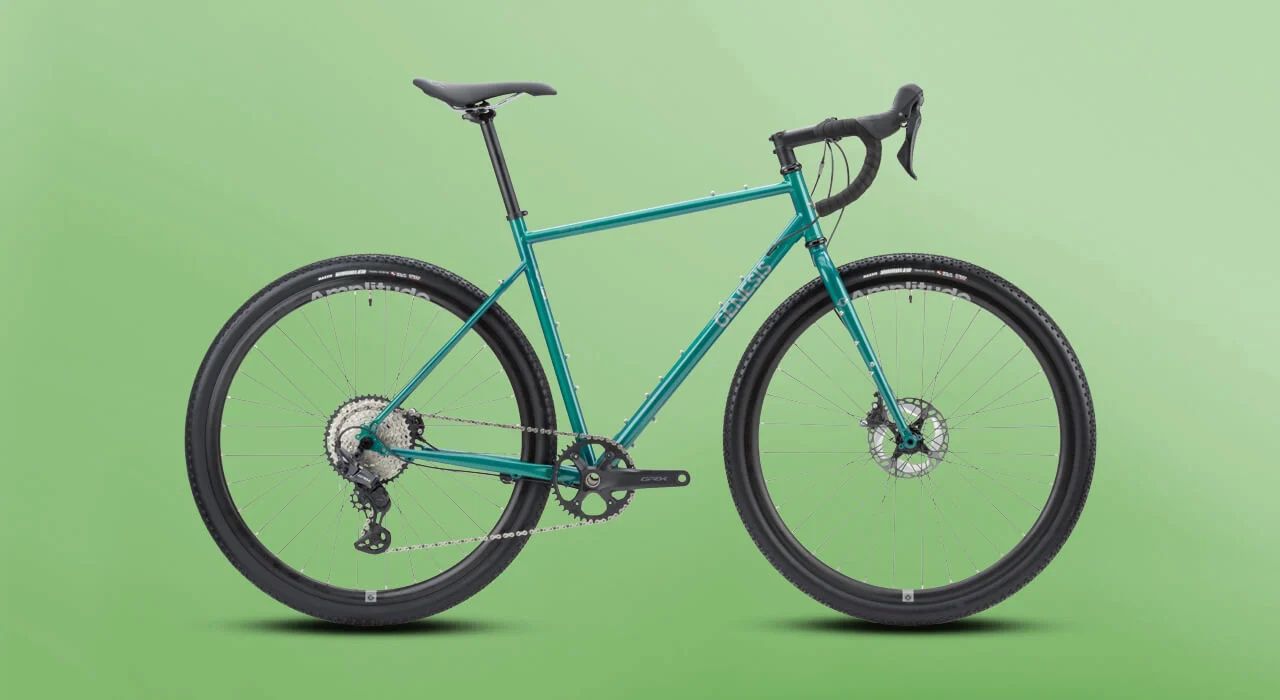
The Croix de Fer family is one of the most versatile platforms in modern cycling. Over time it has included drop-bar versions aimed at gravel, touring, and mixed-surface travel, as well as flat-bar versions intended for urban use, commuting, and light adventure.
In the Bikejamming catalog you can find both drop-bar and flat-bar Croix de Fer models, but the correct way to think about it is at the platform level: the design logic stays the same, while priority shifts between efficiency and control.
Terrain, Load, and Pace: The Real Decision Triangle
Terrain is often the first filter. On smooth or mixed surfaces, drop bars retain an efficiency advantage; on rough and technical ground, flat bars inspire more confidence.
Load shifts the balance further: light, fast setups pair well with drop bars, while medium to heavy loads—especially up front—often feel more reassuring with flat bars.
Finally, pace matters. Riders who settle into long, steady days usually benefit from drop bars; those who ride more dynamically often prefer flat bars.
Fit and Comfort: Where Most Mistakes Happen
Many negative opinions about drop bars or flat bars don’t come from the bar itself, but from poor fit.
Incorrect width, excessive or insufficient reach, front end too low, or poorly positioned levers can make even the “right” handlebar feel wrong.
Before dismissing a setup, it’s always worth checking whether the position truly matches your body and your riding habits.
Practical Application by Category
In the Adventure / Touring category
https://www.bikejamming.it/en/1094-adventure-touring/
you’ll find bikes that work well with both configurations: drop bars for long, mixed journeys; flat bars for rougher terrain and control.
In Classic Cycle Touring
https://www.bikejamming.it/en/86-traditional-touring-bikes/
drop bars remain a very logical choice, but not the only one. Flat bars can make sense when simplicity and a more upright posture are priorities.
In Urban Bikes
https://www.bikejamming.it/en/9-urban-bike/
flat bars often win for visibility and maneuverability, but drop bars are not wrong if the city is part of a longer, more demanding route.
Two Opposite (and Complementary) Travel-Adventure Examples
Bombtrack Beyond 1 — Travel Adventure with Flared Drop Bar
https://www.bikejamming.it/it/bombtrack-beyond-1-metallic-black-.html
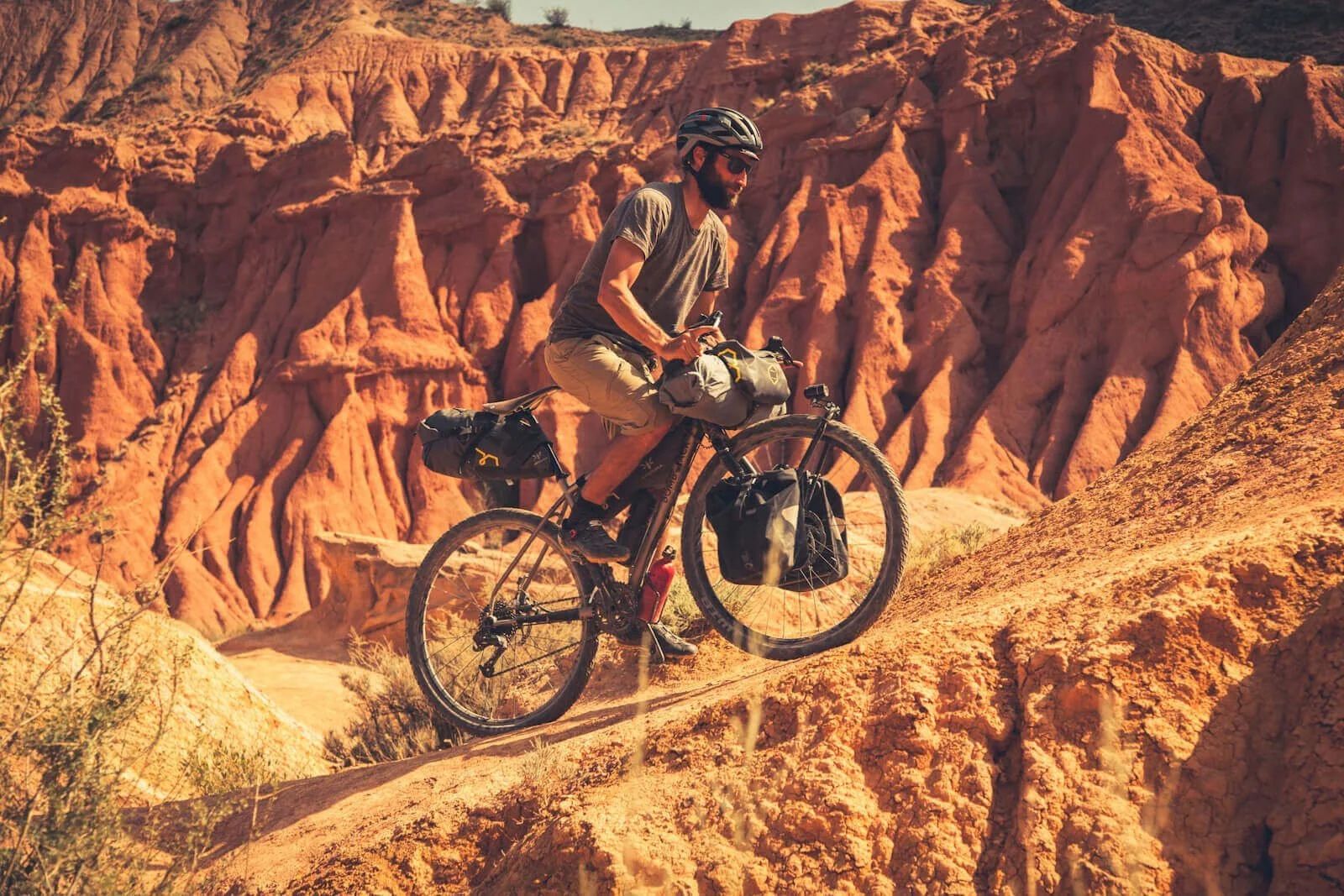
The Beyond 1 is a clear reference for travel adventure with drop bars. The flared drop bar is designed to increase stability and hand-position options over long hours in the saddle. It suits riders who travel far, mix asphalt and gravel, and want to finish the day less fatigued, not just faster.
Beyond+ ADV with Jones Bar — An Evolved Flat Bar, Not a Straight One
https://www.bikejamming.it/it/bombtrack-beyond-adv-matt-black.html
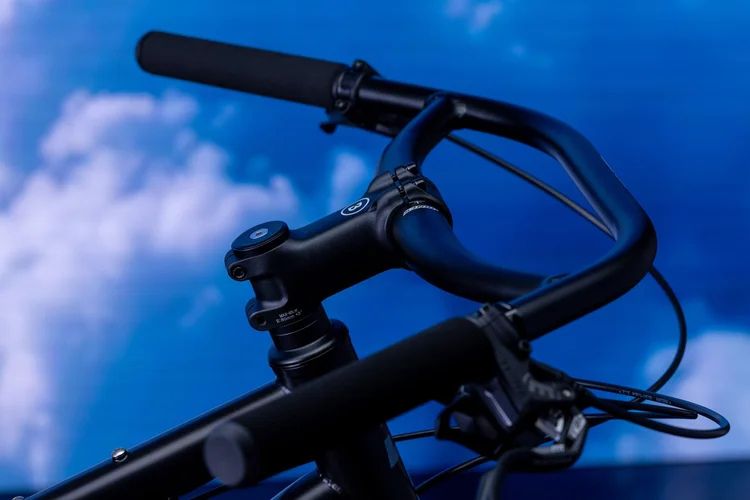
The Beyond+ ADV uses a Jones Bar, which is not a standard flat bar. It is designed to offer more hand positions than a conventional flat bar, while maintaining a natural wrist and shoulder posture and very high control on rough terrain. It prioritizes stability, postural comfort, and mental ease, especially on uneven routes and with load.
Final Comparison Table — Drop Bar vs Flat Bar (Travel / Adventure Focus)
| Aspect | Flared Drop Bar (e.g. Beyond 1) | Flat / Jones Bar (e.g. Beyond+ ADV) |
|---|---|---|
| Hand positions | Many and variable | Fewer, but more spontaneous |
| Comfort over long hours | Very high | High |
| Efficiency on asphalt | Higher | Lower |
| Control on technical terrain | Good, progressive | Very high, immediate |
| Mental confidence | Built over time | Immediate |
| Best suited for | Long journeys, mixed terrain | Rough terrain, load |
Three-Line Summary: How to Choose Without Overthinking
If you spend many hours in the saddle and mix asphalt with gravel, a flared drop bar remains the most efficient choice.
If your priority is control, uneven terrain, and intuitive handling, a flat bar—including evolved options like the Jones Bar—often feels more reassuring.
The right choice is the one consistent with terrain, load, and pace, not the one that is “right” in absolute terms.
Advisory
If you’ve read this far, your question is probably not theoretical, but practical.
The best decision is not “drop or flat,” but which setup truly matches the way you ride.
Write to us with answers to these five questions:
-
Real percentage of road vs gravel (e.g. 40/60)?
-
Is your gravel mostly smooth or technical/rough?
-
Load: light, medium, or heavy (and where)?
-
Steady pace or more dynamic riding style?
-
Do you feel more at home in a compact position or an open, stable one?
With these answers, we can suggest which handlebar makes the most sense for you and how to set up the bike without unnecessary compromises.
Essential FAQs – Drop bar vs Flat bar for adventure and cycle touring
1) Is a drop bar or a flat bar better for an adventure bike?
It depends on terrain, load, and riding rhythm. A drop bar (especially flared) is more efficient and sustainable over long distances and on smoother surfaces, while a flat bar offers more immediate control on technical terrain and slow descents.
2) Is a drop bar recommended for classic cycle touring?
Yes, in most cases. A drop bar provides multiple hand positions, reduces fatigue over long hours, and remains very effective on asphalt and compact gravel sections.
3) Is a drop bar suitable for off-road riding?
Yes, if it is flared and properly set up. Compared to a traditional drop bar, a flared design improves stability and control on gravel, while remaining less intuitive than a flat bar on very rough technical terrain.
4) When is a flat bar the better choice?
When the route is technical, uneven, or slow, or when carrying significant front load. A flat bar offers greater leverage, immediate confidence, and simpler handling in tight situations.
5) Jones Bar: is it better than a traditional flat bar?
It is not “better” in absolute terms, but different. The Jones Bar offers more hand positions than a straight flat bar, a more natural posture for wrists and shoulders, and high control on rough terrain. It can be installed on many flat bar bikes without changing brakes or shifters, making it a simple way to improve comfort and control without radically altering the bike.
6) Can I switch from a drop bar to a flat bar on the same bike?
Often yes, but it is not just a handlebar swap. Controls, levers, cabling, and especially the fit need to be reviewed to maintain balance, comfort, and control.
7) Does comfort depend more on the handlebar or on bike fit?
On bike fit. Many issues attributed to the handlebar actually come from incorrect width, poorly positioned levers, or an inconsistent front-end setup. The right handlebar with the wrong fit will still be uncomfortable.
8) How can I choose the right handlebar without making mistakes?
Consider the real percentage of road and gravel, the type of terrain, the load you carry, and your riding rhythm. The right choice is the one that matches how you actually ride, not the bike category or current trends.