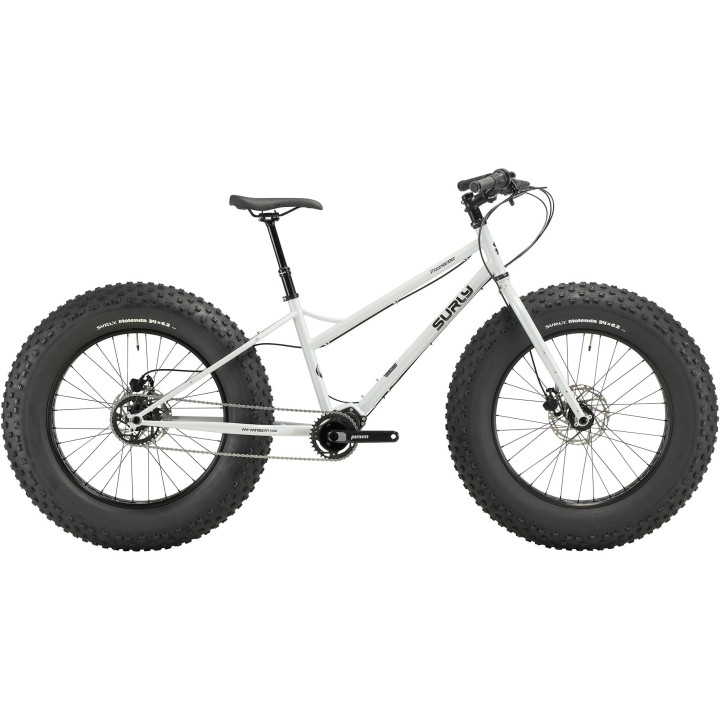
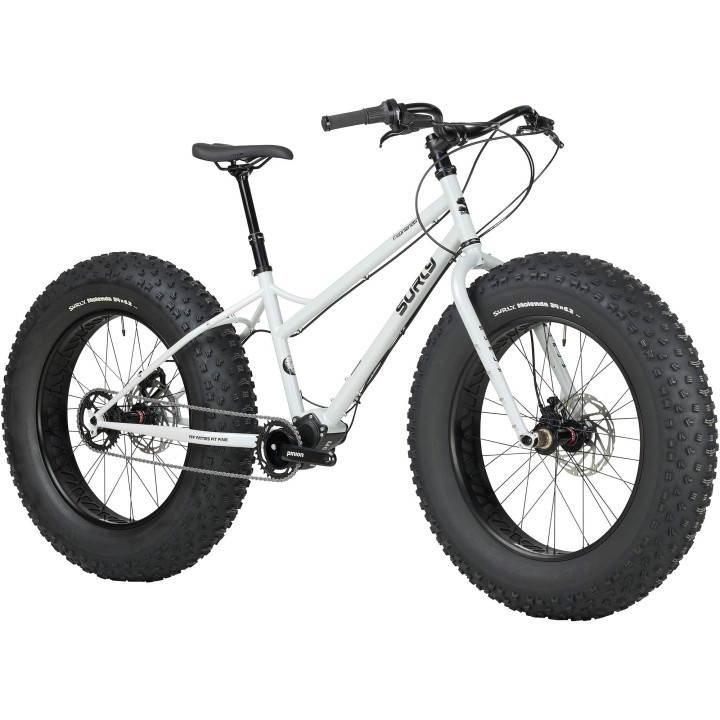
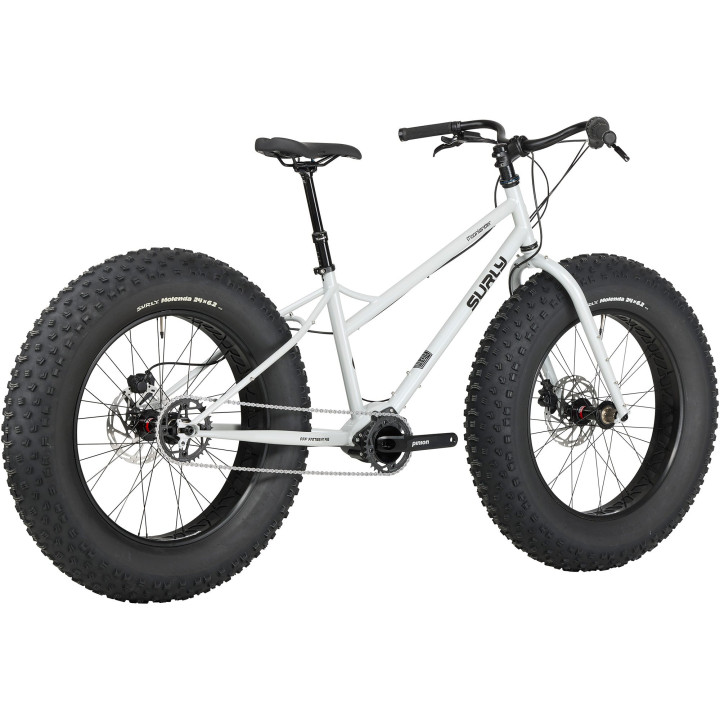
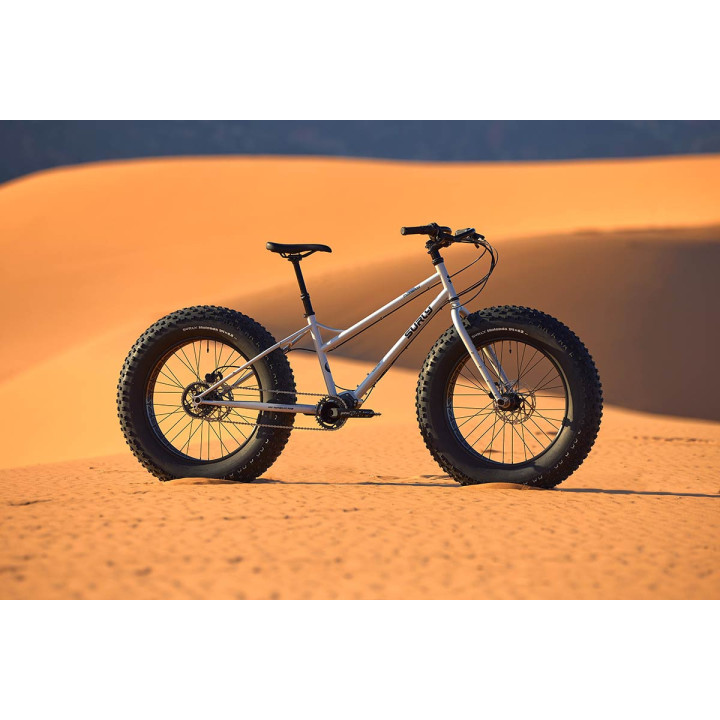
The SURLY Moonlander is an extreme-terrain expedition fat bike with 24×6.2″ tyres and a 9-speed Pinion C1.9 XR gearbox. Its steel frame, long geometry and cargo mounts are designed for deep snow, soft sand and bikepacking across challenging terrain.
Looking for another size or variant? Contact us to check availability and estimated lead times.
🌍 International shipping available. If your country is not listed at checkout, email info@bikejamming.it for shipping options and costs.
Secure payments and protected data
Secure & tracked delivery
Regulated and transparent withdrawal
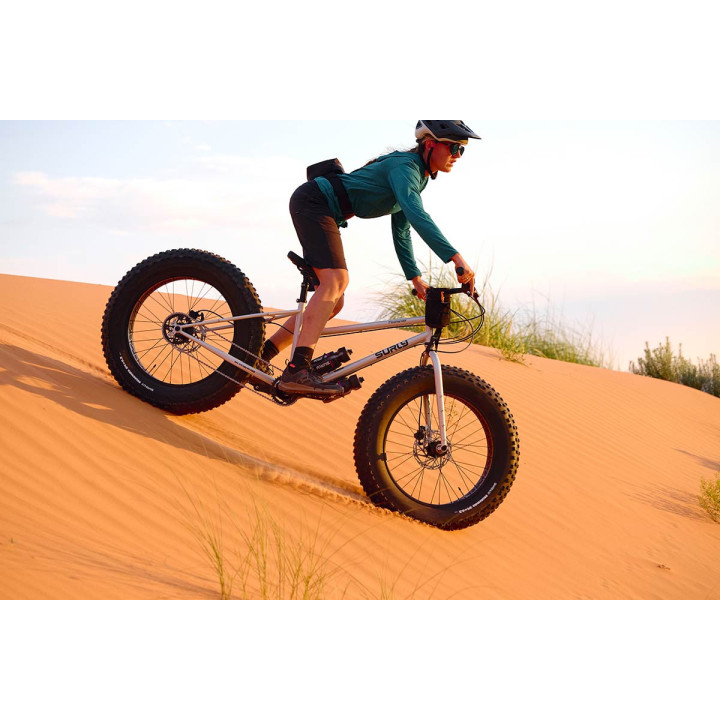
The SURLY Moonlander is a fat bike designed to keep moving where the ground provides very little support for the wheels. Deep sand, soft snow, beaches, rocky dunes and uneven surfaces are the environments in which its design truly comes into its own.
Its enormous SURLY Molenda 24×6.2″ tyres, Chromoly steel frame, extended geometry and Pinion C1.9 XR 9-speed gearbox work together to prioritise flotation, traction and stability. The Moonlander does not attempt to replicate the handling of a conventional mountain bike: it makes routes possible where maintaining forward progress matters more than speed.
This generation is a thorough redesign of the original Moonlander. It retains its exploratory purpose while introducing a dedicated platform with 24″ wheels, 6.2″ tyres and an integrated drivetrain.
24×6.2″ tyres: flotation as a design principle
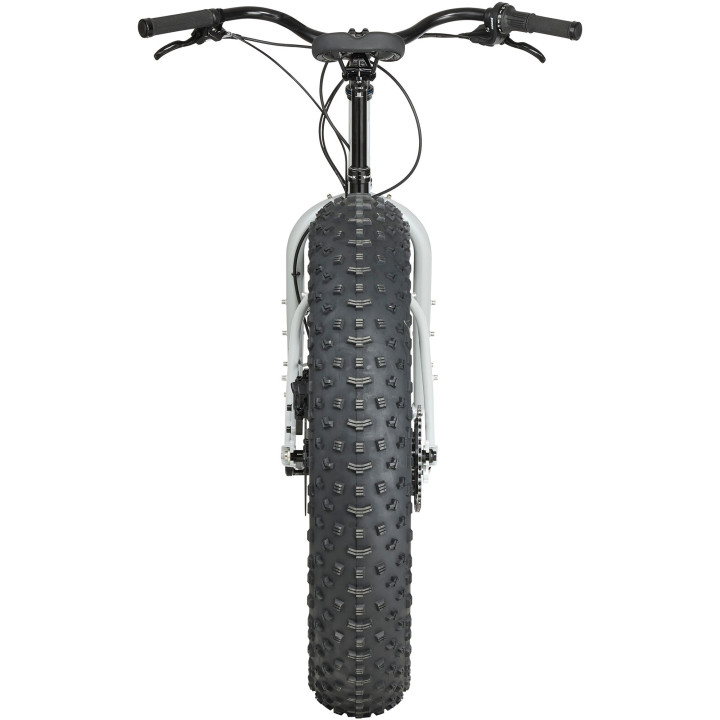
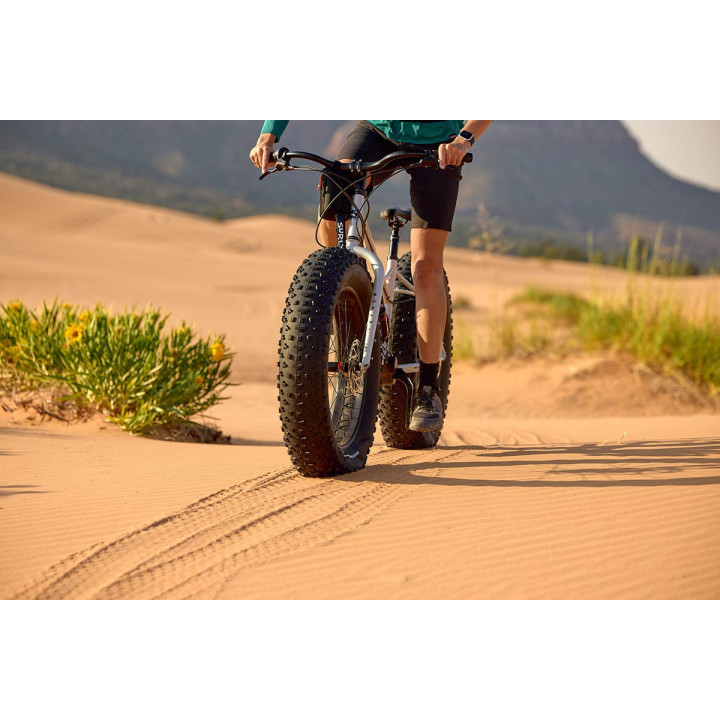
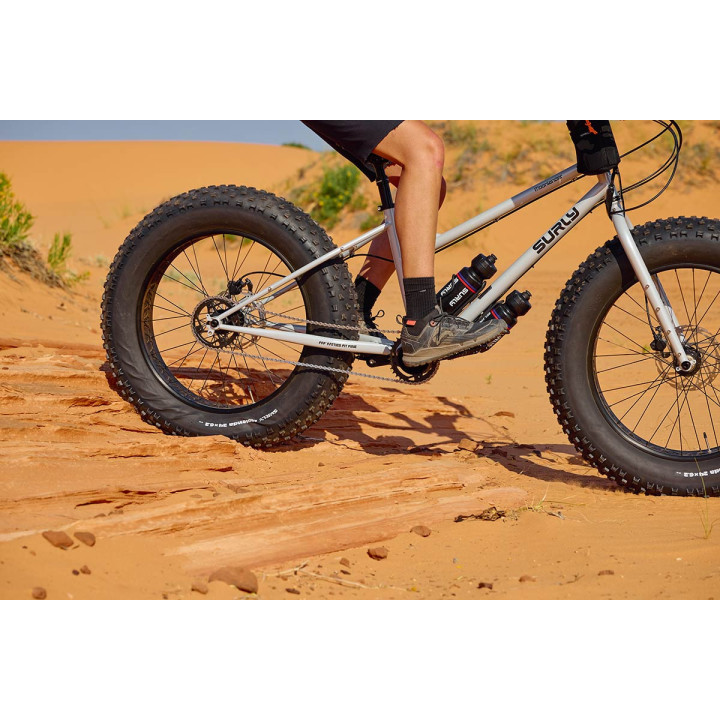
The Moonlander is built around SURLY Molenda 24×6.2″ tyres, fitted to 100 mm-wide SURLY Clown Royal rims.
The large air volume allows very low tyre pressures, increasing the contact patch and spreading weight over a wider area. On sand, this reduces the tendency of the wheels to sink; on soft snow, it helps maintain forward progress; and over rocks and uneven ground, it allows the tyres to conform to obstacles.
The 24″ rim diameter is a deliberate choice. Combined with a tyre of this size, it creates a wheel with a substantial overall diameter while limiting the height of the structure needed to accommodate it.
The Molenda tyres have a 60 TPI casing and are tubeless-ready. Their tread provides traction across varied surfaces, from sand to rock, while their volume plays a major role in absorbing irregularities.
Geometry: stability, ground clearance and low-speed control
The Moonlander has geometry that differs considerably from that of a fat bike designed primarily for trail riding.
The particularly long 562 mm chainstays contribute to directional stability and weight distribution. In size M, the wheelbase measures 1,248 mm, with a 68.5° head angle and a 73° seat angle.
These dimensions encourage predictable handling as the surface changes, speeds drop and the rider must constantly choose a line between obstacles or patches of soft ground.
The bottom bracket is positioned to provide ground clearance without unduly compromising stability. The steeply sloping top tube leaves room to put a foot down quickly, often essential when the front wheel encounters particularly soft sand or snow that will not support the rider’s weight.
The riding position, with a relatively high front end, is also intended for long hours in the saddle. The TransX dropper seatpost, with 100 mm of travel in size S and 125 mm in the other sizes, makes manoeuvring and moving around the bike easier on demanding sections.
Pinion C1.9 XR gearbox: an integrated drivetrain for exploration
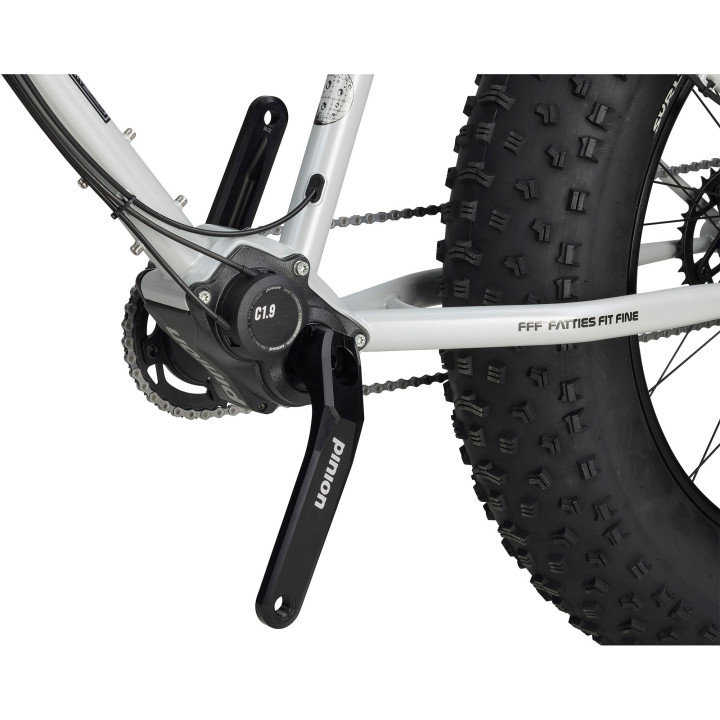
The Moonlander uses a centrally mounted Pinion C1.9 XR 9-speed gearbox.
The gears are enclosed in a protected housing rather than exposed near the rear wheel. This reduces the shifting mechanism’s exposure to impacts, mud, snow and debris — a particularly valuable advantage for a bike intended for challenging environments.
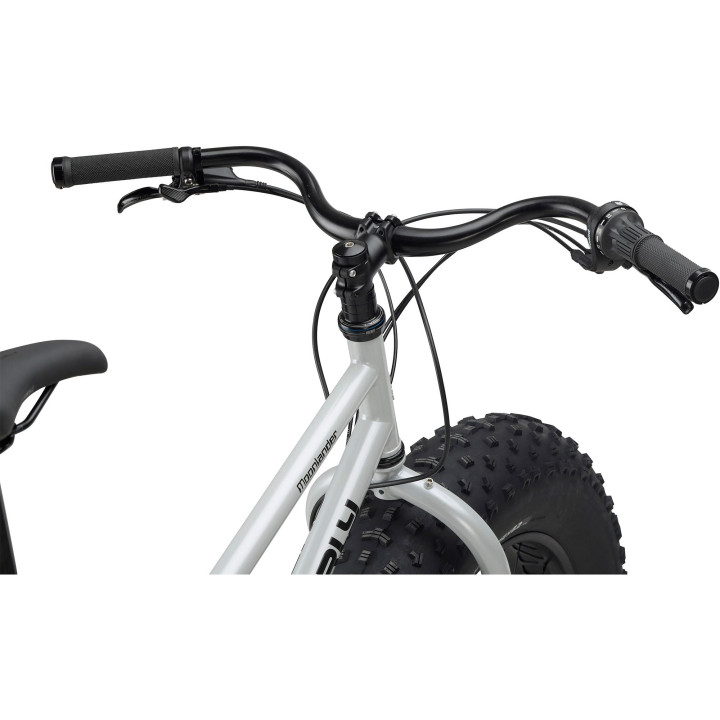
The drivetrain uses a chain but has no rear derailleur. Gears are selected with a Pinion twist shifter, and shifting is possible even when the bike is stationary: a practical feature when stopping before an obstacle or in deep sand and needing an easier gear before setting off again.
The gearbox offers an overall 568% gear range. Its nine gears have wider steps than many conventional 12-speed drivetrains, favouring a particularly broad overall range.
The central position of the gearbox also helps concentrate a significant proportion of the drivetrain’s weight close to the bicycle’s centre of gravity.
Steel frame and bikepacking mounts
The frame and fork are made from SURLY Chromoly steel, with a triple-butted main triangle, TIG welding and a protective E.D. coating.
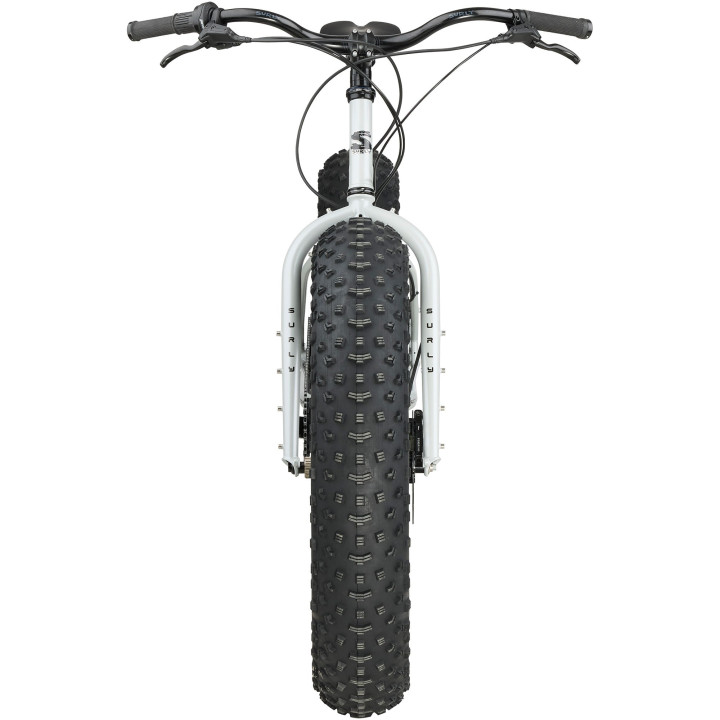
The Moonlander features rack and mudguard mounts, as well as accessory mounts on the fork. It is compatible with the SURLY Rear Disc Wide Rack.
These mounting options allow luggage to be arranged according to the terrain and length of the route. Fork-mounted bags can carry light, bulky items; a rear rack can accommodate additional equipment; and a frame bag keeps some of the load centrally positioned.
The extended rear end and stable geometry are well suited to loaded exploration. In its test, Bikepacking.com used the Moonlander with a rear rack and touring equipment, reporting convincing handling on the routes ridden.
The maximum permitted combined weight of rider and luggage is 110 kg, due to the limits of the Pinion system. This is an essential consideration when planning a touring setup.
Four wheel formats, one specialist platform
The original 24×6.2″ tyre configuration best expresses the Moonlander’s character. However, the frame and fork also accommodate other wheel formats:
26×5.1″
27.5×4.8″
29×3.0″
This versatility makes it possible to adapt the bicycle to different requirements.
The 24×6.2″ setup prioritises the largest possible contact patch on soft ground. A 29×3.0″ configuration, by contrast, may roll more efficiently on firm gravel roads and trails while retaining the platform’s stable handling.
Alternative wheels must meet the Moonlander’s specific standards: it uses 12×197 mm thru-axle hubs at both the front and rear.
Where the Moonlander really makes sense
Deep snow and winter routes
One of the Moonlander’s most characteristic applications is riding on snow, especially when the surface is too soft or uneven for a conventional fat bike.
The high-volume tyres help distribute weight and maintain traction. The Pinion gearbox is suited to conditions in which a conventional derailleur drivetrain would be more exposed to accumulations of snow and ice.
The Moonlander’s use in demanding winter events such as the Arrowhead 135 in Minnesota demonstrates the relevance of the design to snow exploration and intense cold.
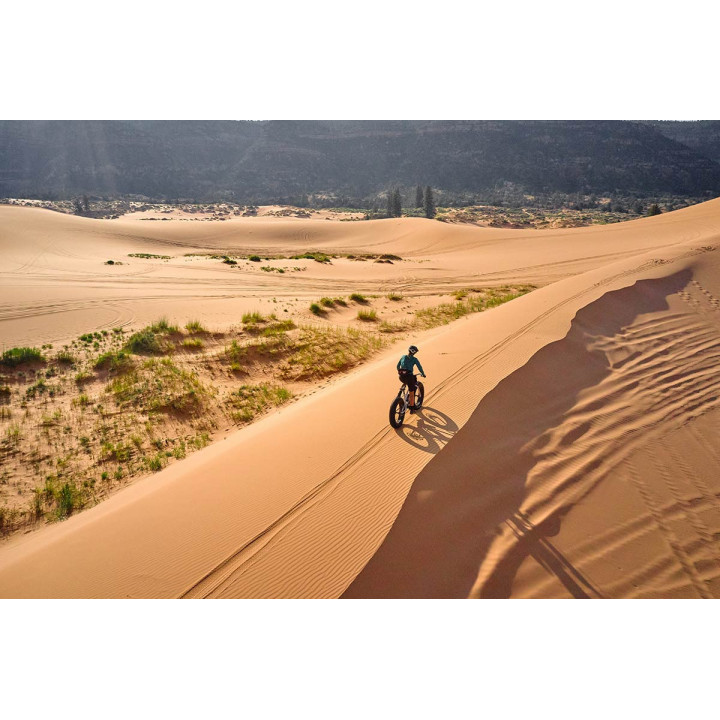
Beaches, dunes and deep sand
On sand, tyre width becomes decisive. The 6.2″ tyres allow the bike to move over surfaces where narrower tyres tend to dig in.
Long beaches, sandy coastal stretches and dunes are therefore another natural environment for the Moonlander.
The Westbrook Cycles test on the English coast between Saltburn and Redcar provides a real-world example of this kind of use.
Riverbeds, coarse gravel and rocky terrain
The Moonlander is not limited to snow and sand.
Over rocks, coarse gravel and uneven ground, the tyres’ volume helps absorb obstacles and maintain traction. The long geometry favours stability and control when moving slowly.
It is particularly interesting for exploratory routes that alternate rideable sections with passages requiring balance, careful line choice and the ability to negotiate obstacles.
Who is it for?
Ideal for
Exploration on deep snow, soft sand and extremely yielding ground, where flotation and traction take priority.
Bikepacking on remote, challenging routes, making use of the stable geometry, luggage mounts and integrated gearbox.
Riders looking for a protected, centrally mounted drivetrain suited to demanding environments.
Anyone wanting a specialist platform with the option of running different wheel formats.
When it is not the right choice
For fast-rolling gravel routes, where a touring mountain bike or a 29+ bike will generally be more efficient.
For riders seeking a particularly agile and responsive fat bike on technical singletrack: the Ice Cream Truck is more oriented towards this use.
When the combined weight of rider and luggage exceeds 110 kg.
For those who prioritise low weight, acceleration and ease of transport.
Frequently asked questions
Is the SURLY Moonlander suitable for bikepacking?
Yes. The frame has rack and accessory mounts, while its extended geometry supports stability and forward progress on difficult terrain. The combined weight of rider and luggage must not exceed 110 kg.
What is the difference between the Moonlander and the Wednesday?
The Wednesday is a more versatile adventure fat bike, suitable for mixed-surface touring, packed snow and gravel tracks. The Moonlander prioritises flotation on very soft snow and sand, thanks to its 24×6.2″ tyres and purpose-built geometry.
How does it differ from the Ice Cream Truck?
The Ice Cream Truck is more trail-focused, with more agile, responsive geometry. The Moonlander prioritises stability, traction and the ability to keep moving over extremely soft surfaces.
Can the Moonlander take 29+ wheels?
Yes. The frame and fork accommodate 29×3.0″ tyres, provided the wheels meet the bicycle’s specific standards.
Can you shift the Pinion gearbox while stationary?
Yes. The twist shifter allows you to select a gear while the bike is stationary, which is useful when setting off again on sand, snow or difficult ground.
What maintenance does the Pinion gearbox require?
The integrated gearbox requires the periodic servicing specified by Pinion, including oil changes according to the manufacturer’s instructions. The gears are enclosed in a protected housing, with no exposed rear derailleur.
Are SURLY Molenda tyres tubeless-ready?
Yes. The SURLY Molenda 24×6.2″ tyres, with their 60 TPI casing, are tubeless-ready.
Unsure about sizing or whether the SURLY Moonlander is the right bike for your plans?
Get in touch: we can help you assess the geometry, technical features and setup best suited to the terrain you intend to tackle and the way you travel.









Comments (0)
Your review appreciation cannot be sent
Report comment
Report sent
Your report cannot be sent