
- The Most Common Mistakes When Choosing a Touring Bike
- Mistake 1: Starting from the Category Instead of the Route
- Mistake 2: Underestimating Geometry Under Load
- Mistake 3: Choosing a Bike That Is Too Specialised
- Mistake 4: Being Guided by the “Adventure” Imagery
- Mistake 5: Looking for a Bike That “Does Everything”
- Mistake 6: Underestimating Position and Long-Term Fatigue
- The Core Mistake: Ignoring Repeated Stress
- In Summary
- FAQ – Mistakes When Choosing a Touring Bike
The Most Common Mistakes When Choosing a Touring Bike
This guide does not replace the technical analysis on how to choose a travel bike based on the real route, but highlights the most common mistakes that lead to incoherent choices.
Choosing a touring bike is not difficult because there are too few options.
It is difficult because the same label is used to describe projects designed for very different technical scenarios: classic asphalt touring, mixed-terrain travel, light bikepacking, heavy-duty adventure with structural load.
The wrong bike is rarely a “low-quality” bike.
It is a bike that is incoherent with the prevailing terrain, the type of load and the duration of stress it will face over time.
If you’re wondering which touring bike to choose, the answer does not start with the model — it starts with the type of route you will actually ride. For a structured and complete decision framework, refer to Touring bike – Complete guide to choosing the right one.
In real-world travel, coherence matters more than declared specifications.
Mistake 1: Starting from the Category Instead of the Route
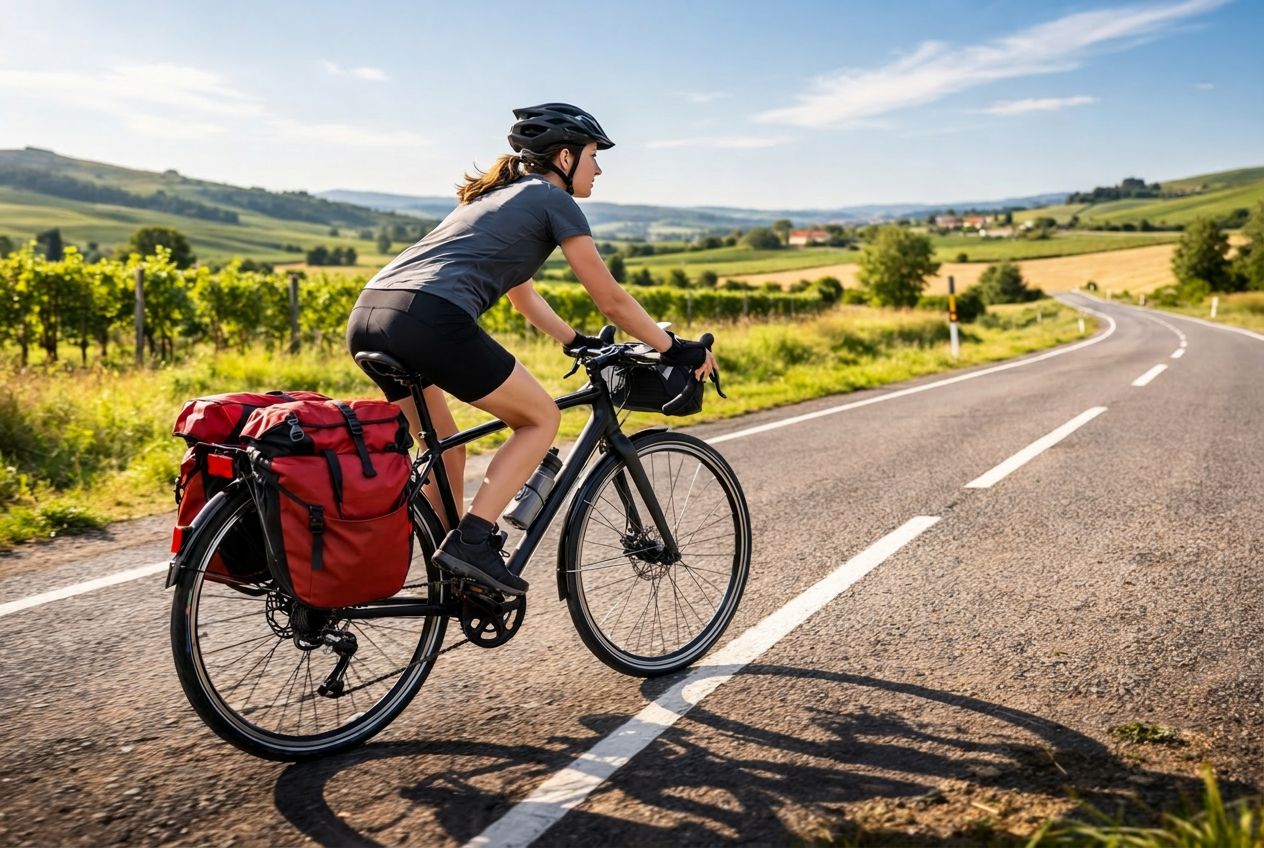
The most common question is:
“What is the best touring bike?”
The correct question is:
“What surface will I ride most of the time?”
Concrete examples:
-
80% asphalt, 20% light gravel → a balanced touring geometry with 35–40 mm tyres and a stable setup is often more efficient than an extreme adventure platform.
-
60% compact gravel, light and variable load → a well-balanced gravel bike with adequate chainstay length and real tyre clearance can work very well.
-
Remote tracks, deteriorated surfaces, continuous load → longer wheelbase, stable rear triangle, fork designed for front load and a structure built for prolonged stress are essential.
For this reason, asking “gravel bike or touring bike for travel?” without defining the real route almost always leads to an imprecise choice.
Choosing by category (“gravel”, “adventure”, “expedition”) instead of starting from real terrain is the first structural mistake. To clarify what truly differentiates these categories, see Adventure vs Gravel vs Touring Bikes: What’s the Real Difference?.
Mistake 2: Underestimating Geometry Under Load
Many bikes feel versatile when unloaded.
Load is the real test. How geometry reacts under load is explored in Travel bike geometry — Guide.
Wheelbase, head angle, chainstay length and riding position radically change behaviour when weight becomes continuous.
A geometry with:
-
compact wheelbase
-
steep head angle
-
extended reach
may feel lively and fun unloaded, but become nervous and fatiguing after 5–6 hours with bags mounted.
By contrast, a more balanced geometry:
-
absorbs weight variations better
-
remains predictable on descents
-
reduces micro-corrections
Over time, fewer corrections mean less fatigue.
Many poor choices result from short test rides or trials without load.
Mistake 3: Choosing a Bike That Is Too Specialised
A frame designed for fast gravel or sport use can work for light travel.
But when load becomes structural, design limits emerge:
-
short chainstays → lightened front end
-
aggressive angles → nervous steering
-
overly stretched position → arm and back fatigue
Likewise, a heavy-duty expedition bike may be excessive for predominantly asphalt travel with moderate load.
A bike that is too specialised does not prevent you from travelling.
It makes the journey less efficient and more tiring than necessary.
Mistake 4: Being Guided by the “Adventure” Imagery
Massive frames, forks full of mounts, tyres over 50 mm and expedition-ready setups convey strength and total self-sufficiency.
But ask yourself:
-
Will you really carry continuous front load?
-
Will you ride remote tracks for weeks?
-
Will you face technical off-road terrain every day?
If real use is 70–80% asphalt and regular gravel, a lighter and more coherent platform can be smoother, more efficient and less fatiguing.
Aesthetics should not replace function.
Mistake 5: Looking for a Bike That “Does Everything”
There is no universal touring bike.
Those searching for a touring bike that can do everything often end up with a platform that does not work optimally in any specific scenario.
There are bikes that work well in relation to:
-
a specific prevailing terrain
-
a certain continuity of load
-
a defined journey duration
Real versatility does not come from stacking features, but from a coherent platform that can evolve without losing its character.
A bike that promises to do everything often does many things “reasonably well” — but few things truly well under stress.
Mistake 6: Underestimating Position and Long-Term Fatigue
On a journey, you ride tired — not fresh.
Excessive reach, low stack and a front-loaded position may feel efficient on early rides. After many consecutive hours, they become chronic fatigue factors.
A slightly more compact and stable position:
-
reduces muscular tension
-
improves control under load
-
makes riding more sustainable
In touring, feeling less tired matters more than feeling faster.
The Core Mistake: Ignoring Repeated Stress
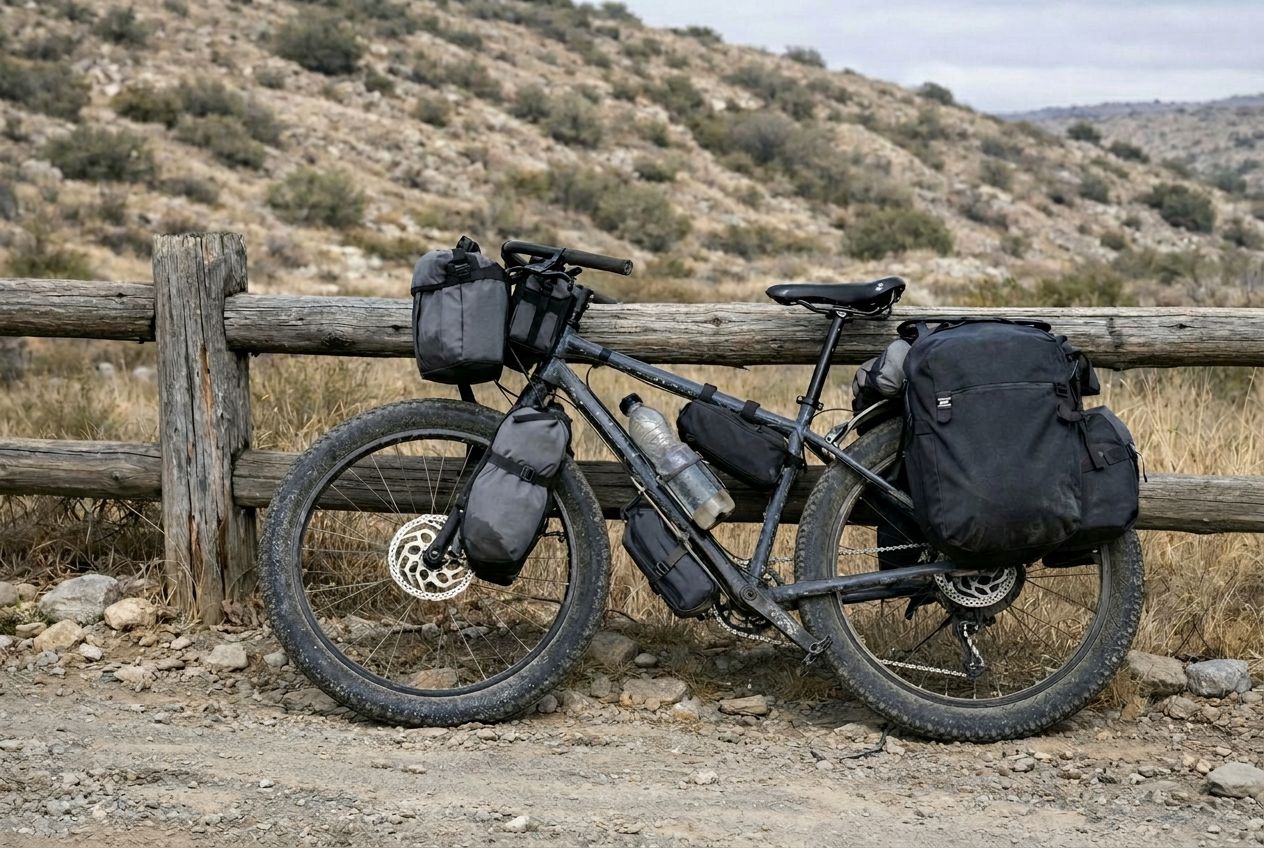
Travel is not one long ride.
It is stress repeated day after day.
A bike may work well for 100 km.
The real question is: does it still work well after 8 consecutive days?
If the answer is uncertain, the choice is probably not coherent.
In Summary
The most common mistakes when choosing a touring bike come from:
-
starting from category instead of real terrain
-
ignoring how geometry behaves under load
-
choosing overly specialised platforms
-
being guided by imagery rather than actual use
-
searching for a universal bike
The right bike is not the most extreme or the most fashionable.
It is the one that remains stable, readable and minimally fatiguing when the journey becomes real.
If you are evaluating which bike to choose for a long trip with panniers or for mixed use between asphalt and gravel, the questions below summarise the most common doubts.
FAQ – Mistakes When Choosing a Touring Bike
What is the most common mistake when choosing a touring bike?
Choosing based on category (gravel, adventure, expedition) rather than on the prevailing terrain and real load that will be faced most of the time.
Gravel bike or touring bike for cycle touring?
It depends on the route. For predominantly asphalt trips with continuous load, a touring bike with stable geometry is often more coherent. For mixed terrain and variable load, some balanced gravel bikes can work well.
Can I use a sporty bike for touring?
For short trips, yes. For long journeys with continuous load, aggressive geometries and compact wheelbases tend to become fatiguing and less stable.
Is there a touring bike that works for everything?
No. There are bikes that work well in specific scenarios. The right choice comes from coherence between route, load and duration.
How can I avoid choosing the wrong touring bike?
Start from prevailing terrain, real load (continuous or variable) and trip duration. Only then evaluate category and build.
Is an adventure bike always better for long trips?
No. It is better when terrain is demanding and stress is structural. On predominantly asphalt routes, it may be less efficient than necessary.
How important is geometry when choosing a touring bike?
Extremely important. Wheelbase, head angle, chainstay length and riding position determine stability and fatigue under load more than total bike weight.