
- Surface, continuity and remoteness
- The guiding principle: covering the worst case
- Plus / wide-tyre expedition: the most coherent approach
- Key characteristics
- Suspension or wide tires?
- Brakes and drivetrain: functional simplicity
- In summary
- Examples from our catalogue: two possible approaches
- FAQ – Baja Divide bike choice and setup
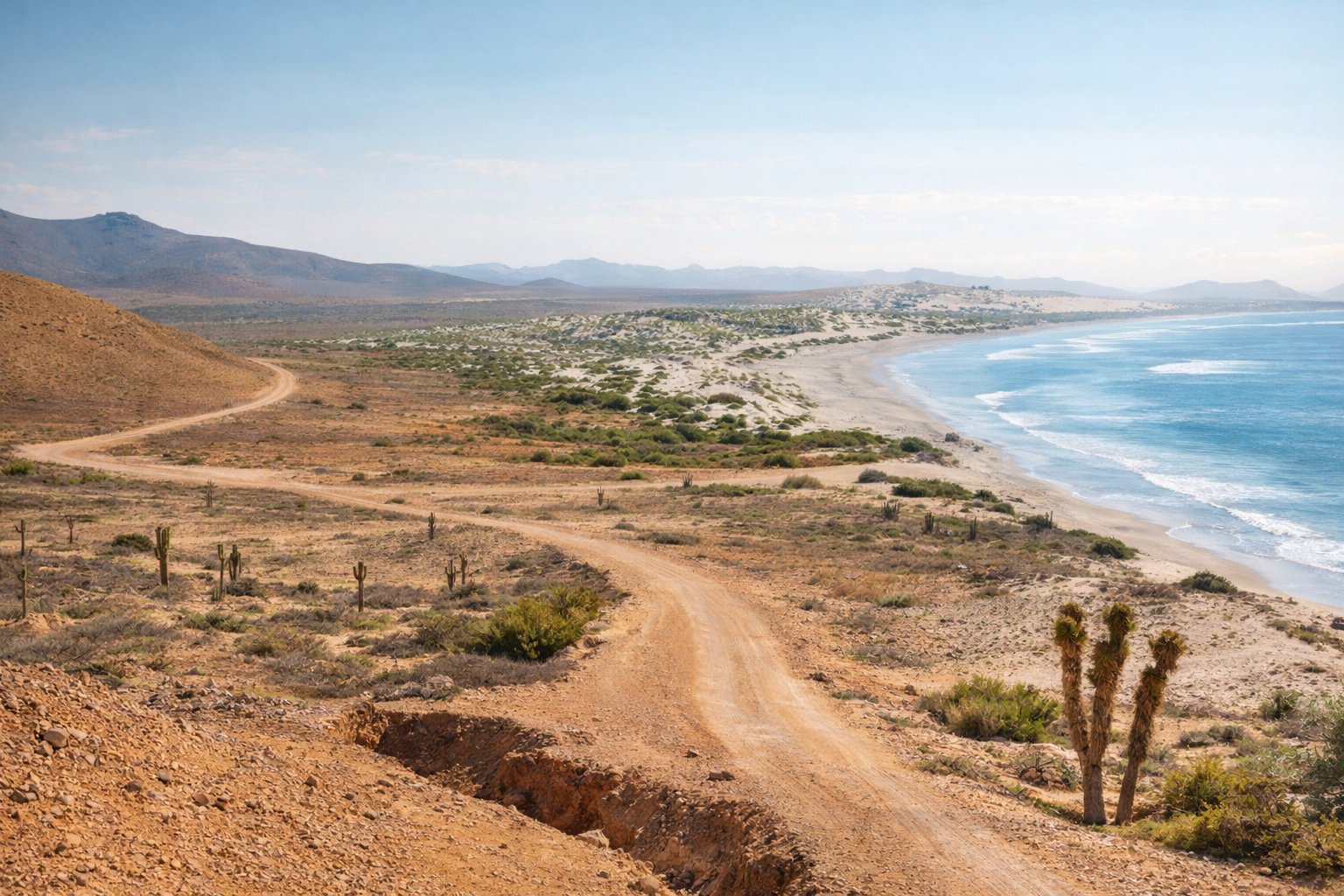
The Baja Divide is a 2,700+ km off-road crossing of Mexico’s Baja California peninsula. It is not a technical route in the classic sense, but it is extremely demanding by accumulation: unstable surfaces, constant vibration, heavy loads, and long stretches without services.
The difficulty is not concentrated in a few specific sections, but spread day after day. This is what makes bike choice non-negotiable.
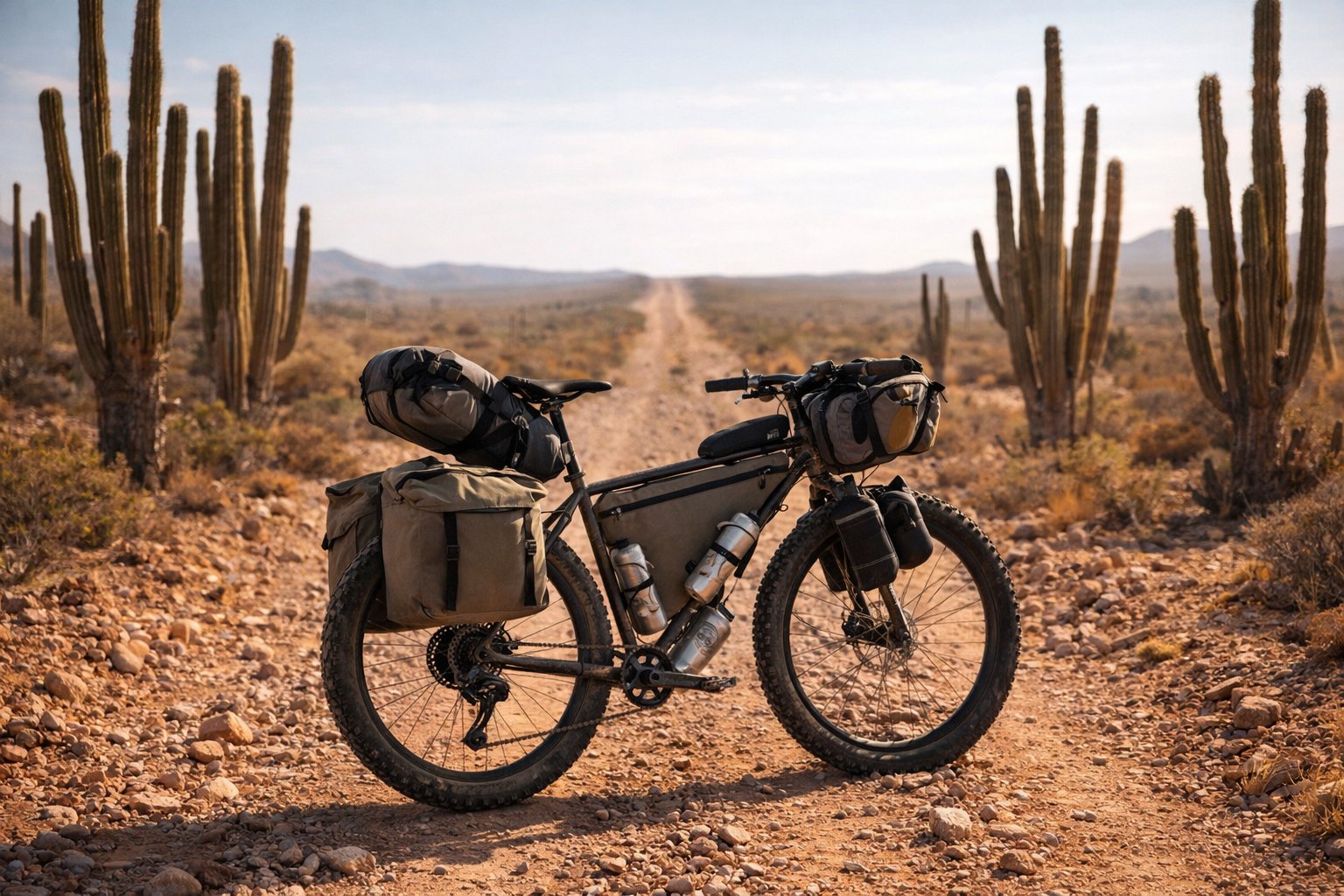
Surface, continuity and remoteness
Riding the Baja Divide means spending weeks on repetitive, punishing conditions:
- deep sand
- constant washboard
- broken tracks and rocky sections
- mud
- long segments without water or assistance
The result is not just physical fatigue, but cumulative stress affecting:
- hands and wrists
- wheels and tires
- frame and load-bearing points
On a route like this, a wrong bike choice does not simply reduce performance: it puts the continuity of the journey at risk.
In desert environments, the real problem is not if something fails or a puncture happens — but how quickly you can keep moving again. The Baja Divide rewards setups that minimise downtime, mechanical stress and repeated interruptions rather than those optimised purely for speed or weight.
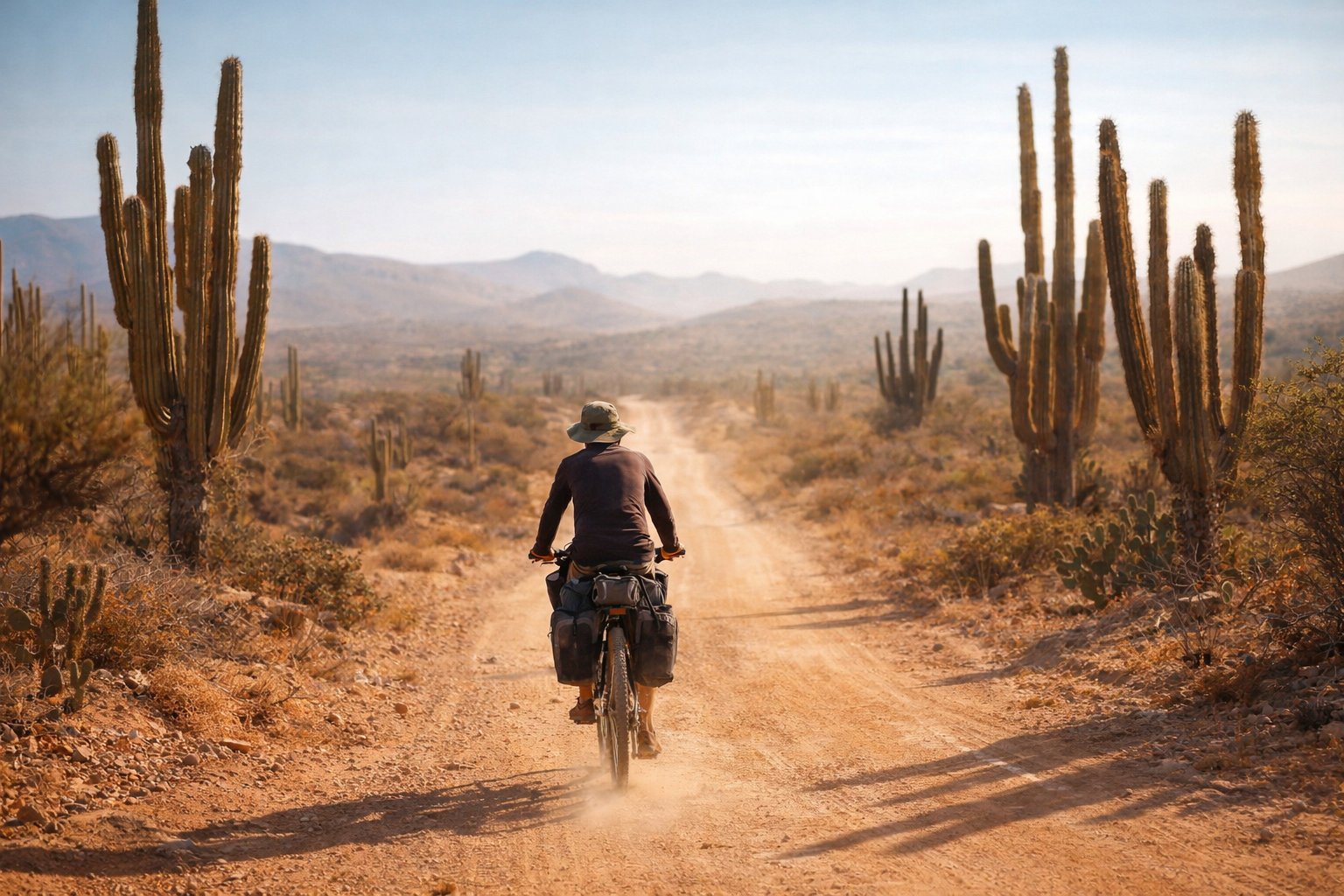
The guiding principle: covering the worst case
For the Baja Divide, you do not choose a bike based on the best sections, but on the worst surface and how often it repeats over time.
Lighter or “faster” solutions may feel effective on compact terrain, but quickly become limiting when:
- sand stretches for kilometres
- washboard hammers for hours
- load increases to ensure self-sufficiency
- mud makes progress difficult during the rainy season
That is why the reference category is clear.
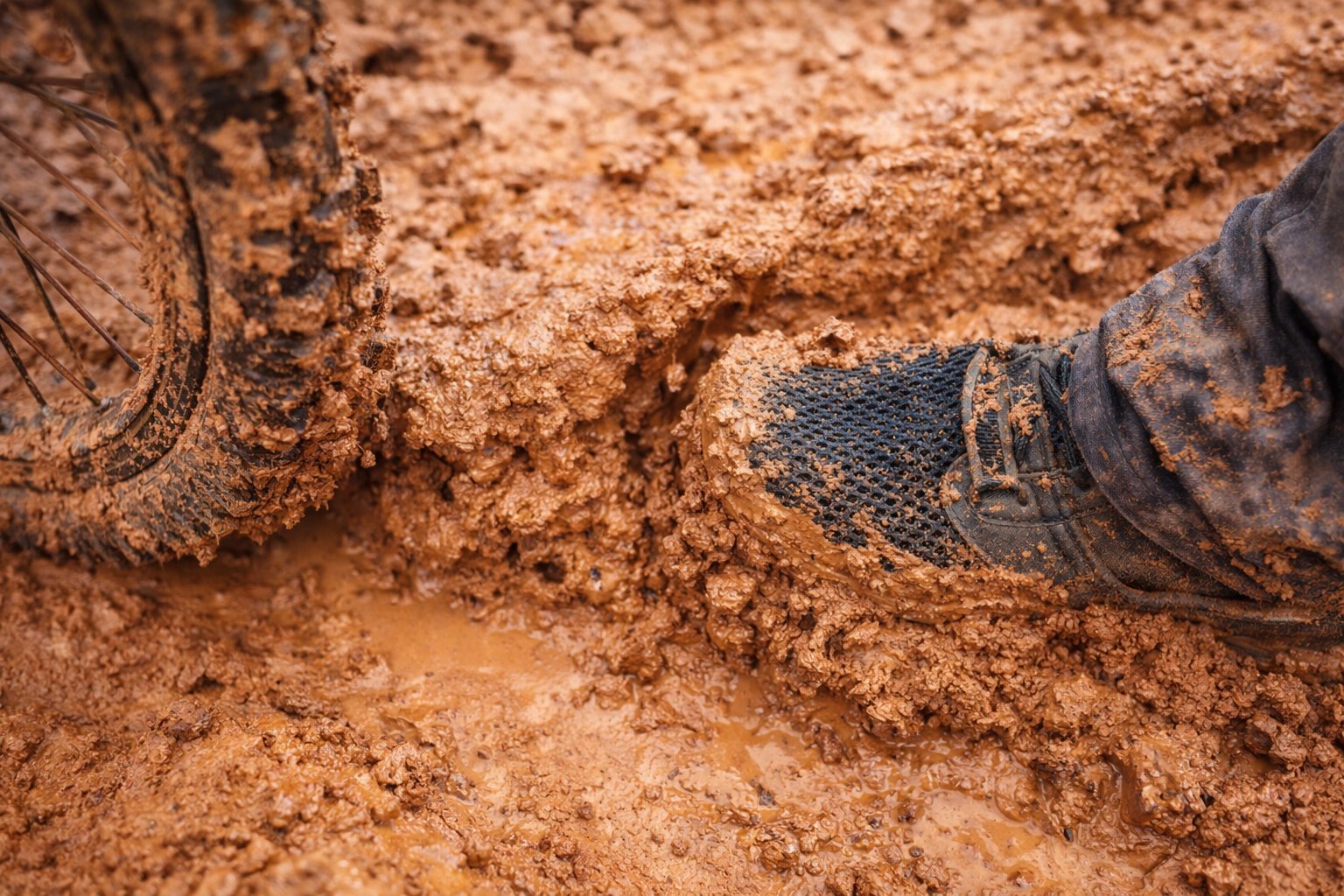
Plus / wide-tyre expedition: the most coherent approach
For the Baja Divide, many experienced riders and guides agree on one point: the priority is floatation in sand and stability under load, rather than technical performance on narrow singletrack.
High-volume tyres remain a key reference for this type of crossing. Historically many riders relied on plus setups (roughly 2.8”–3.0”), but in recent years a different balance has emerged: slightly less extreme tyres — typically 2.4” to 2.6” with reinforced casings — capable of maintaining structural stability, reducing washboard fatigue and improving long-distance reliability.
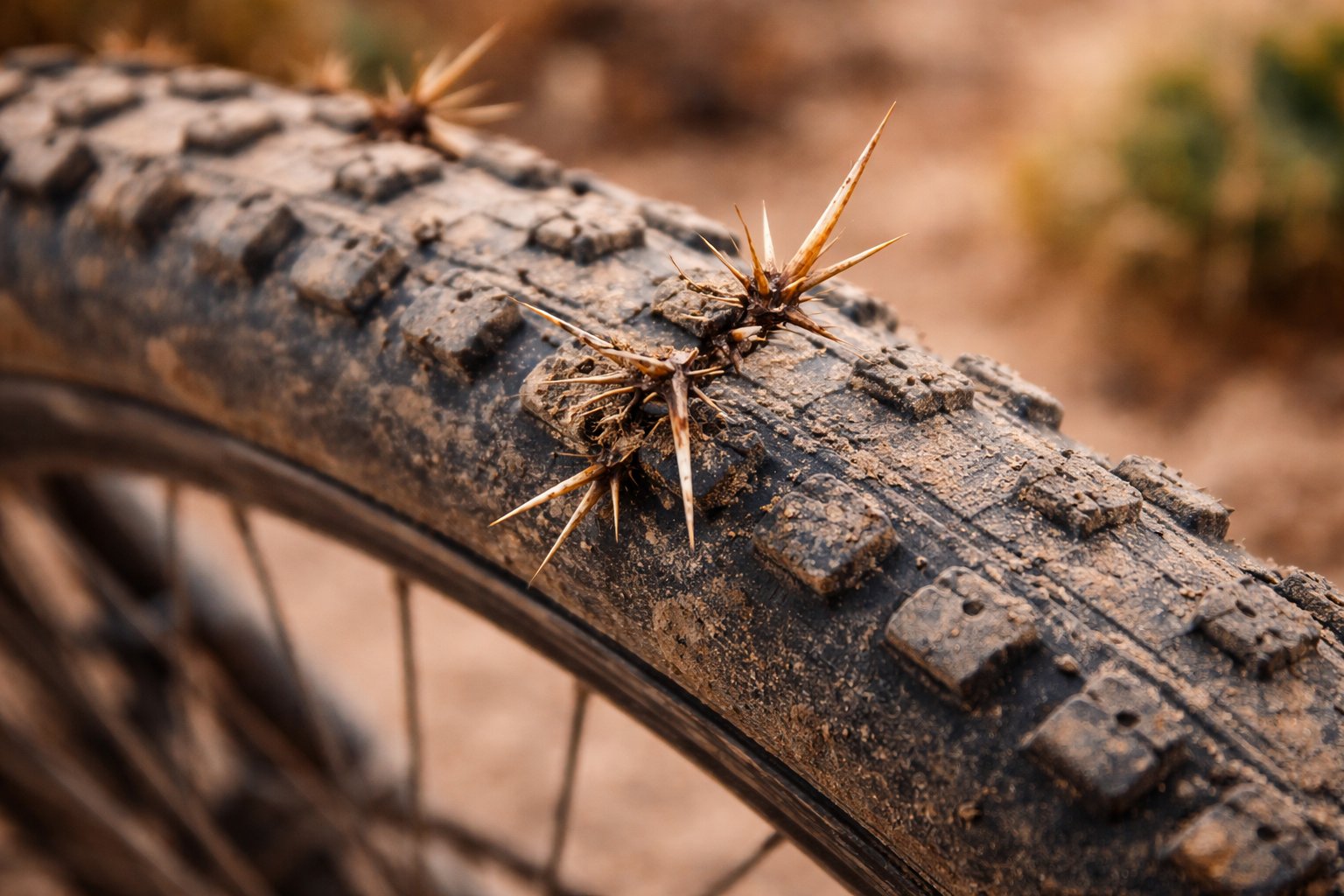
To explore the most critical real-world aspect — punctures, casing durability, tire pressure, sealant management and rapid field repairs — we collected the most coherent setup strategies for routes like the Baja Divide in a dedicated guide: Baja Divide tire setup and puncture management.
Key characteristics
- Wide tires in a tubeless setup for floatation, comfort and frequent punctures
- Stable geometry with full loads and crosswinds
- Durable frame designed for prolonged stress
- High carrying capacity with reliable mounting points
It is not the fastest or the lightest option, but it is the one that reduces fatigue, protects the bike, and increases the likelihood of finishing the route.
Suspension or wide tires?
On the Baja Divide, the priority is not absorbing big impacts, but reducing constant micro-vibrations. For this reason, wide tires at low pressure remain the simplest and most common solution.
A suspension fork is not inherently wrong and some riders successfully use one, but it introduces greater mechanical complexity, higher exposure to dust and wear, and increased maintenance demands.
For long distances in remote terrain, rigid setups combined with high-volume tires are generally considered the safer and more reliable approach.
Brakes and drivetrain: functional simplicity
The Baja Divide does not require extreme braking power, but systems that remain consistent with load, dust and autonomy.
- brakes that can be managed far from assistance
- readily available consumables and spares
- simple drivetrains with very low gearing
The priority is maintaining a steady, sustainable cadence, not top-end speed.
In summary
- work reliably on the worst surfaces
- remain dependable after consecutive days
- reduce the risk of injury and mechanical failure
Plus / wide-tyre expedition is not an extreme choice. It is a prudent and technical solution for a route that leaves very little margin.
Examples from our catalogue: two possible approaches
Our catalogue includes several potentially suitable models. Here we highlight two representative examples of the approaches described above, without excluding other valid options.
- Wide-tyre / expedition approach (floatation and resilience): Bombtrack Beyond+ ADV – a platform designed for self-supported off-road travel, with high-volume tires and a stable riding position.
Alternative within the same family: Bombtrack Beyond+ 29, which retains the expedition DNA of the Beyond+ platform while also allowing high-volume non-plus 29” tyre setups, offering greater flexibility between flotation and long-distance stability. - Suspension fork approach (more control on rough sections): Bombtrack Cale GX Eagle – a hardtail with front suspension, suited to riders prioritising control and comfort while accepting increased mechanical complexity.
To compare all adventure touring options and evaluate bikes with different setups, visit the full Adventure Touring section , keeping the criteria outlined above in mind.
FAQ – Baja Divide bike choice and setup
What type of bike works best for the Baja Divide?
A stable bike designed for sustained off-road load, typically with high-volume tires and geometry suited to long-distance rough terrain rather than speed-focused riding.
Is a rigid bike safer than a suspension setup on the Baja Divide?
In many cases yes. Rigid setups reduce mechanical complexity and are easier to manage independently in remote environments where maintenance or repairs may be difficult.
How important are tires on the Baja Divide?
Tire choice is one of the most decisive factors. Proper volume and casing stability significantly influence fatigue, control and reliability over thousands of kilometres.
Does suspension improve comfort on the Baja Divide?
It can help with impacts, but much of the route’s fatigue comes from continuous vibration, which large-volume tires often manage effectively with fewer mechanical risks.
What is the biggest challenge of the Baja Divide?
Not technical riding, but accumulated fatigue caused by vibration, isolation and repeated rough surfaces over many consecutive days.
Can a gravel bike complete the Baja Divide?
Only in very specific configurations and with significant experience. Bikes designed for continuous off-road load generally offer greater reliability.
What is the most common preparation mistake?
Choosing equipment based on ideal terrain instead of preparing for the worst conditions repeated throughout the route.